
Airtightness and Ventilation for Old London Houses in Plain English
Are you planning insulation, an extension, or a wider retrofit and wondering how to keep your home healthy and dry?
Are you concerned that sealing up a Victorian or Edwardian property might create damp or mould?
You are not alone.
Many London homeowners feel uncertain about airtightness and ventilation. The language can sound technical, but the goal is simple. You want a home that feels warmer, drier, quieter and easier to live in.
When we upgrade insulation, we think carefully about how air and moisture behave throughout the house. Improving walls, floors, roofs or windows changes how heat, air and moisture interact within the building.
A thoughtful upgrade reduces uncontrolled draughts and replaces them with deliberate ventilation. It reduces heat loss without trapping moisture. It protects the building fabric while improving comfort.
This matters whether you are insulating a period terrace, adding a rear extension, converting a loft or rethinking interiors. Airtightness and ventilation sit quietly behind all of these decisions.
When handled properly, the result is a home that uses far less energy, avoids condensation, and feels calm throughout the year.
If you would like a broader overview of insulation first, you may find our guide on how to insulate a period London home helpful.
Why Victorian ventilation worked then but not now
Victorian homes were built around open coal fires. These fires produced significant heat and needed a constant supply of oxygen to burn. That oxygen came from gaps around sash windows, unsealed floorboards and the general leakiness of the building.
The fire drew air up the chimney.
That movement pulled fresh air into the house through every available gap.
It was not a designed ventilation system. It was simply how the heating method worked.
As the decades passed, things changed.
Coal fires disappeared.
Gas boilers replaced them and no longer relied on household draughts.
Double glazing reduced air leakage.
Chimneys were blocked or removed.
Insulation made homes warmer and further reduced accidental ventilation.
Today, many London period homes have far less ventilation than they were originally built to rely on. This is why modern homes sometimes experience condensation on windows, musty smells or patches of mould. The older ventilation pattern no longer exists.
A carefully planned retrofit replaces those lost draughts with a deliberate ventilation strategy designed around how the house now performs.
What airtightness really means
Airtightness describes how well a building prevents warm indoor air from leaking through gaps and cracks. It is the difference between a winter coat with holes and a coat that actually keeps you warm.
A common misconception is that airtightness stops a home from “breathing”.
Buildings do not need to breathe. People do. Walls need to stay dry, not draughty.
Airtightness helps in three ways:
It keeps warm air inside, so the home uses less energy.
It stops moist indoor air from entering cold voids.
It creates a stable background condition for controlled ventilation.
The key point is simple.
Airtightness is not about sealing the house permanently. It is about removing the uncontrolled leakage paths that cause discomfort and hidden damp.
If you want to understand how airtightness interacts with insulation choices, our guide comparing internal and external wall insulation explains the differences in detail.
What changes when you insulate a London period home
Once you insulate walls, roofs or floors as part of a broader renovation, you create warmer internal surfaces. This improves comfort but it also changes the airflow within the building.
Warm air holds moisture.
When that warm air passes through gaps into colder spaces, the moisture condenses into liquid water. This is often how mould and timber decay begin.
Insulation reduces the number of draughts.
Airtightness reduces the number of gaps.
Together, they make the home more efficient, but also more dependent on planned ventilation.
Airtight and breathable at the same time
A wall can be fully airtight and fully breathable. These ideas are not opposites.
Airtightness controls the movement of air.
Breathability controls the movement of moisture.
Breathable materials like wood fibre, cork and calcium silicate allow moisture to pass through slowly and safely. Airtightness ensures this moisture does not hitch a ride on leaky warm air and condense in the wrong place.
When both qualities align, the building is far more likely to perform well and remain dry over time.
Ventilation: the other half of the equation
Ventilation is the process of bringing fresh air into the home and removing stale or humid air. Once a property becomes more airtight, ventilation must become more deliberate.
There are three main methods:
1. Background ventilation
Small openings such as trickle vents. These help but do not provide enough control for an insulated, airtight home.
2. Extract-only ventilation
Fans in kitchens and bathrooms.
Effective for lighter retrofits.
Less reliable once airtightness improves.
3. Balanced mechanical ventilation with heat recovery (MVHR)
An MVHR system supplies fresh, filtered air to bedrooms and living areas and extracts humid air from kitchens and bathrooms. A heat exchanger recovers warmth from the outgoing air and transfers it to the incoming air.

An MVHR system can often be integrated discreetly into a cupboard or utility area. This CGI shows how balanced ventilation can form part of a calm, well-planned retrofit rather than feeling like an add-on.
This system is quiet, continuous and extremely effective in London’s older housing stock once insulation and airtightness improve.
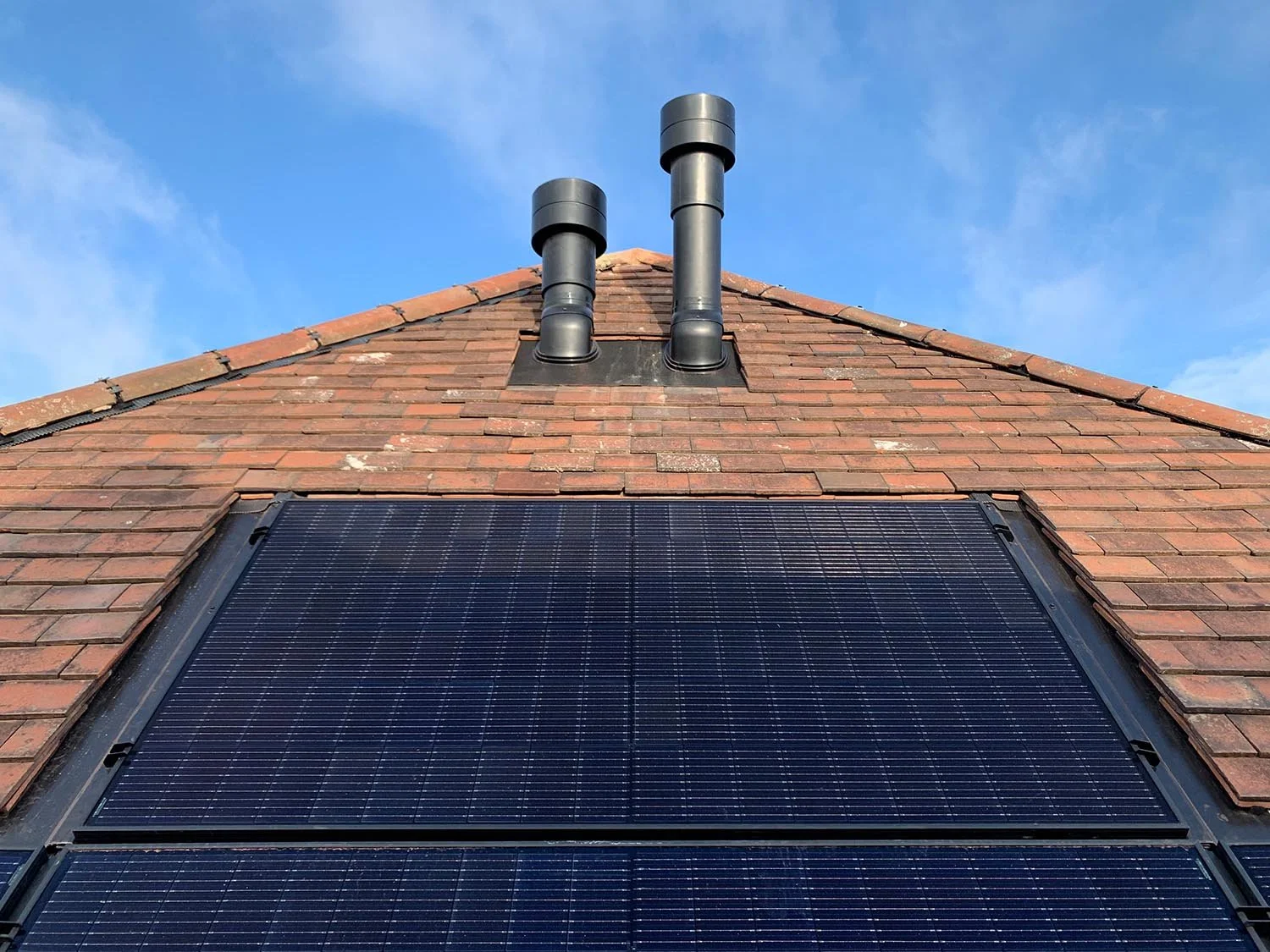
MVHR is mostly hidden inside the home, but it still needs careful coordination with the roof, structure and external fabric. At The Orchard, roof terminals allow the system to bring in fresh air and exhaust stale air as part of a whole-house ventilation strategy.
Case Study: North London Retrofit
Whole-house retrofit with MVHR
This North London home underwent a full whole-house retrofit. The owners wanted a warmer, quieter and more energy-efficient home with a stable indoor climate throughout the year. The work included external wall insulation to the rear elevation, new floor insulation, a carefully detailed loft build-up and a coordinated airtightness strategy.
These improvements transformed the way the house behaved. It retained heat more effectively, draughts disappeared and internal surfaces became noticeably warmer. However, because the original leakage paths were removed, the home no longer had the accidental ventilation it once relied on.
A balanced MVHR system was introduced to manage fresh air and moisture. It now removes humid air at the source and supplies filtered air to the main living and sleeping spaces. The change was immediate.
Windows remained dry in the mornings.
Humidity stayed within a healthy range.
The home felt calmer, quieter and far more consistent in temperature.
This North London retrofit shows how an MVHR system protects both comfort and building health when insulation and airtightness were upgraded together as part of a coordinated design.
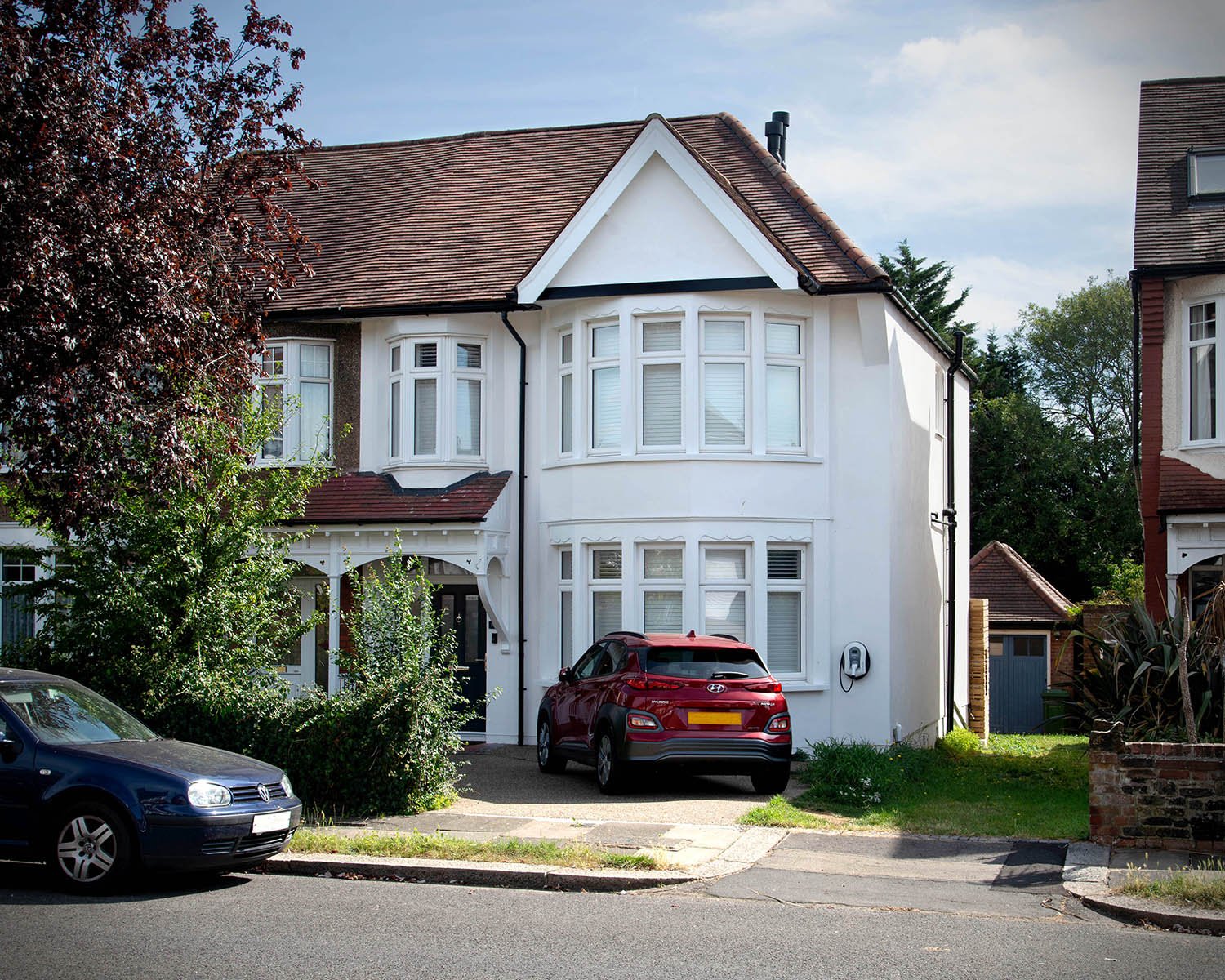
North London retrofit: a semi-detached family home upgraded with external wall insulation, airtightness improvements and balanced MVHR. The aim was not to seal the house shut, but to replace uncontrolled draughts with planned, healthy ventilation.
Common mistakes to avoid
A few common issues can undermine an otherwise good retrofit:
Blocking underfloor ventilation.
Using foam-based insulation on solid brick walls.
Installing insulation without a vapour strategy.
Leaving chimneys unvented after blocking them.
Ignoring airtightness at junctions and socket positions.
Leaving ventilation design until construction begins.
Relying on trickle vents alone in an insulated home.
Avoiding these traps protects the building fabric and supports long-term performance.
These risks are explored further in our article on avoiding damp and mould in London retrofits.
When MVHR becomes necessary
There is no single rule, but MVHR becomes important when:
Two or more major elements are insulated.
Airtightness improves significantly.
Chimneys are removed or blocked.
The home has a loft extension or dormer conversion.
Bedrooms feel stuffy in the morning.
There are concerns about air quality.
The home is near a busy road and windows are kept closed.
Ventilation planning should begin at the design stage, not during the build.
Planning airtightness and ventilation for a period home
A well-considered approach usually involves:
Understanding moisture paths
Assessing wall types and material compatibility
Checking sub-floor ventilation
Modelling how and where condensation could form
Clear targets for reducing unwanted air leakage
An early ventilation strategy
Careful detailing at junctions
On-site supervision during key installation stages
When these elements are aligned, the home becomes warm, stable and easy to maintain.
Summary: Creating a home that feels naturally comfortable
Airtightness and ventilation are rarely optional once significant insulation upgrades are introduced. They shape how your home will feel every day once insulation or extensions are complete.
If you are planning insulation, a loft conversion or a wider upgrade, our Retrofit Strategy Service sets out how airtightness, ventilation and fabric improvements should work together before construction begins. It provides a whole-house plan for comfort, energy reduction and moisture control.
If you would prefer to begin with an on-site review, an Architect’s Home Visit and Appraisal looks at your existing building, budget range and constraints. We assess where air leakage, ventilation gaps or condensation risks may sit so that future upgrades are safe and effective.
If you are unsure which route is right, a free 45-minute Project Consultation helps you decide whether a Home Visit or a full Retrofit Strategy is the appropriate next step.

Airtightness and ventilation are not separate technical extras. They shape how warm, dry and healthy your home will feel after insulation, extension or retrofit work is complete.