
Architectural Interiors for London Homes
Kitchens, bathrooms, joinery, storage, lighting and materials designed as part of the wider home.
You are not just choosing finishes.
You are deciding how your home will work every day: how you move through it, where things are stored, how light falls, how rooms connect and how each space supports daily life.
Kitchens, bathrooms, joinery, lighting and materials carry many of the most important cost, coordination and long-term decisions in a renovation or extension. They are also the areas where late decisions are hardest to fix once construction has started.
Our architectural interiors service helps resolve these elements early, so they are considered with the rest of the home, not left as isolated decisions on site.
What architectural interiors means
Architectural interiors are different from styling or decoration.
We are usually involved where interior decisions affect layout, services, joinery, construction, materials, budget and daily life. The aim is not simply to make rooms look finished. It is to make them work properly, feel calm and support the way you live.
A home can have a good layout and still feel unresolved. The kitchen may not support the way you cook, gather or move between spaces. Storage may sit in the wrong places. Lighting may feel flat or harsh. Materials may feel disconnected from room to room.
This is where architectural interiors can make the home feel more coherent, practical and complete.
What this changes
When interiors are designed and coordinated properly:
storage is where you actually need it
kitchens support cooking, gathering and everyday routines
bathrooms and wet areas are resolved before construction begins
lighting supports how each space is used
materials feel consistent, not pieced together
rooms feel calmer and more organised
transitions between spaces feel considered
contractors and suppliers have clearer information
decisions are made earlier, reducing avoidable changes on site
This is what a well-resolved interior allows. It removes friction from the way the home works day to day.

What we design and coordinate
We focus on the parts of your home where careful coordination matters most:
bespoke joinery and storage
kitchens and utility spaces
bathrooms and wet areas
lighting
materials and finishes
thresholds and room transitions
stair design where it forms part of the interior architecture
built-in furniture where relevant
coordination with structure, plumbing, heating and electrics
These elements are designed together, not in isolation.
That helps avoid gaps between suppliers, reduces late decisions on site and gives the project a clearer route from design to construction.
Kitchens, bathrooms, joinery and storage
Kitchens, bathrooms, stairs and joinery can carry a significant part of the project budget.
They also have to work especially hard. A kitchen may need to support cooking, storage, conversation, informal gathering, entertaining and the movement between rooms and, where relevant, the garden. A bathroom needs to feel calm, but also depends on careful decisions about drainage, ventilation, waterproofing, lighting, storage and maintenance.
A stair may be a standard contractor-led element, or it may become an important architectural feature that needs more careful design.
Joinery can make a room feel effortless, but only when it is designed around the way you actually use the space.
We help resolve these decisions before they become rushed site questions. That means clearer drawings, better coordination and fewer assumptions left for builders, suppliers or installers to interpret later.
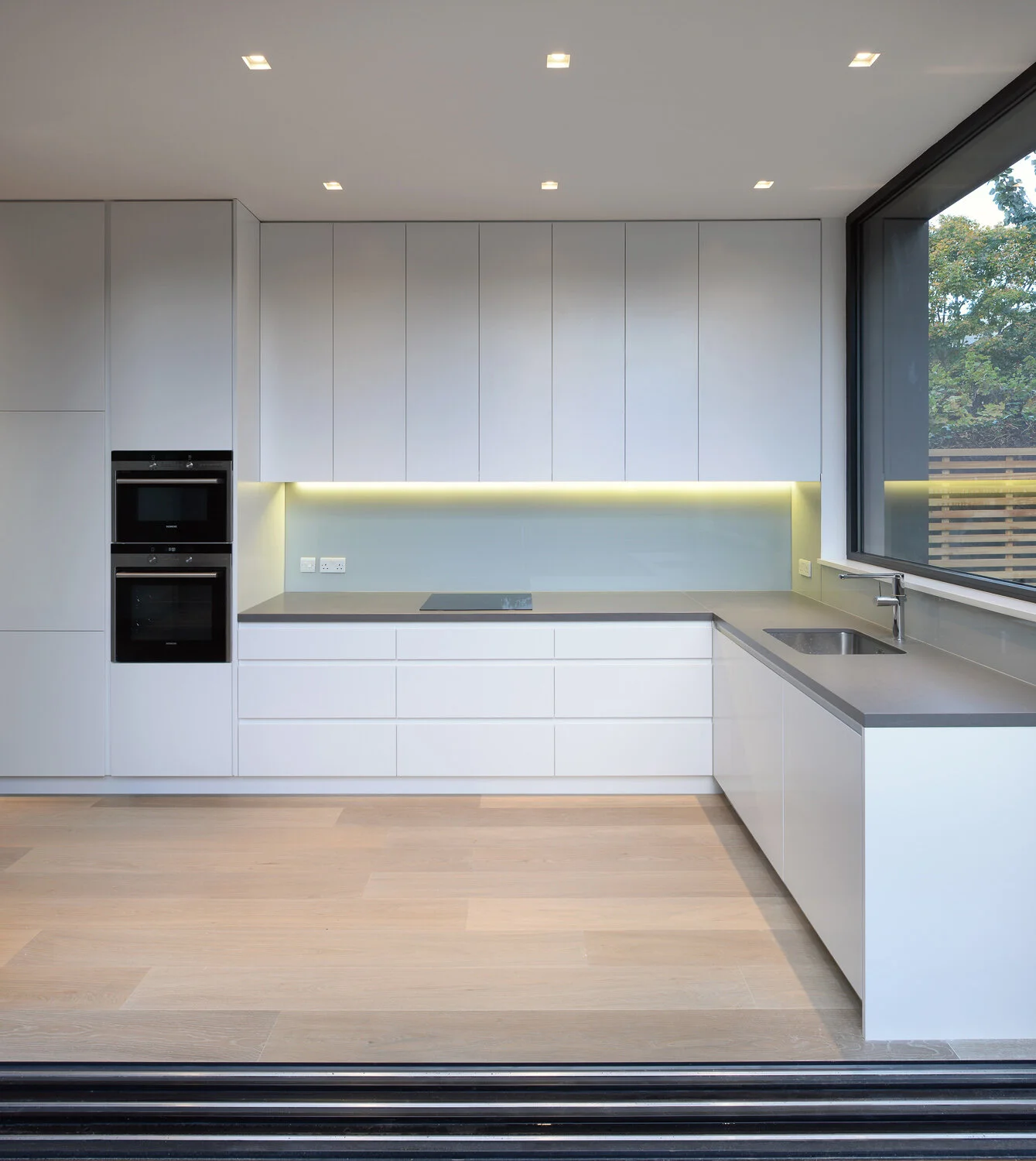
Kitchen design affects more than cabinets and appliances. It changes storage, light, services, circulation and how the room supports daily life.
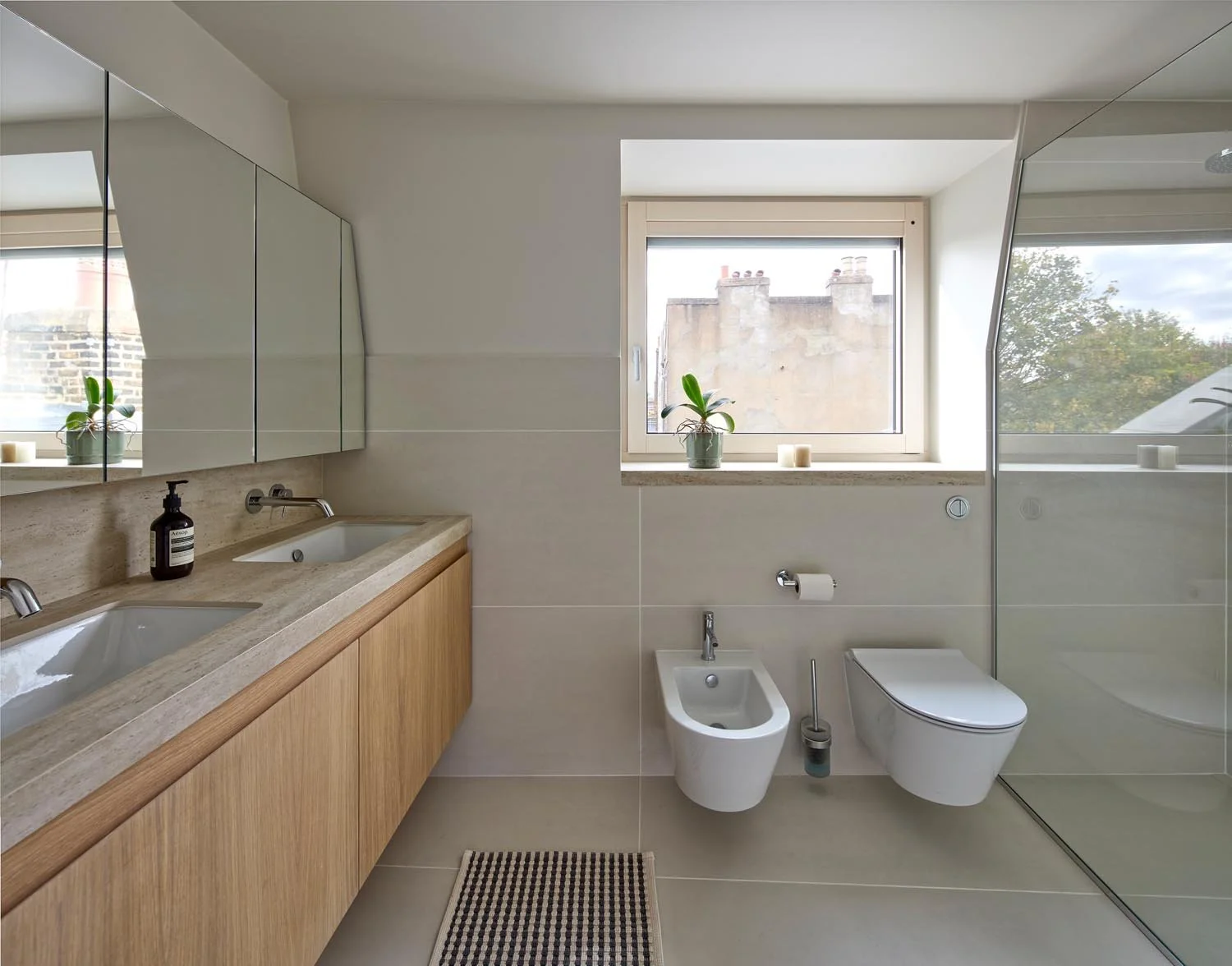
Bathrooms need calm surfaces and careful coordination behind the scenes: drainage, ventilation, waterproofing, lighting, storage and maintenance all need to work together.
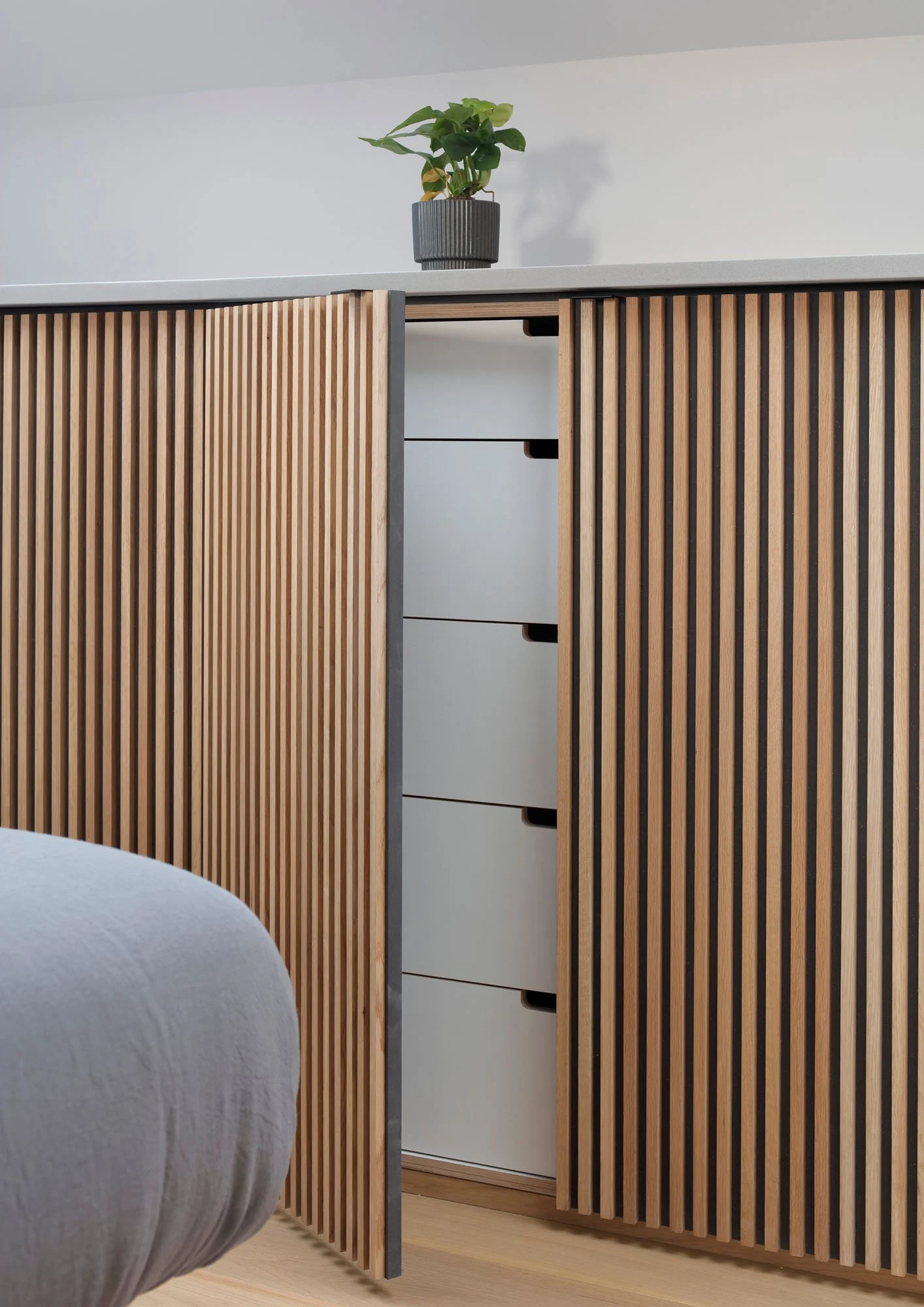
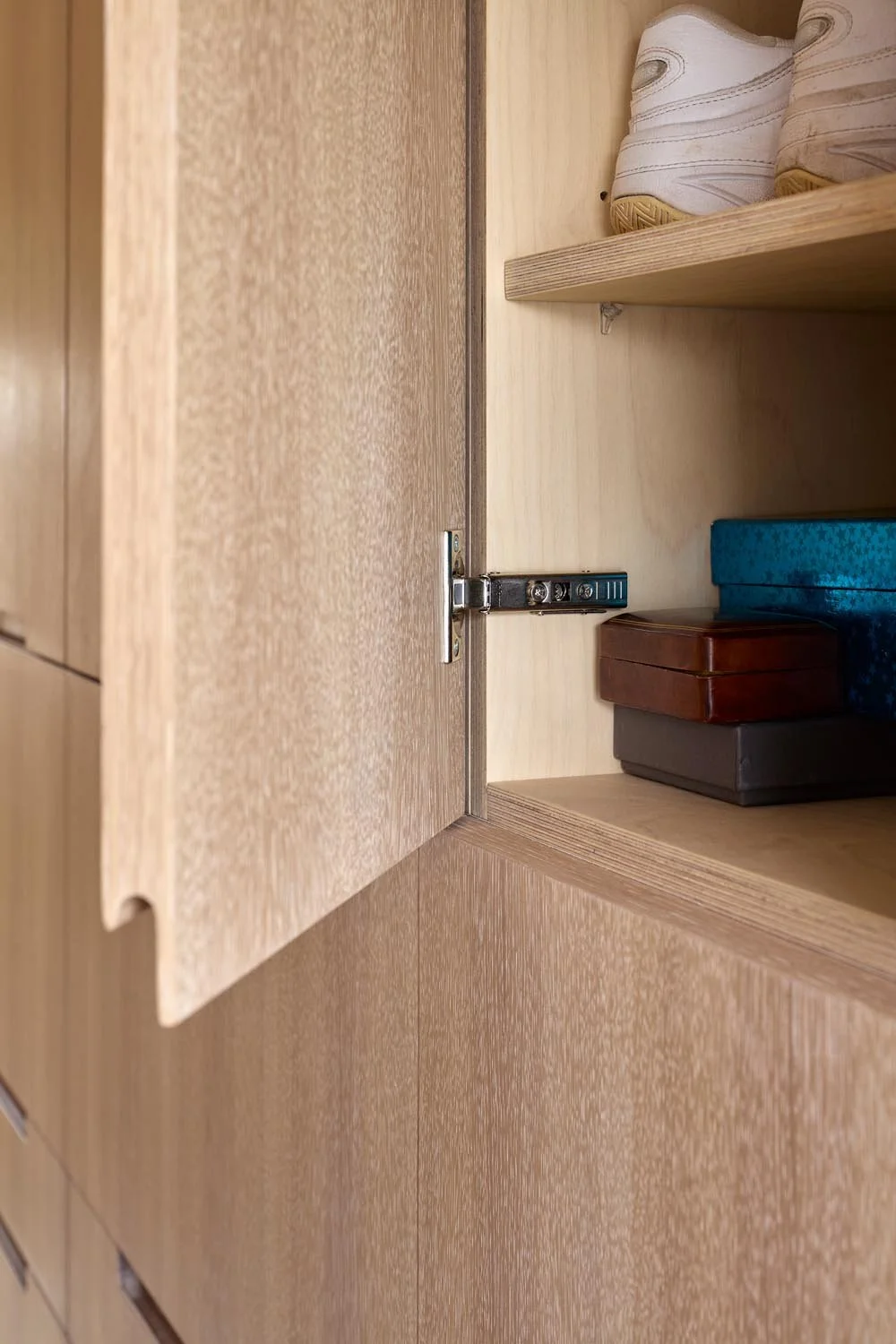
Storage works best when it is designed as part of the room. Bespoke joinery can add useful capacity while keeping the space calm, ordered and easy to live with.
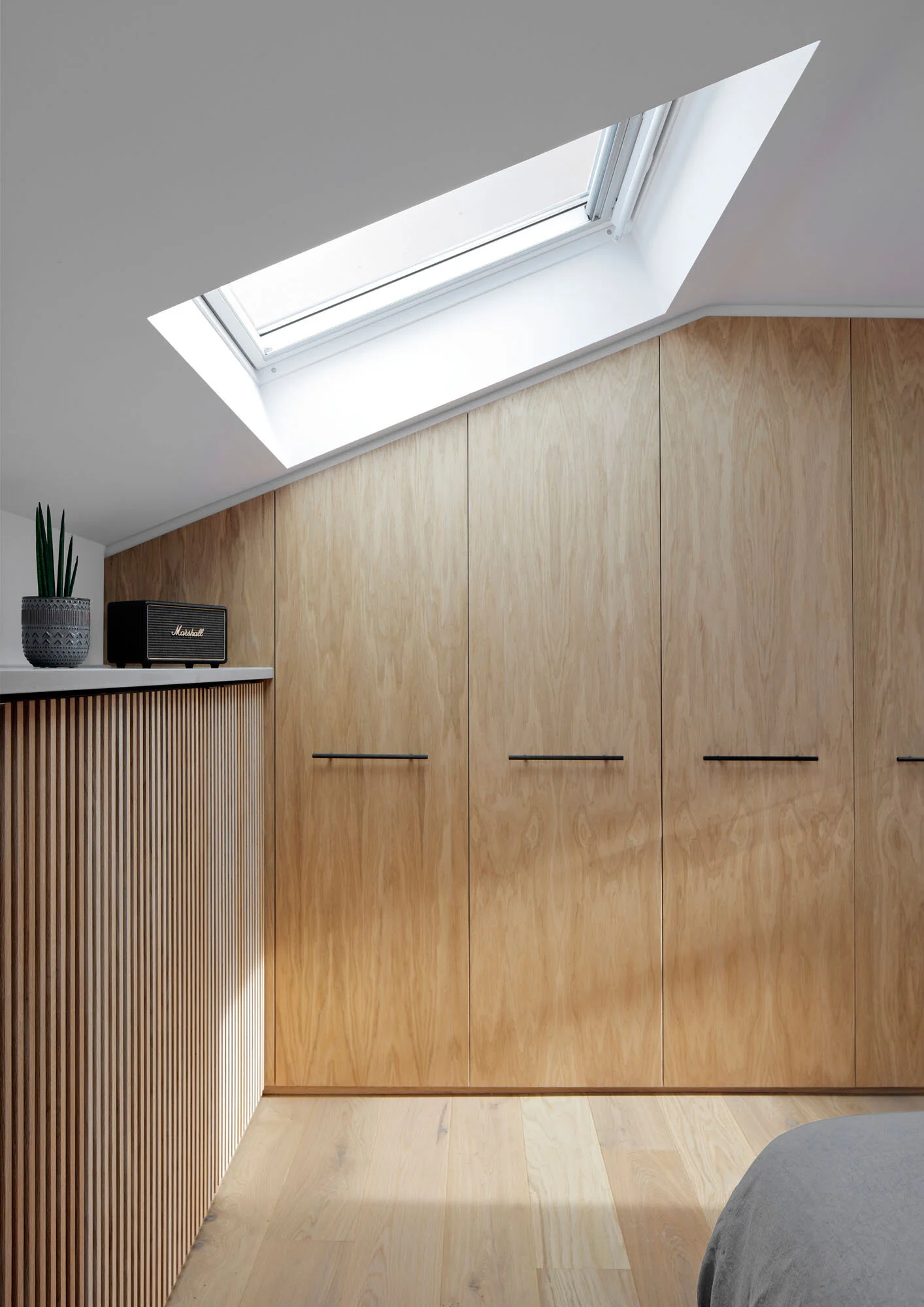
Lighting, materials and atmosphere
Lighting and materials change how a home feels every day.
Good lighting can make a kitchen easier to use, a bathroom feel calmer and a hallway feel more welcoming. Materials can bring warmth, texture and durability into rooms that might otherwise feel hard, flat or disconnected.
We often work with natural materials where they suit the building and the brief. These might include timber, lime-based finishes, natural fibres, stone, clay, low-toxin paints or other materials chosen for their feel, durability, repairability and long-term value.
The aim is not to create a decorative style. It is to make choices that feel good to live with, age well and support the wider architecture of the home.
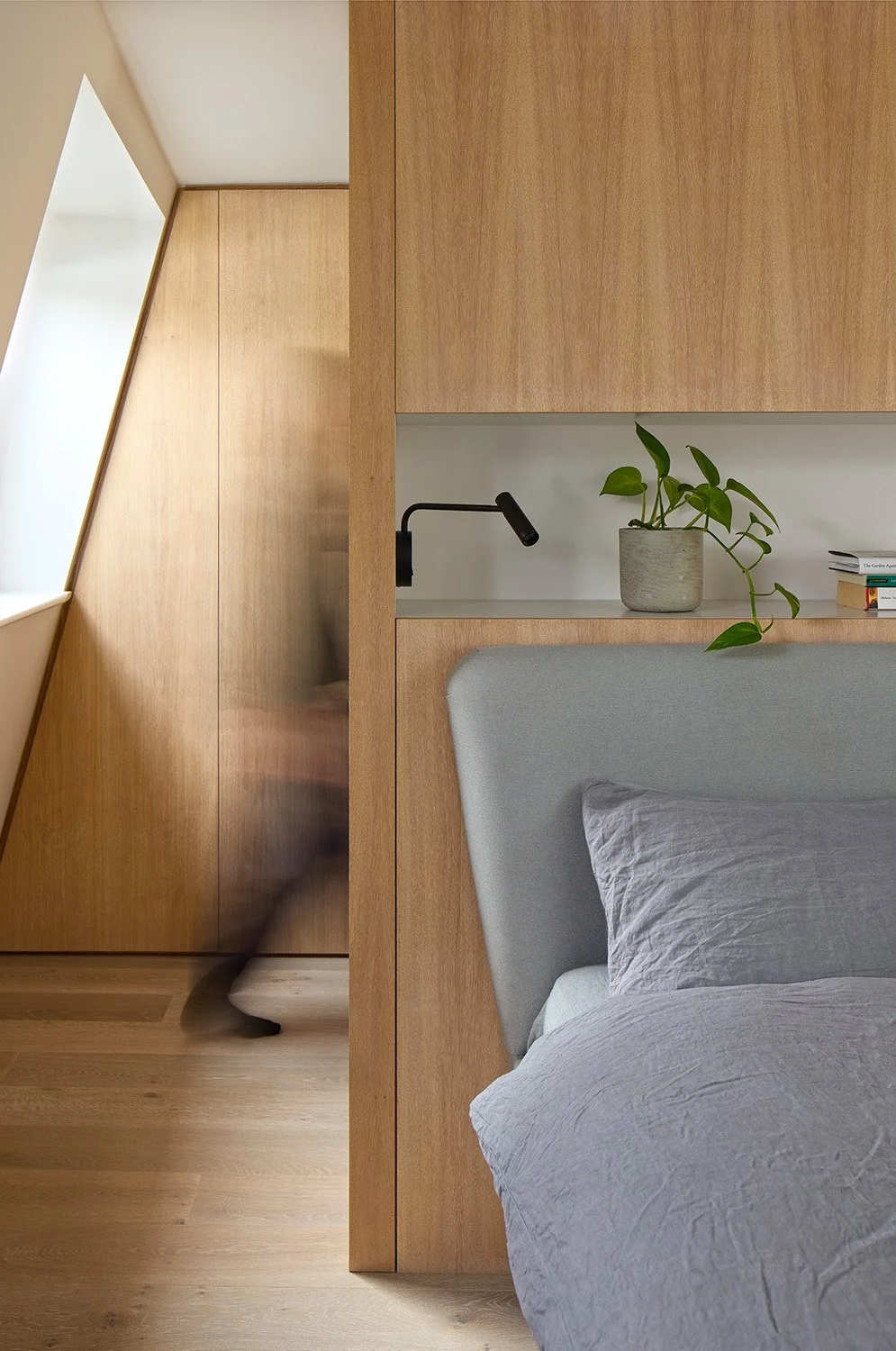
How interiors connect to the whole home
Interior decisions rarely sit in one room.
Changing a kitchen can alter storage, light, services, heating, ventilation and the way nearby rooms work. Adding joinery can change circulation, wall space, lighting and how calm or cluttered a room feels. Choosing finishes affects maintenance, durability, comfort and how old and new parts of the home sit together.
This is why we approach interiors as part of whole-house thinking.
That does not mean every project becomes a whole-house construction project. It means each decision is considered in relation to the home as a whole, so the final result feels coherent rather than pieced together.
How this fits into your project
Architectural Interiors can be a focused route, or it can run alongside a larger architectural project.
The right level of interiors input is not always clear at the outset. It often becomes clearer during concept design and developed design, as the layout, budget, design ambition and procurement route are worked through.
In some projects, the core architectural service may establish the broad position of a kitchen, bathroom, stair or built-in storage, and how these elements relate to the surrounding rooms, structure and services.
As the design develops, some of these elements may need a separate Architectural Interiors scope. This allows kitchens, bathrooms, joinery, lighting, materials or stair details to be coordinated with the architecture, rather than treated as late or disconnected decisions.
We will always make clear what is included in the core architectural service, what sits within the separate interiors scope, and how the two parts of the process work together.
Is this the right level of help?
Architectural Interiors is most useful when the internal parts of the project carry real weight: a kitchen that needs careful coordination, bathrooms or wet areas that need proper planning, a stair that needs more than a standard solution, joinery and storage across several rooms, or lighting and materials that need to feel coherent across the home.
It is usually less appropriate for small cosmetic updates, styling-only work or isolated off-the-shelf decisions.
If you are unsure, we will advise honestly whether this level of input is proportionate to your project.
If you are still deciding
You may not yet know whether your project needs Architectural Interiors, a Full Architectural Service, a Retrofit Strategy or a different route.
In some homes, the right answer is not a larger extension or a major reconfiguration. The most valuable next step may be better storage, a more coherent kitchen, improved lighting, calmer materials or more practical use of the rooms you already have.
This is where an Architect’s Home Visit and Appraisal can help.
We visit your home, discuss your priorities and help you understand the most appropriate route before you commit to a larger design process.
Selected work
Our interiors work is often shown through the detail of completed homes: the kitchen that supports family life, the storage that makes everyday life easier, the bathroom that feels calm and easy to use, the materials that connect old and new spaces, and the joinery that makes awkward rooms feel resolved.
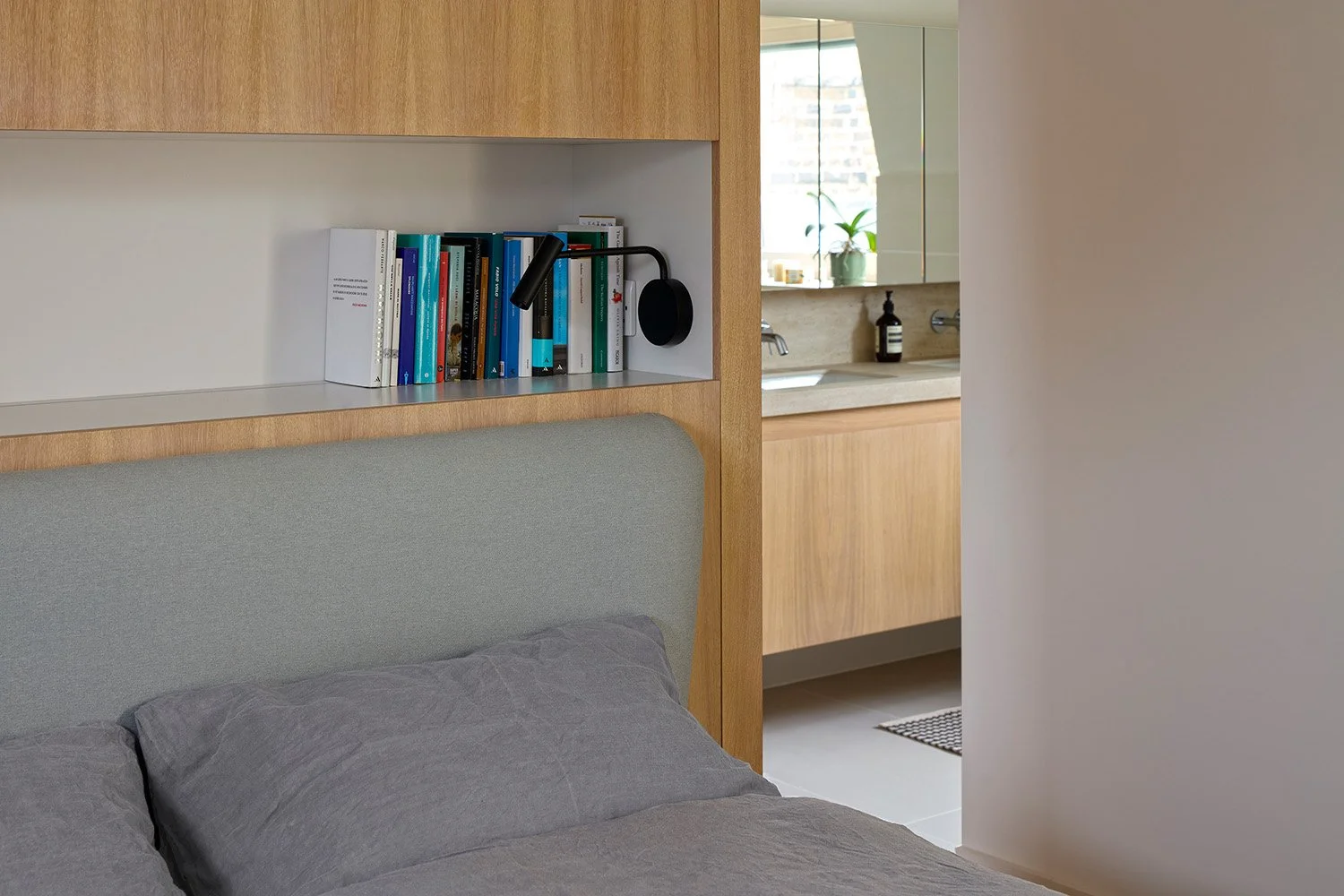
Victorian Loft Conversion and Family Home Retrofit, Hackney
Joinery, bedroom storage, stair design and bathroom coordination within a carefully resolved whole-home renovation.
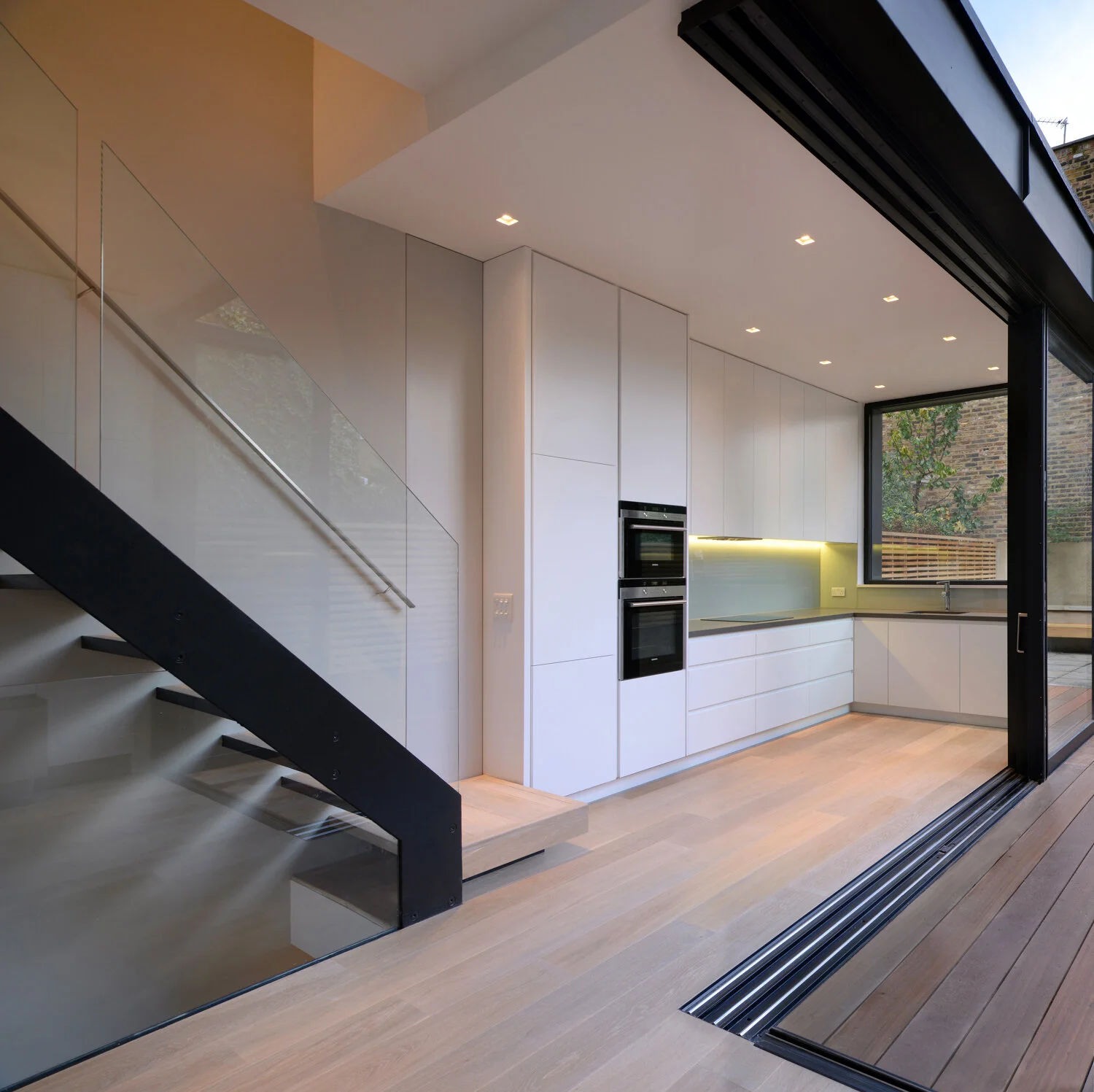
Victorian Rear and Basement Extension, St Paul Street, Islington
Kitchen, bathroom and stair decisions coordinated as part of a wider London home project.
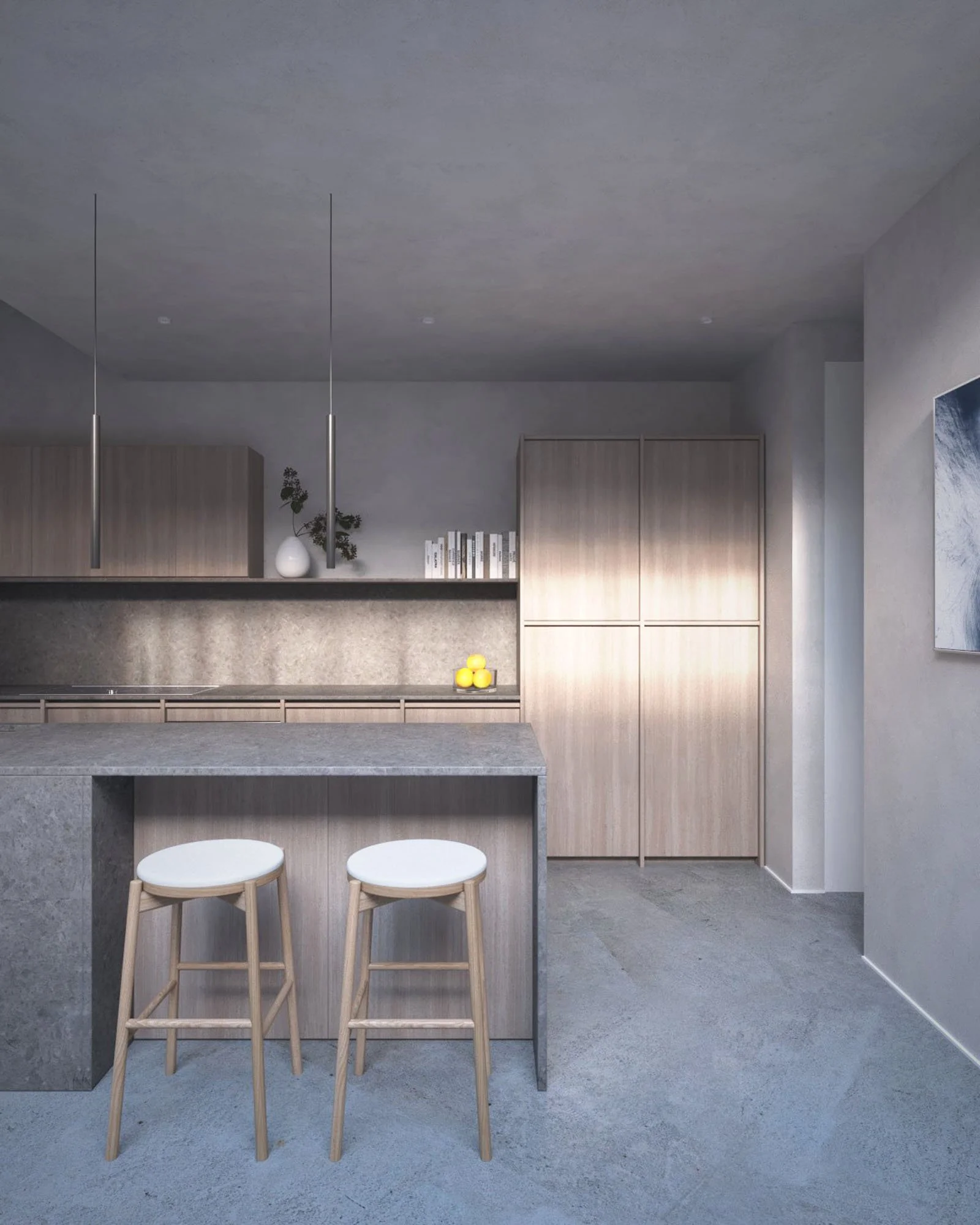
Upper Walthamstow House
Design visualisations exploring kitchen, dining, material atmosphere and the relationship between the home and garden.
Next Step
If you are planning a renovation, extension or interiors-led project, the best time to resolve these decisions is early.
Send us a short project enquiry and tell us about your home, what you are hoping to improve and where you are in the process. We will review the enquiry and advise on the most appropriate next step.
FAQs
-
Architectural interiors are focused on how the inside of the home works as part of the wider architecture. This often includes kitchens, bathrooms, joinery, storage, lighting, materials, services and construction detail.
Interior design can sometimes focus more on furniture, decoration and styling. Our work is usually more closely connected to layout, buildability, daily life and the long-term coherence of the home.
-
Yes. These are often central to our interiors work.
We can help design and coordinate kitchens, bathrooms, utility spaces, built-in storage, bespoke joinery and related materials, lighting and finishes.
-
No. For larger renovations, extensions and whole-home projects, Architectural Interiors is often developed alongside the Full Architectural Service, but it is separately scoped.
This allows interiors to be coordinated with the wider architecture while making clear what is included in each part of the appointment.
-
Not always.
At the beginning of a project, it may be too early to know exactly how much Architectural Interiors input will be needed. The main layout, budget, design ambition, procurement route and level of detail often need to develop first.
Some interior elements may be resolved through the core architectural service at a more general level. For example, this might include the broad position of a kitchen, bathroom, stair or built-in storage, and how these elements relate to the surrounding rooms, structure and services.
As the design develops, some of these elements may need a more detailed Architectural Interiors scope. This could include kitchen elevations, bathroom layouts, joinery, stair design, lighting, material direction, finishes, fittings, schedules, setting out drawings or coordination with suppliers, contractors or specialist makers.
These decisions are usually worked through during concept design and developed design, when the architecture, budget and procurement route become clearer.
Where the interiors scope is not yet known, we can identify it as a separate item to be confirmed. We will explain what is included in the core architectural service, what may become part of a separate Architectural Interiors scope, and when those decisions are best made.
-
Sometimes.
If the layout is already clear but the interiors need careful resolution, a focused Architectural Interiors route may be appropriate. If the scope is very limited or mainly decorative, we will say so.
-
If you already know your project needs architectural interiors input, you can send a project enquiry.
If you are unsure whether you need interiors, retrofit, a larger renovation or a different route, an Architect’s Home Visit and Appraisal may be the better first step.