Victorian Rear and Basement Extension, St Paul Street, Islington
A House Rebuilt from the Inside Out
This project involved a rear and basement extension with full internal reorganisation of a Victorian terrace in the Arlington Square conservation area of Islington. Completed before formal retrofit standards were widely adopted, the work took a whole-house approach, combining spatial reworking with early fabric and services upgrades. It forms part of Studio CMA’s wider experience delivering projects in Islington conservation areas.
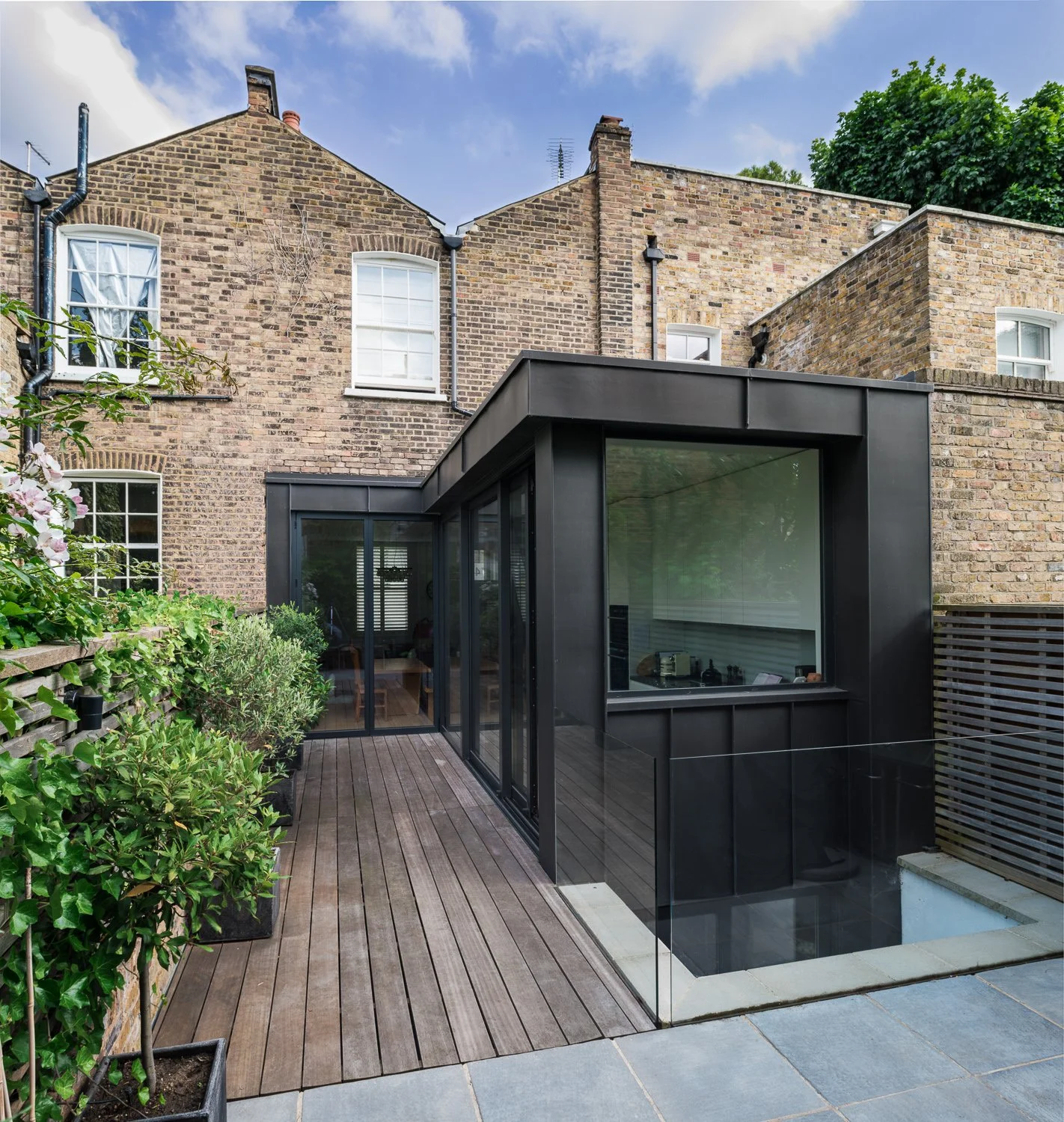
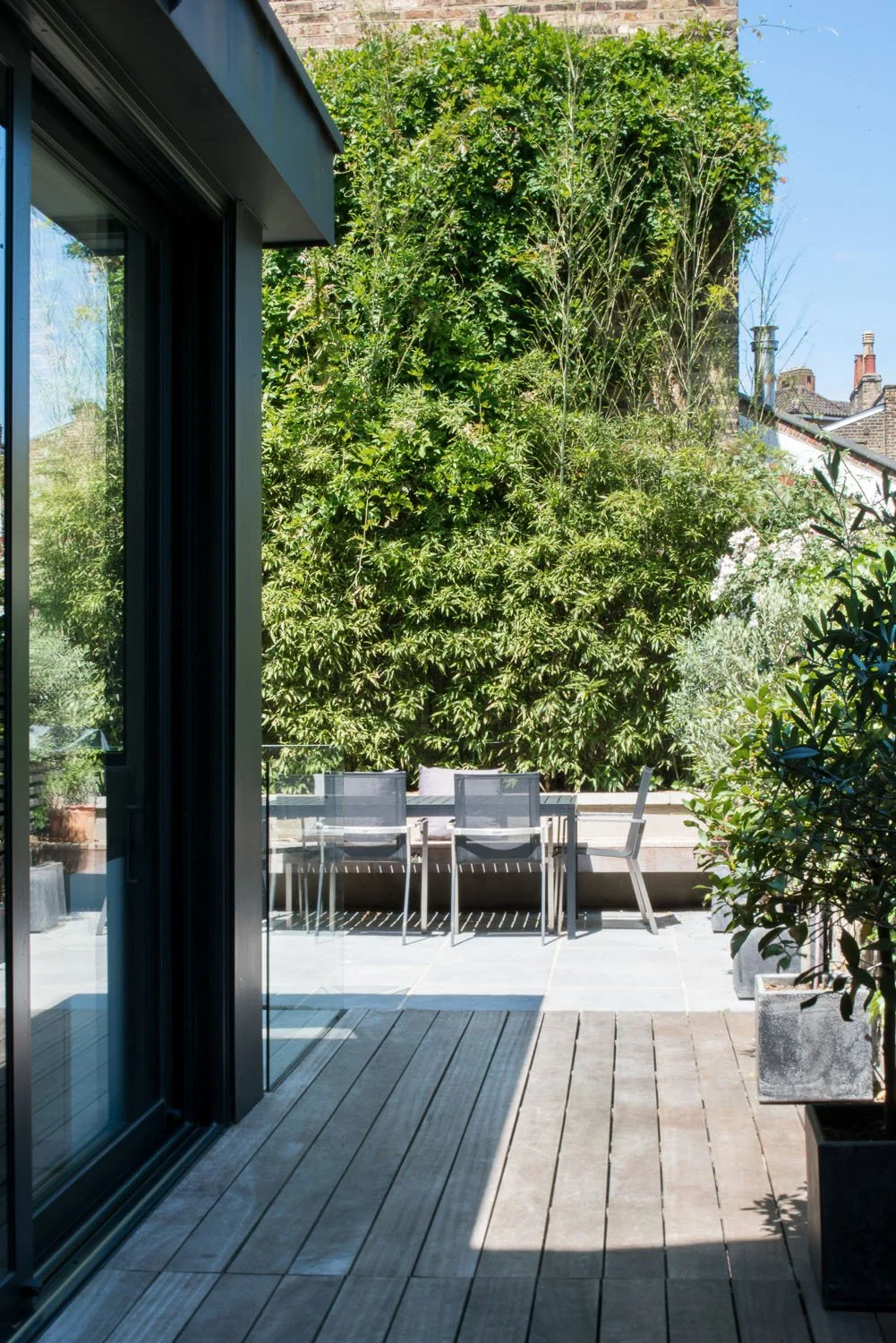
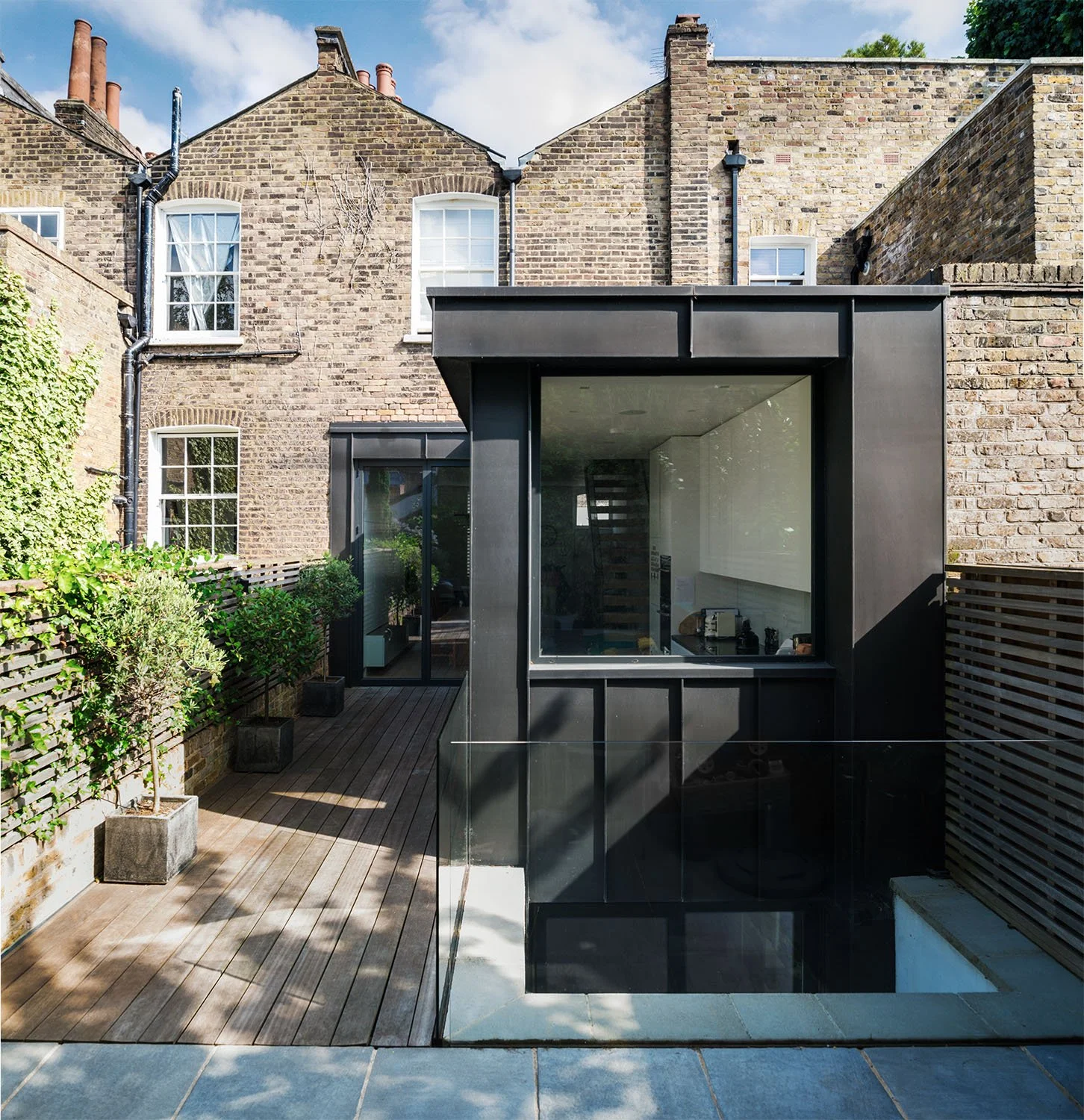
Rear and basement extension to a Victorian terrace in Islington, designed to sit quietly within a conservation area.

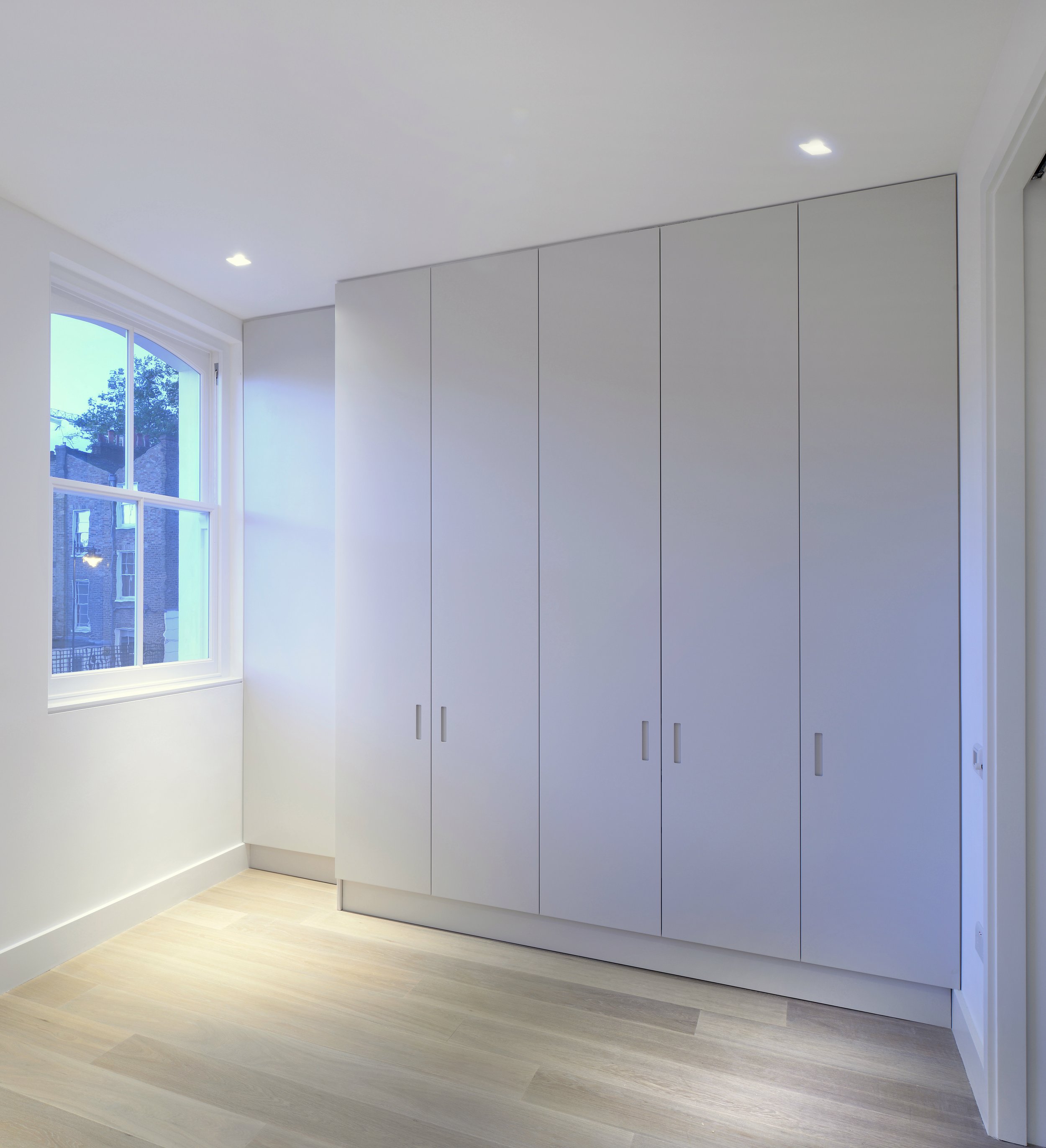
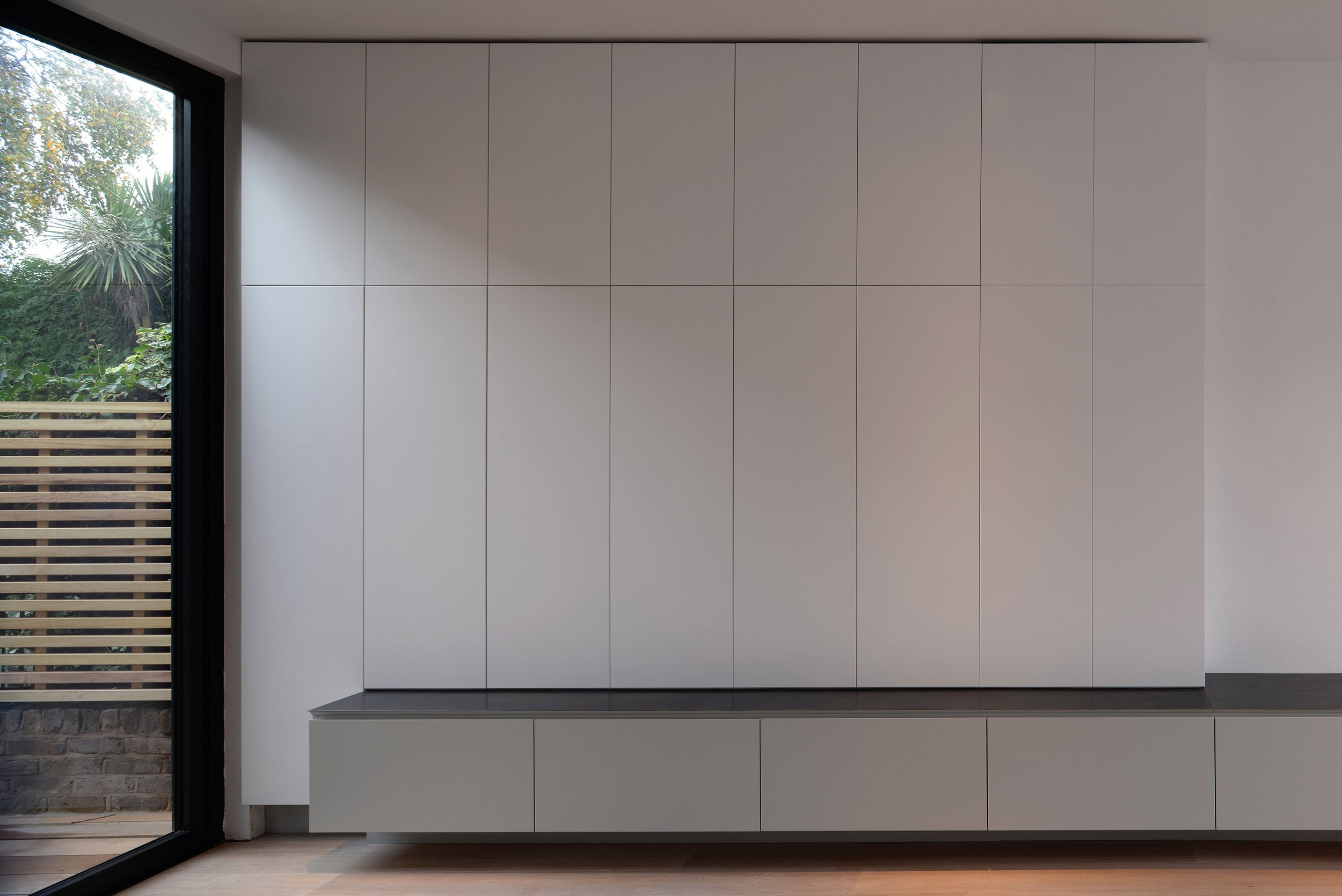
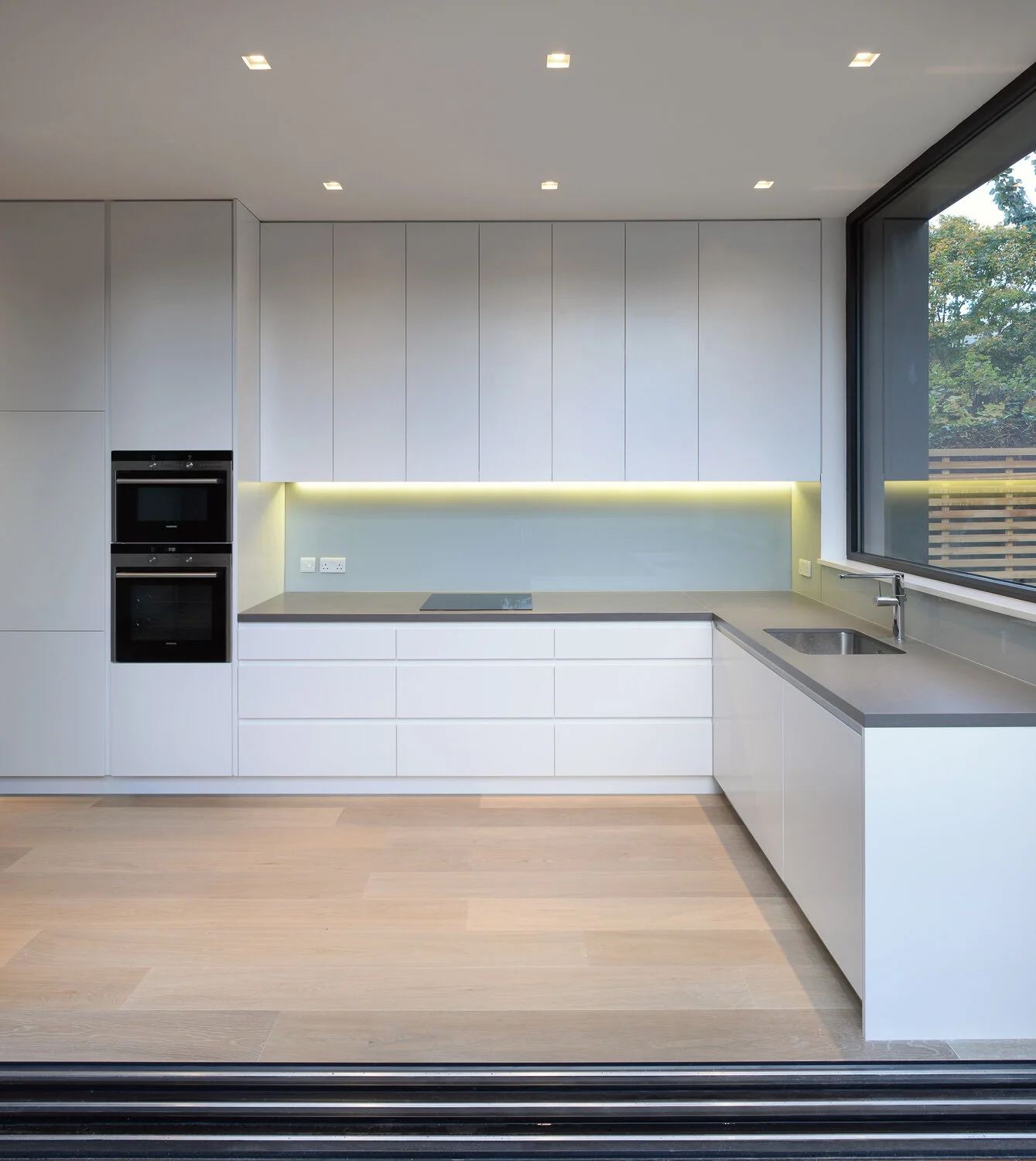
Integrated storage and joinery formed as part of the basement extension and whole-house reorganisation.
Starting Point
The existing house was poorly adapted for modern living. Rooms were stacked without clear relationships, circulation was fragmented, and the connection to the garden was weak, with the rear outdoor space sitting half a storey below the main living areas. The original dog-leg stair further disrupted movement through the house, while services and building fabric had seen little meaningful improvement.
Although the brief was ambitious, the budget was finite. It was clear early on that piecemeal alterations or a single extension would not resolve the underlying issues of levels, circulation and everyday usability.
Exploring Options and Finding the Right Move
Early design studies tested more radical ideas, including double-height spaces and alternative ways of connecting the lower ground floor to the garden through sunken external spaces. While these options had visual appeal, they reduced usable floor area and introduced complexity that did not support long-term use.
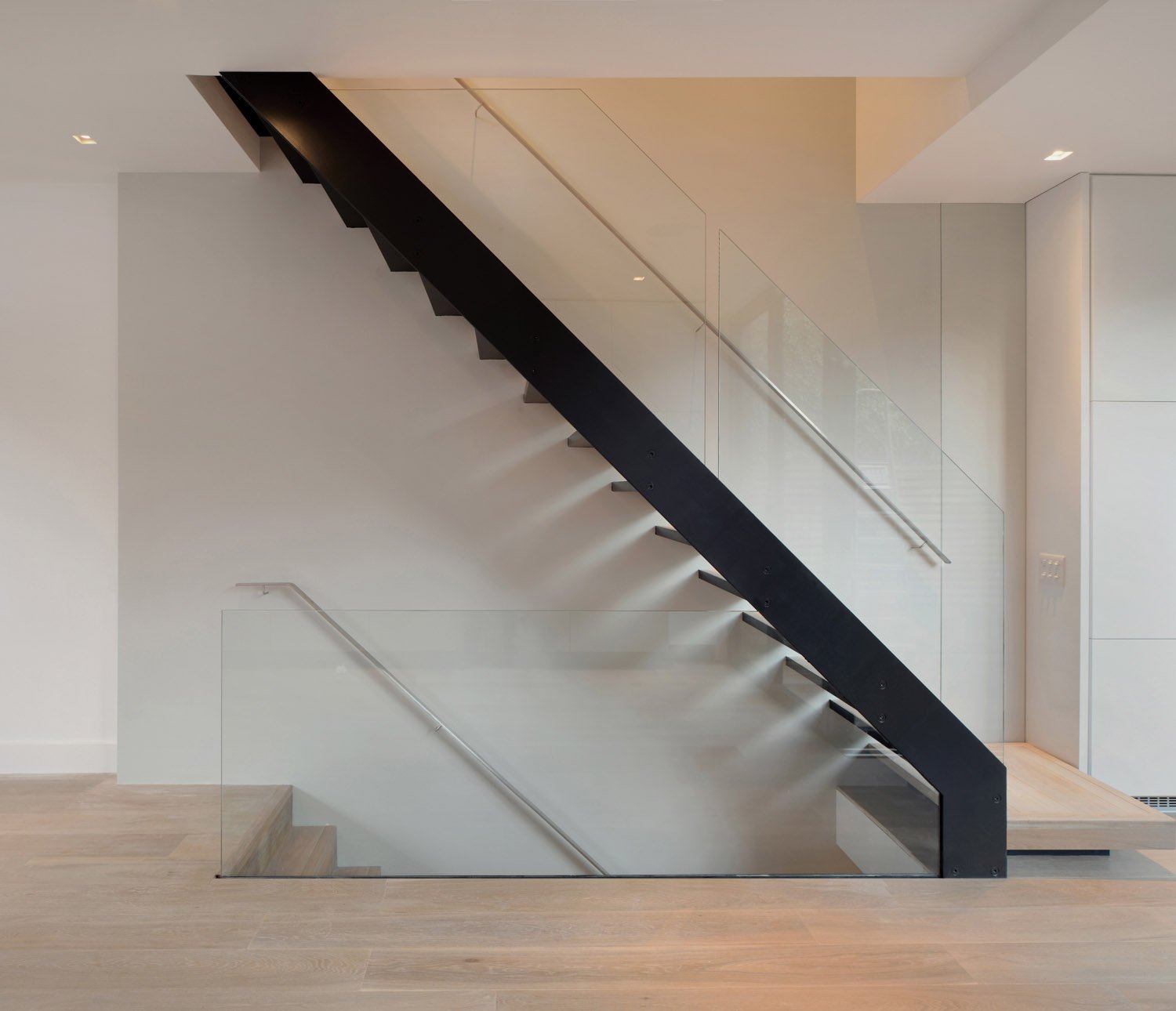
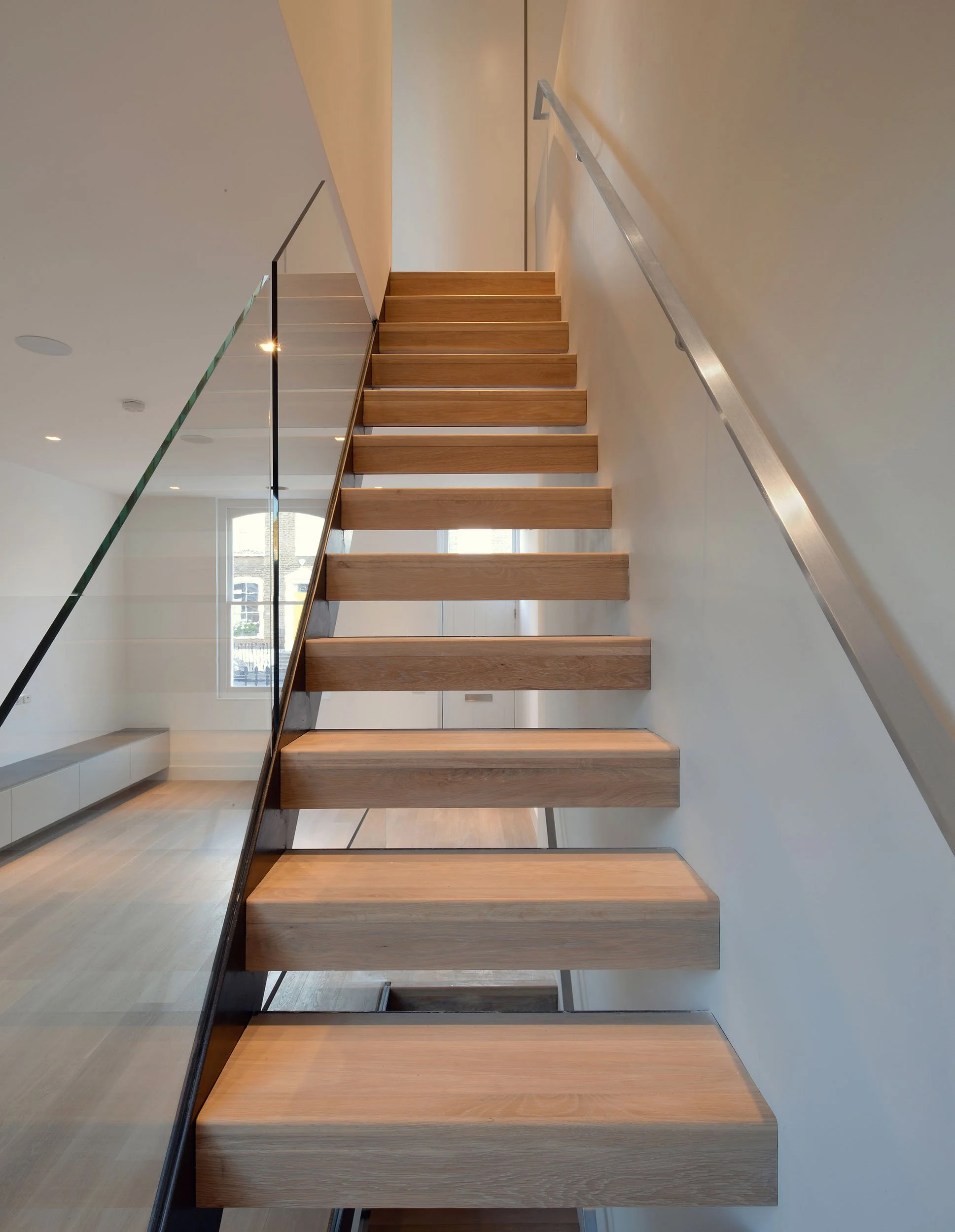
The direction of the project shifted when a different stair type was explored. Replacing the original dog-leg stair with a straight-run stair allowed the house to retain openness while unlocking space across all levels. This became the organising move of the project, aligning circulation vertically, improving daylight through the depth of the house, and clarifying how each floor works day to day.
Basement and Whole-House Reorganisation
The basement was excavated and insulated, bringing it into everyday use rather than treating it as secondary storage. This provided additional bedroom, bathroom and utility spaces, while the new stair ensured the lower level was properly connected to the rest of the house.
Rather than seeing the basement as an isolated gain in floor area, its layout, circulation and head heights were resolved alongside the rest of the house. This coordination was essential in making the lower ground floor feel like a natural part of daily life.
Early Retrofit Measures
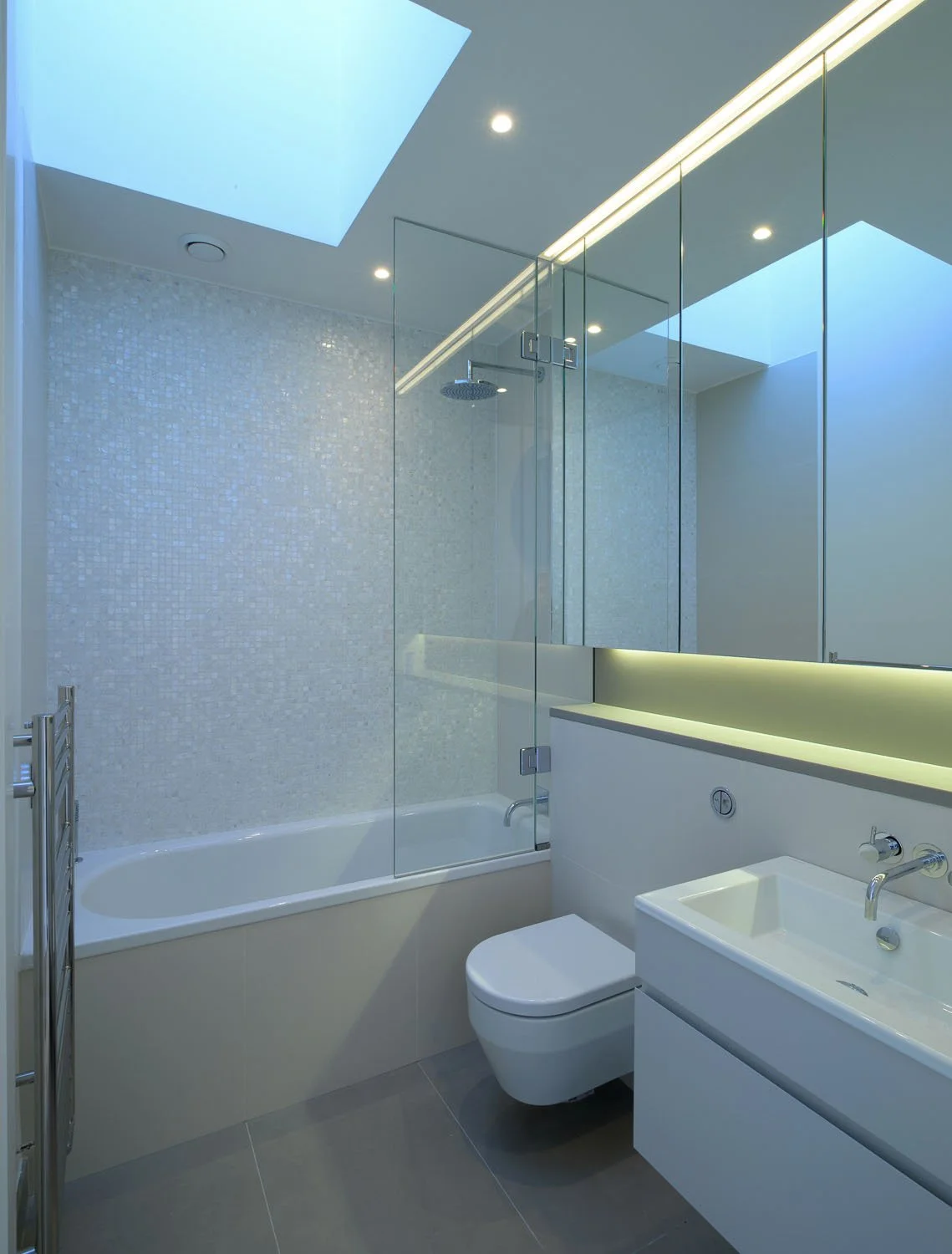
Alongside the spatial reorganisation, a number of early retrofit measures were incorporated. Internal wall insulation, floor insulation and loft insulation were introduced to improve comfort and reduce heat loss. A whole-house ventilation system was included to maintain good indoor air quality once the building fabric was upgraded, with air extracted from centrally located bathrooms and discharged through the roof to avoid cluttering the front or rear elevations.
Window upgrades formed part of the wider fabric improvements. Existing sash windows were replaced with double-glazed units set within the original solid brick walls. At the rear extension, high-performance glazing supported larger openings, while on the principal elevation conservation requirements were met by using traditional crown glass to the outer pane. This preserved the character of the façade while making the house warmer and more comfortable to live in.
Although not conceived as a deep retrofit by today’s standards, the project reflects an early understanding of the value of treating a period house as an interconnected system. This way of thinking later informed Studio CMA’s more developed work, including our current approach to whole-house retrofit strategies for period homes.
Planning, Budget and Delivery
An initial planning submission tested a full-width rear extension, seeking to maximise space within a constrained budget. Objections relating to rights of light led to a reassessment of scale and massing. The final scheme reduced the extension length, introduced a stepped profile at the boundary and aligned more closely with the established pattern of closet wings along the terrace. This achieved consent while remaining subordinate to the original house and its conservation setting.
The extensive scope relative to the available budget required careful prioritisation. Detailed drawings and coordinated schedules were developed to provide certainty during construction and avoid costly ambiguity on site. Certain elements were omitted prior to construction to protect the overall scheme, including a proposed walk-on rooflight. While additional daylight would have been beneficial, these decisions ensured that the core moves of the project could be delivered successfully within budget.
Outcome
The completed house is calmer, clearer and significantly easier to live in. Circulation now works across all levels, daylight reaches deep into the plan, and the relationship between inside and outside is resolved without compromise.
Shaped by real planning and budget constraints, the project demonstrates how thoughtful reorganisation, extension and early retrofit measures can work together to deliver lasting improvement rather than surface-level change.
Helpful Next Steps
If you are still shaping your brief, we have written a guide on how to brief a London architect to help you prepare for early conversations and understand what to prioritise.


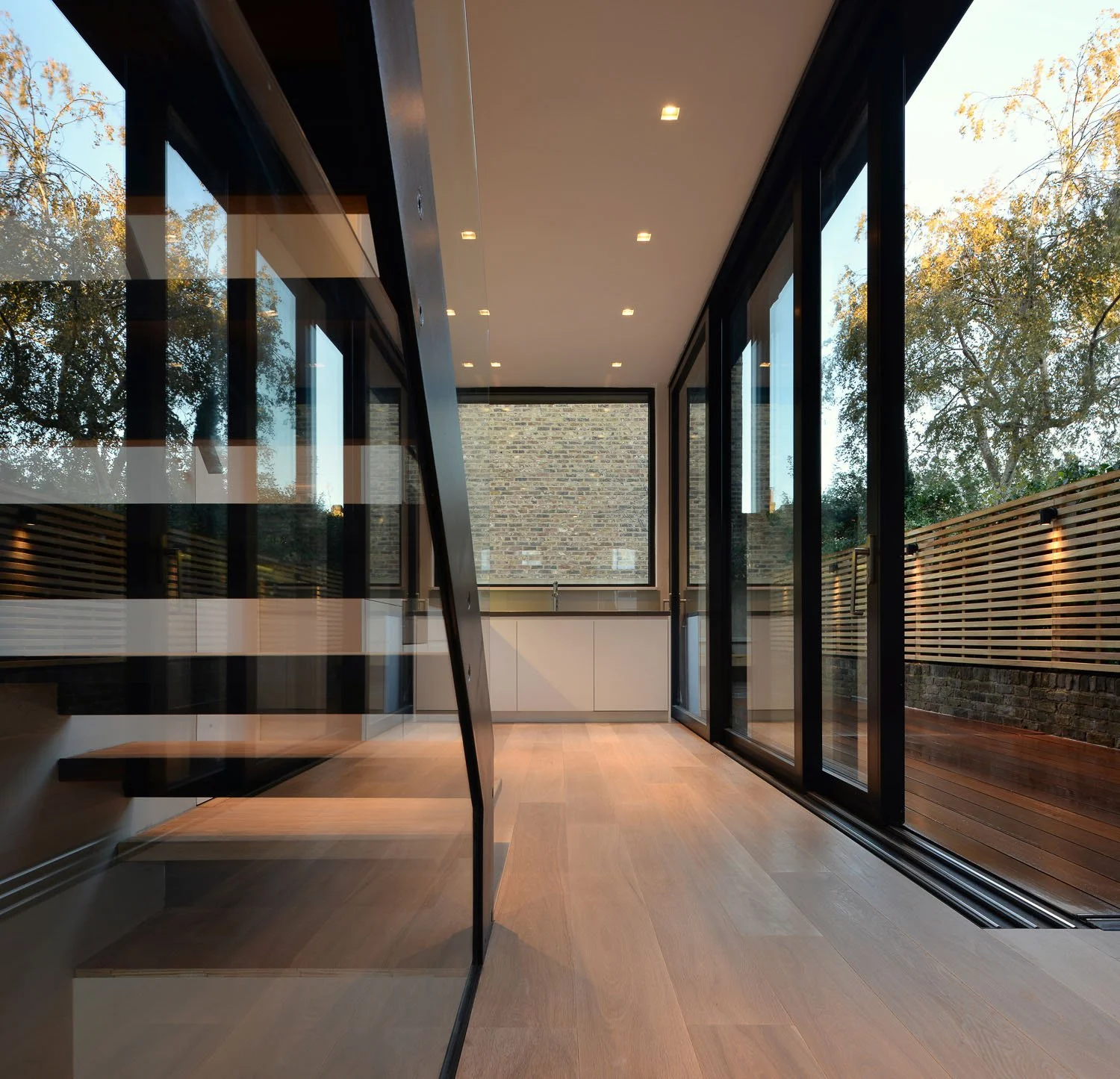
New straight-run stair replacing the original dog-leg stair, reorganising circulation through a Victorian terrace.
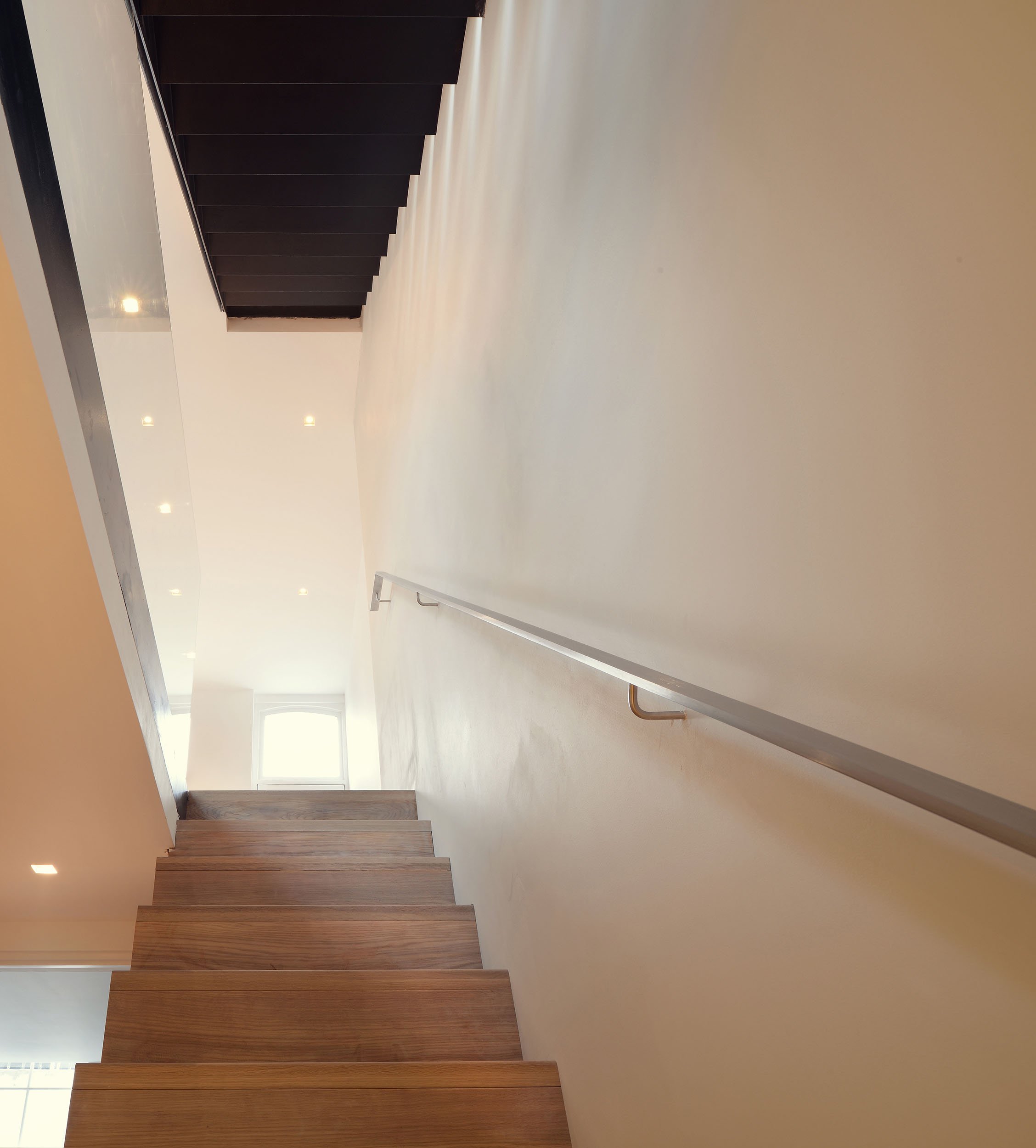
New straight-run stair replacing the original dog-leg stair, reorganising circulation through a Victorian terrace.

Integrated storage and joinery formed as part of the basement extension and whole-house reorganisation.
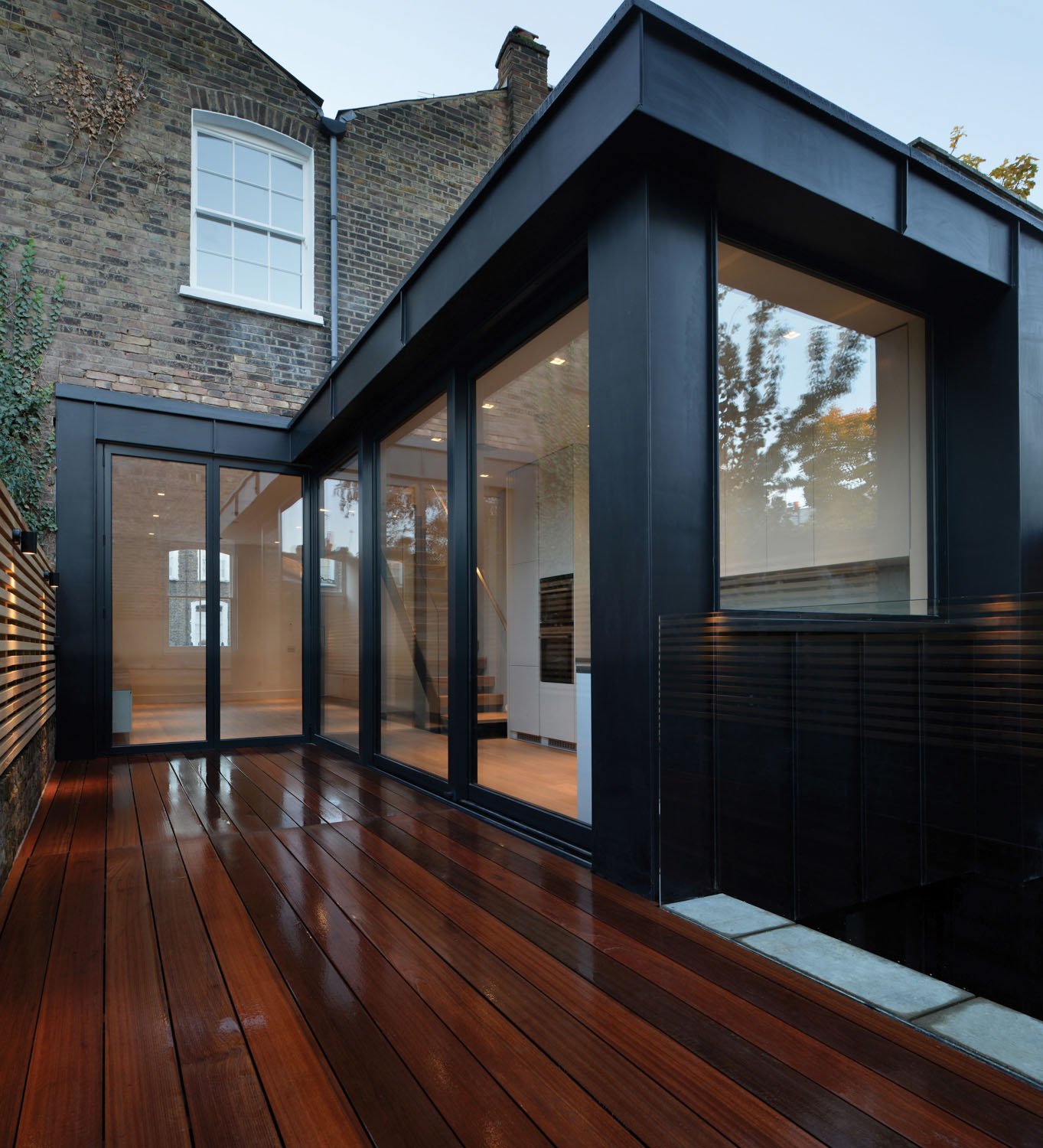
Rear and basement extension to a Victorian terrace in Islington, designed to sit quietly within a conservation area.

New straight-run stair replacing the original dog-leg stair, reorganising circulation through a Victorian terrace.
New straight-run stair replacing the original dog-leg stair, reorganising circulation through a Victorian terrace.

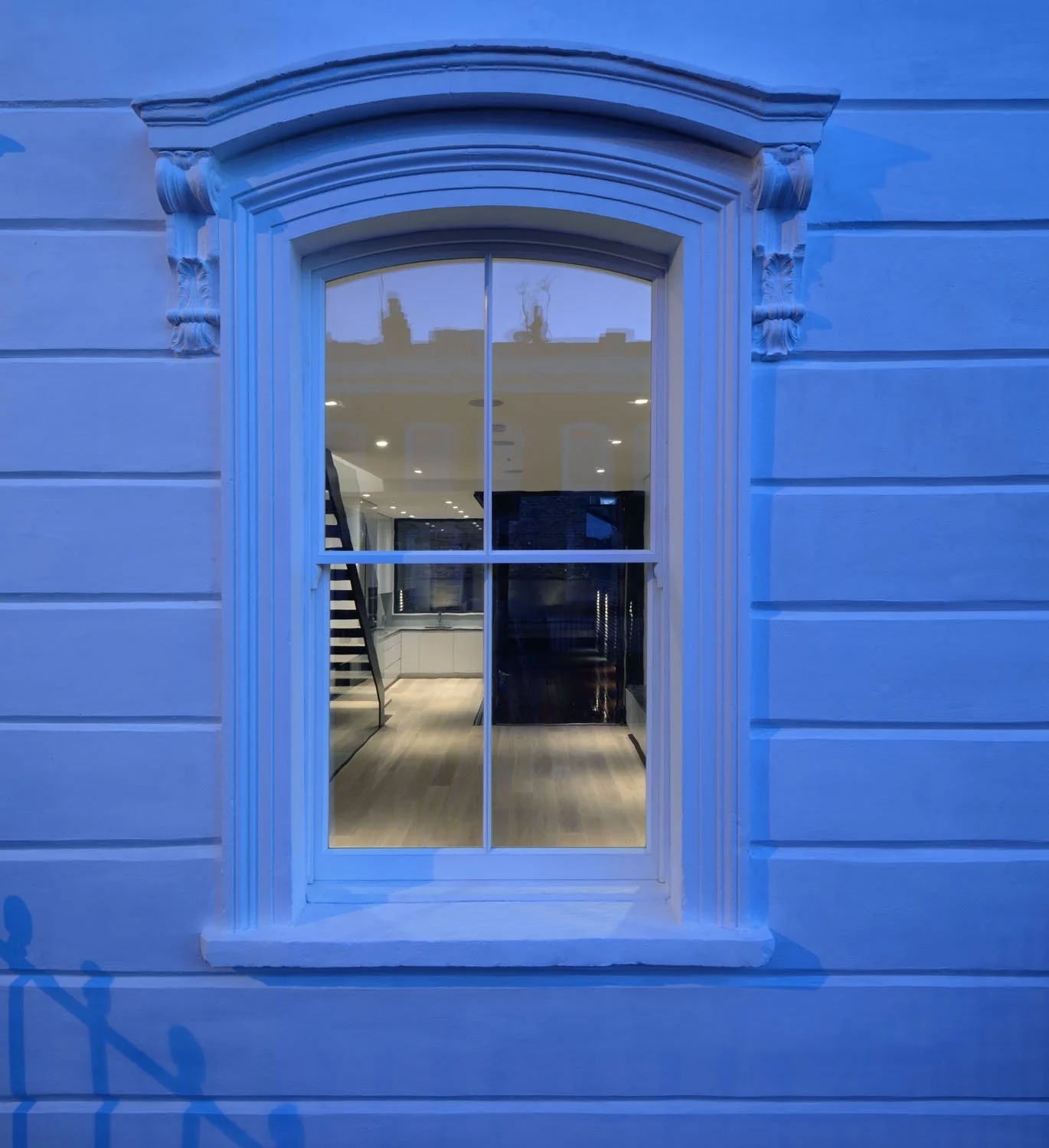
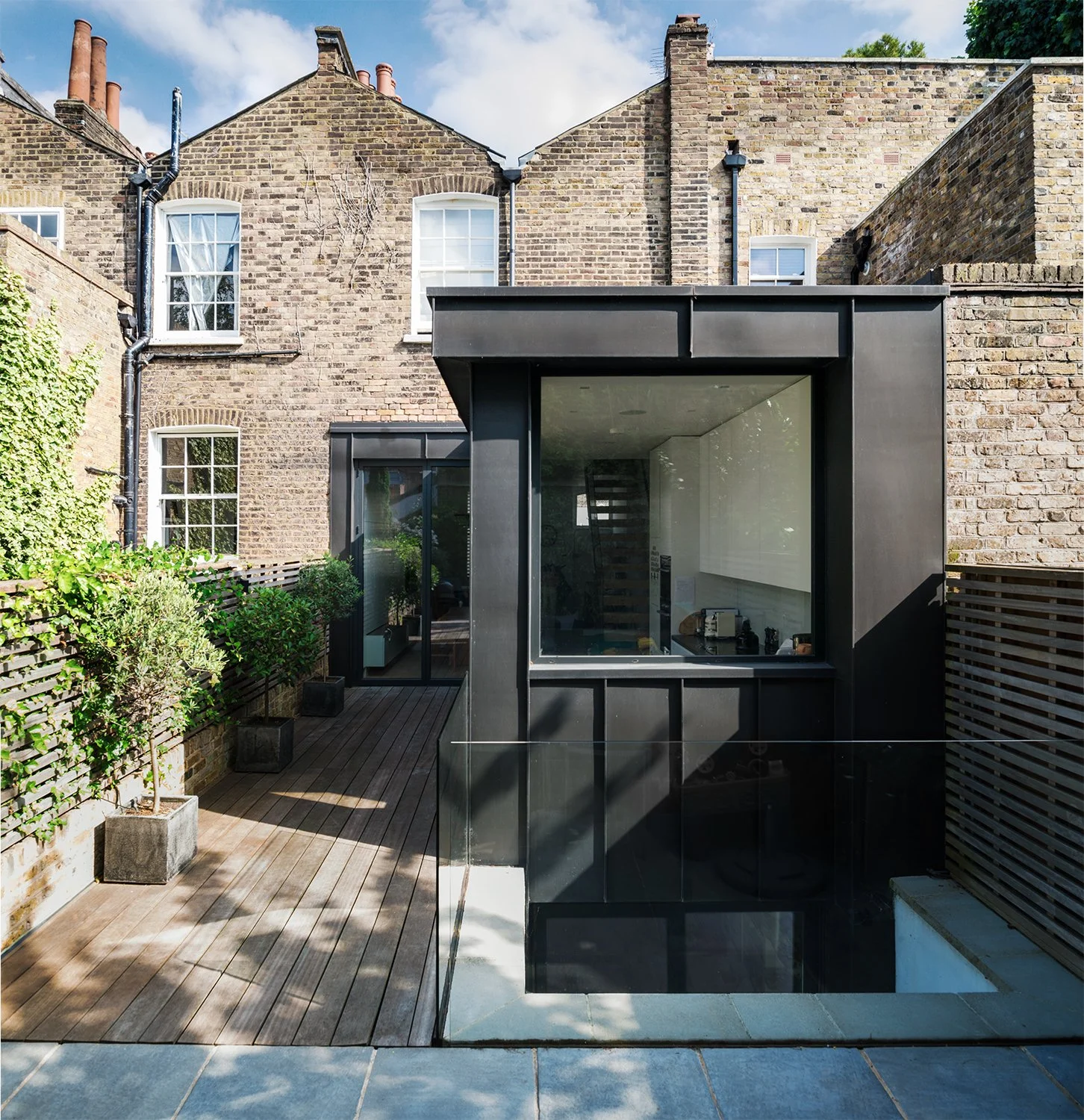
Rear and basement extension to a Victorian terrace in Islington, designed to sit quietly within a conservation area.

Rear extension to a Victorian terrace in Islington, with a new straight-run stair organising the house and connecting the kitchen to the garden.
Integrated storage and joinery formed as part of the basement extension and whole-house reorganisation.