Kent House
A compact, low-energy family home immersed in a mature Kent garden.
A family returning to Kent wanted a calmer, more comfortable home where their daughter could grow up close to nature. Kent House is a Stage 2 concept design for a low-energy replacement dwelling that carries the memory and materials of a tiny cottage into a home shaped around its garden.
Location: Rolvenden Layne, Kent
Project type: Low-energy replacement dwelling
Design stage: Concept design (RIBA Stage 2)
Planning route: Submitted for pre-application advice
Existing cottage: The Little House, approximately 54 square metres
Proposed home: Approximately 128 square metres, with three bedrooms and a small study
Setting: Rolvenden Layne Conservation Area and High Weald National Landscape
Design and visualisation: Studio CMA



Returning to Kent
For the father, moving to Kent was also a return. He had spent childhood summers in this part of the county. Years later, he and his partner wanted to leave London and make a calmer home for themselves and their young daughter.
They wanted better access to schools and the chance to exchange the pace of the city for village life, mature trees and a garden their daughter could grow up with.
The cottage they found was known as The Little House. At just 54 square metres, it was full of character, but its charm concealed serious problems. There was structural movement, timber decay, rising damp and asbestos. The ground-floor ceiling was only 1.9 metres high, and the staircase was exceptionally steep.
Their first hope was to rescue and extend it. We tested several ways of retaining the cottage while accommodating comfortable family rooms, three bedrooms and a place to work from home.
Each option carried the building’s fundamental limitations forward. The question was no longer simply how much could be fitted into the cottage, but whether the investment would produce a home that felt comfortable, coherent and properly suited to family life.
A clearer way forward: Testing the retention options clarified what the family and the site needed.
A replacement home offered a coherent way to bring the brief, the narrow plot and the low-energy ambitions together. Its form, orientation, construction and relationship with the garden could all be considered as parts of one design.
The proposal was developed through concept design to RIBA Stage 2 and submitted to the local authority for pre-application advice. It explored how a modest rural home could provide substantially better space and comfort while remaining closely connected to the character of its setting.
Carrying the cottage forward.
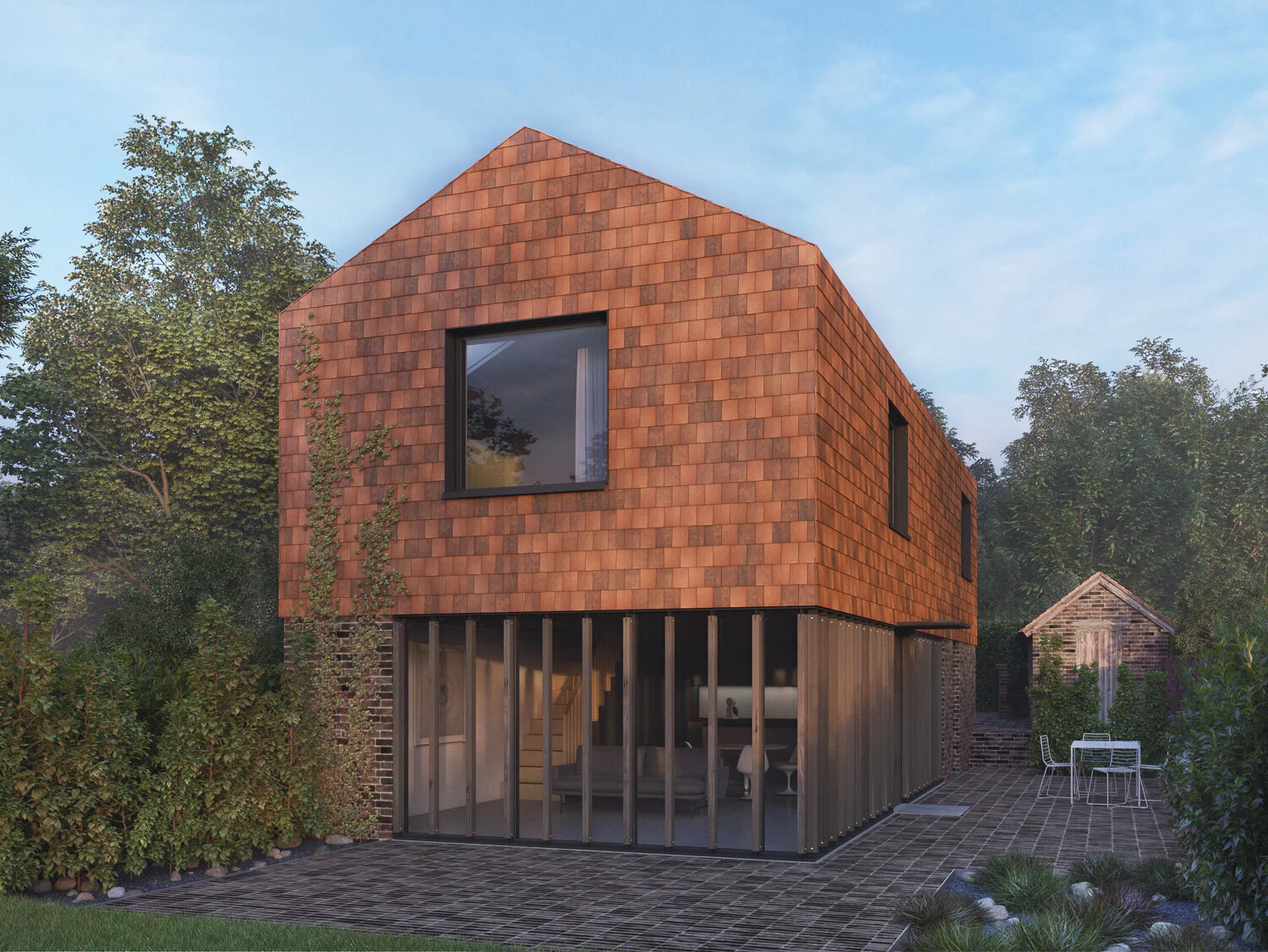
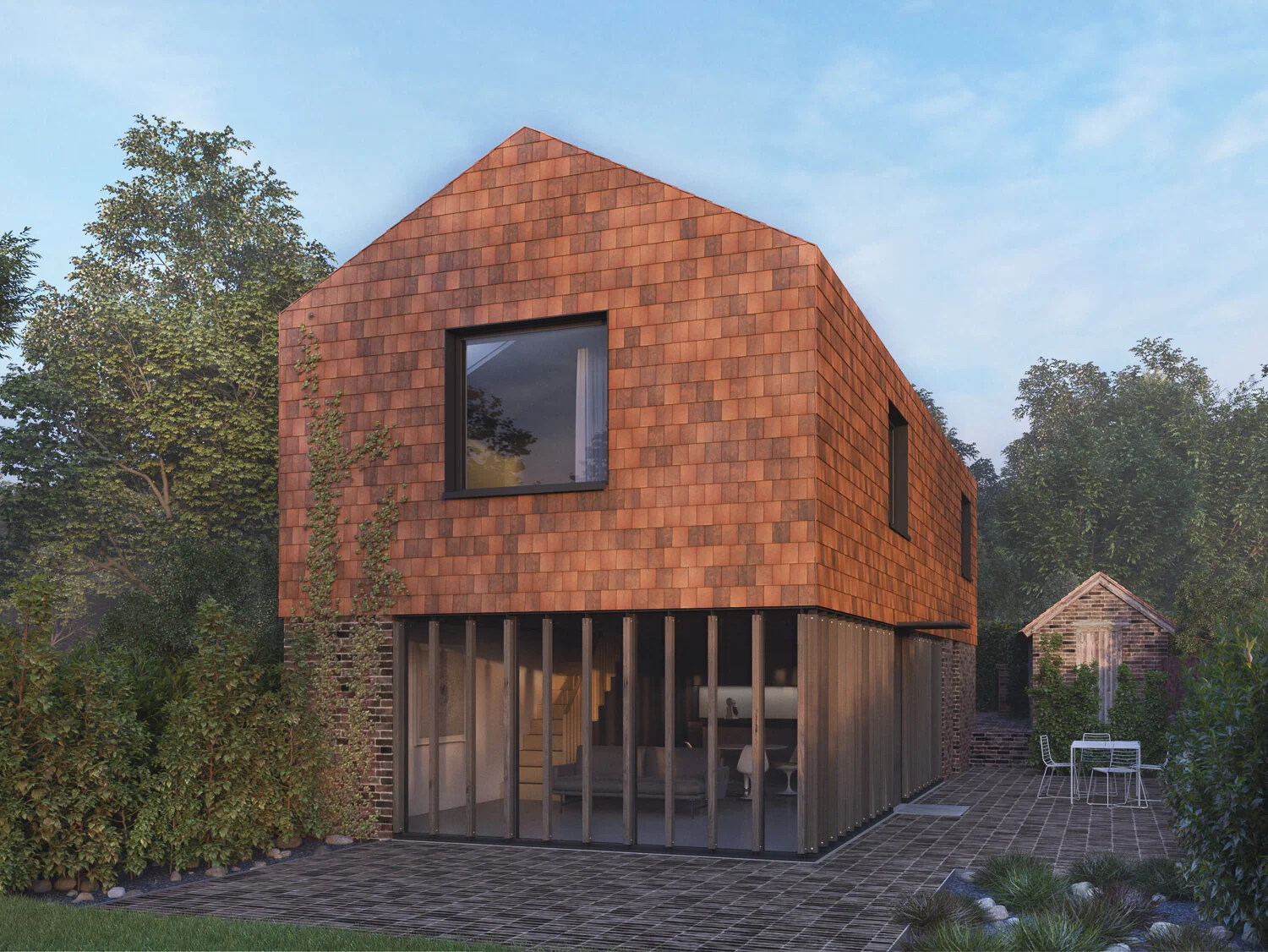
The starting point was the cottage’s simple pitched-roof form. We rotated this form to run along the narrow plot, creating space for the family while bringing the principal rooms much closer to the garden.
Seen from the end of the site, the house would retain the familiar outline and modest scale of a Kent cottage. The conservation setting made form, materials and the relationship with the landscape central to the design.
Kent peg tiles reclaimed from The Little House were intended to wrap around the more private upper floor. Reused brick would connect the ground floor and garden walls to the history of the site.
Together, these materials would give the new home a physical connection to the cottage, allowing familiar elements to take on a new purpose.

Immersed in nature.
The defining experience of the new home would be its relationship with the garden.
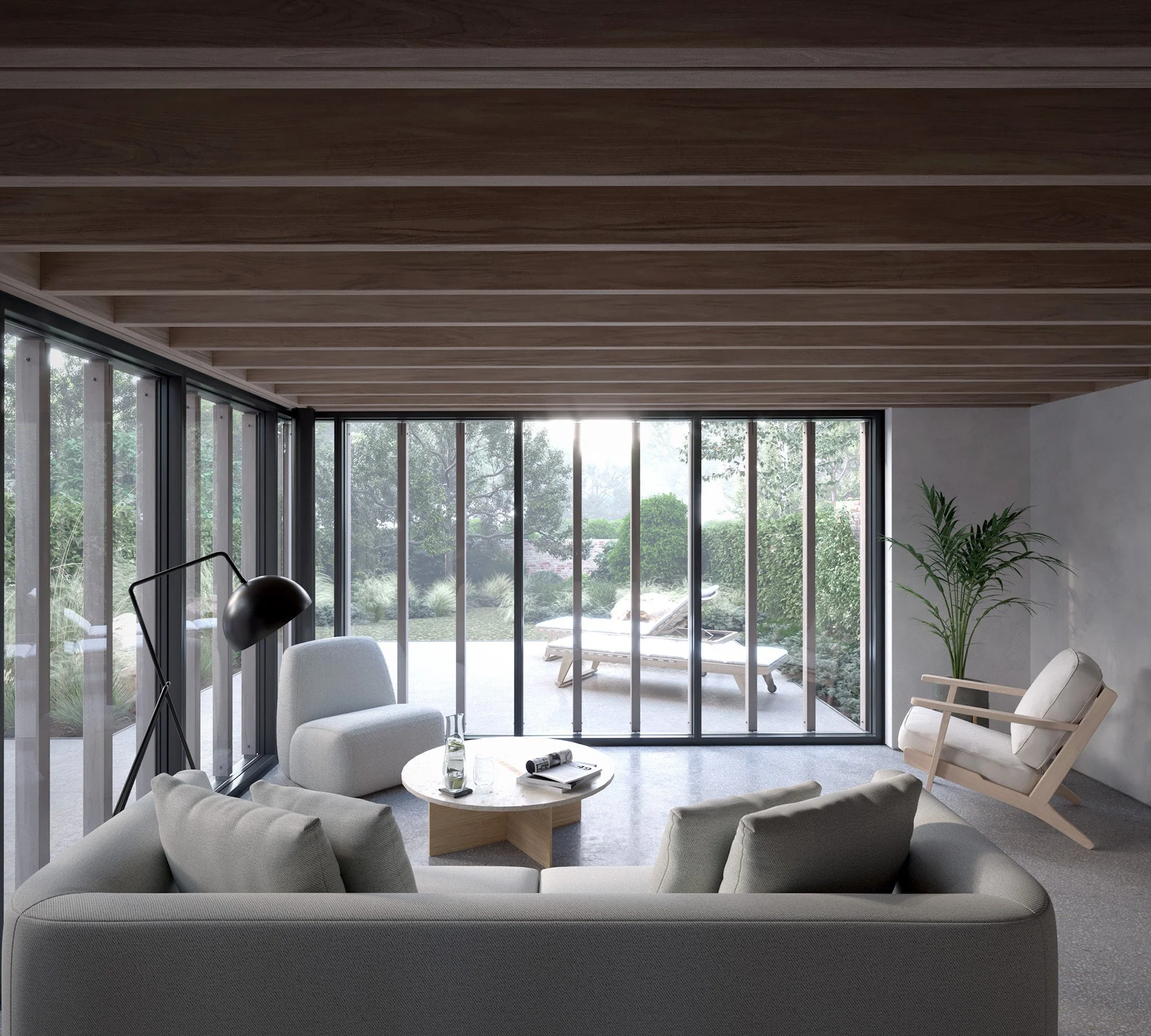
The shared family rooms were arranged along the garden edge. Wraparound glazing would bring mature planting, daylight and the changing seasons into everyday view. From the kitchen, sofa or a quiet reading chair, the family would feel surrounded by the garden.
Above these rooms, the timber-lined ceiling would bring warmth and shelter. Its depth would give the living spaces a sense of enclosure beneath the more private upper floor, balancing the openness of the glazing.
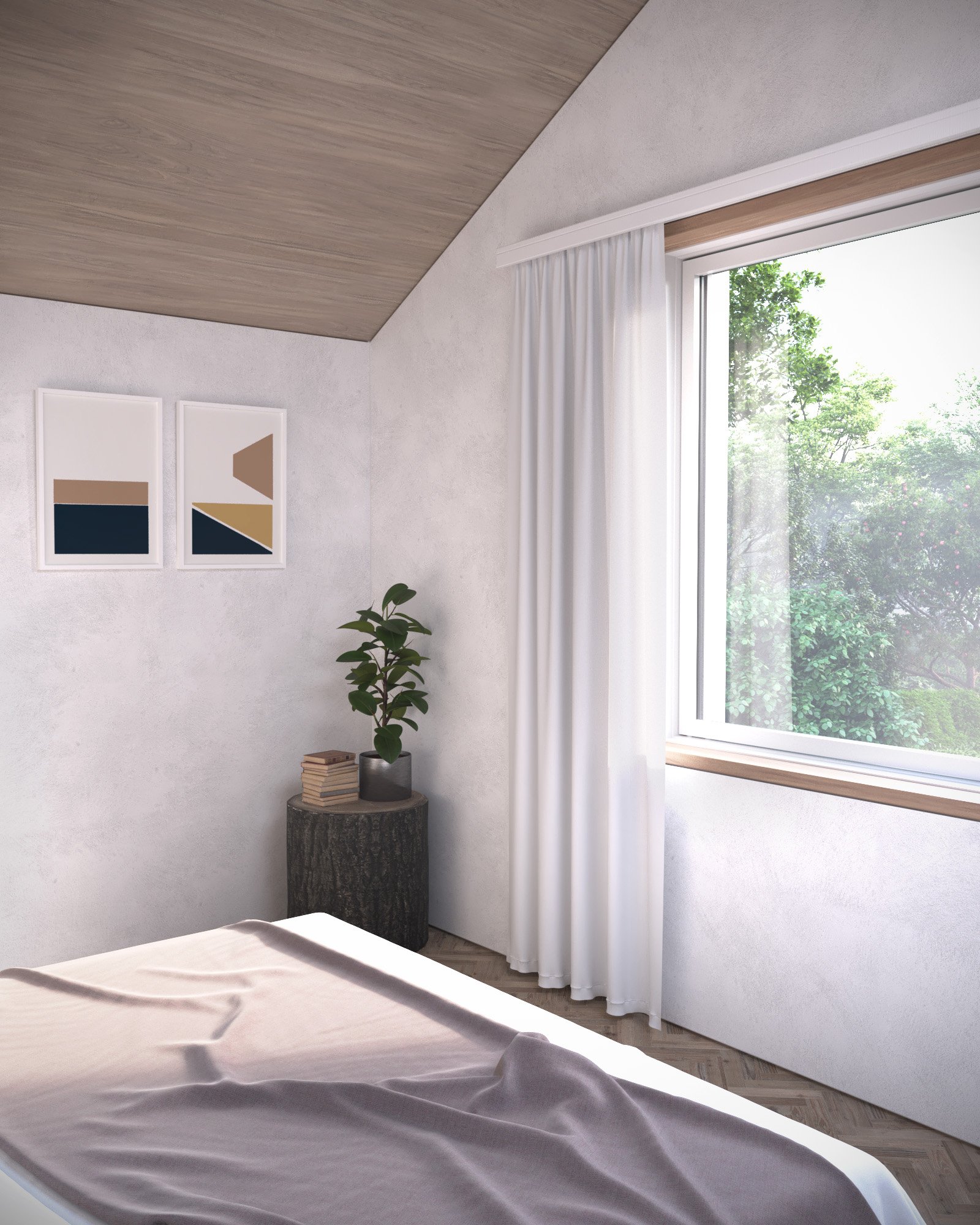
Three bedrooms were arranged beneath the pitched roof. Sloping timber ceilings and deeply framed windows continued the cottage-like character inside, creating quieter rooms overlooking the trees and planting.
A small ground-floor study provided a separate place to work while preserving the openness of the shared family rooms.
The house was designed to feel generous without becoming grand: a compact family home with places to gather, retreat, work and spend more of daily life close to nature.

Comfort built into the construction.
The low-energy strategy began with the building itself.
The design was informed by Passivhaus principles, with a compact form, high levels of insulation and careful attention to how heat would escape through the walls, roof and floor.
A detailed construction section explored timber cassette panels filled with wood-fibre insulation. This approach could create a highly insulated structure using renewable materials, helping the internal surfaces stay warmer while reducing the amount of energy needed to heat the home.
At approximately 128 square metres, the proposed house remained deliberately compact. It brought together three bedrooms, shared family space and a small study within a form that retained the modest character of The Little House.
The concept responds directly to the reasons the family wanted to return to Kent: more room for everyday life, a quieter place to work, greater comfort through the seasons and a close connection to the trees and garden.
In this way, the memory of The Little House would live on in a warmer family home, designed for a new generation and with nature at the centre of daily life.
Considering a significant change to your home?
Deciding what to keep, what to change and where to invest is often the most important part of a home project. We can help you test the options, understand the constraints and establish a clear direction before decisions become fixed.