
Loft Conversion vs Loft Extension: What’s the Difference?
If you are planning to add space in the roof of your home, you will quickly encounter two terms that sound similar but describe different types of projects. Loft conversion vs loft extension.
Homeowners often use the terms interchangeably. Sometimes builders do too. But the difference between a loft conversion and a loft extension matters. It affects how much space you gain, how the rooms feel to live in, whether planning permission is required, and how much compromise is involved.
This is particularly relevant in London, where Victorian and Edwardian houses often have complex roof structures and planning constraints.
Understanding the difference early helps you make better decisions about cost, layout, and what is realistically possible in your home.
This guide explains the difference clearly, using London homes as the context.
Why homeowners start with this question
For many London homeowners, the loft is the first place they look when they need more space.
Families grow. Working from home becomes permanent. Children need their own rooms. Or the house simply begins to feel tight.
Moving is expensive and disruptive. So attention turns upwards.
The roof space appears to offer an obvious opportunity. The structure already exists, and adding a room above the house feels less intrusive than extending into the garden.
This is usually the point where the terminology appears. Loft conversion. Loft extension.
They sound similar, but they describe two different ways of approaching the roof.
The simple distinction
At its core, the difference is straightforward.
A loft conversion works within the existing roof shape.
A loft extension changes the roof shape to create new volume.
Everything else flows from that single decision.
What is a loft conversion?
A loft conversion adapts the space already contained within the roof. The external roofline is largely retained, and the design focuses on making a limited volume usable.
This approach typically involves:
Rooflights to bring daylight into the space
Upgrading insulation to improve comfort
Carefully positioning the stair from the floor below
Joinery designed around sloping ceilings
In most cases, the existing roof structure is retained and strengthened rather than rebuilt. New floor structures are introduced to support the room, but the overall geometry of the roof remains the same.
Many homeowners picture this when they imagine “doing the loft”.
The room sits inside the pitched roof. Sloping ceilings remain visible. Furniture and storage are designed to fit around them.
A loft conversion tends to work best when:
The existing roof already has reasonable height
Only one additional room is needed
Budget and disruption need to be tightly controlled
When designed carefully, this type of project can feel calm and efficient. It succeeds by working within the limits of the existing structure.
Why many London lofts cannot be converted easily
This is where many projects quietly change direction.
A large number of London houses, particularly Victorian terraces, have valley roofs. These are roof structures where two slopes meet internally, creating awkward junctions and very limited head height.
In many cases, the issue comes down to head height. If there is not enough vertical space at the centre of the roof, the loft cannot be converted into a comfortable room without altering the structure.
In these situations:
There is little usable volume to convert
Sloping geometry cuts across the space
Even generous rooflights cannot solve the constraint
Because the issue is not daylight. It is the lack of usable volume and head height.
Homeowners often realise at this point that they are not choosing between a conversion and an extension as a preference. They are deciding whether to create new roof volume or accept a compromised outcome.
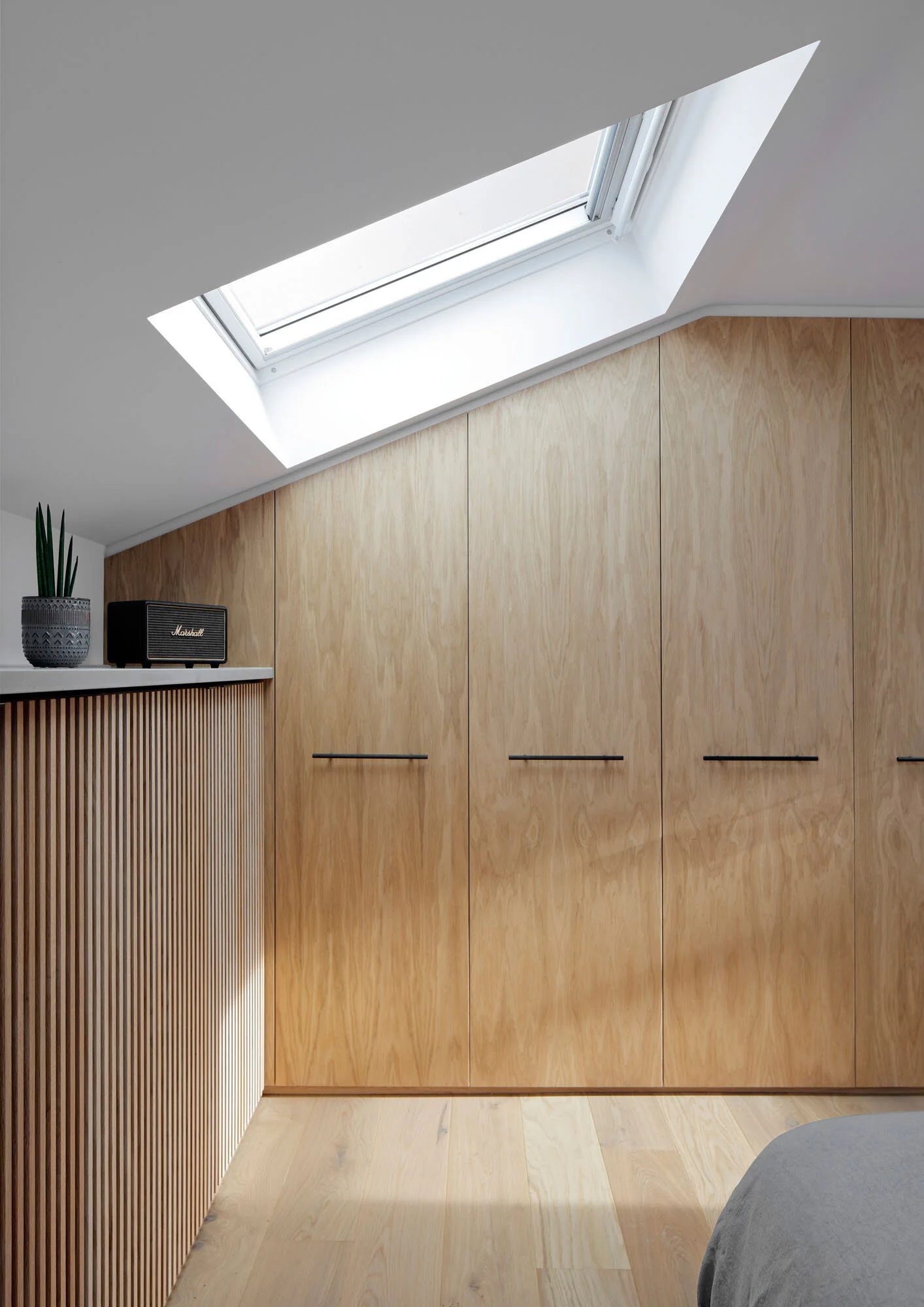
Prebend Street, Islington: rooflight, storage and bespoke oak joinery were designed together within the loft bedroom. In tight roof spaces, the success of the room depends on more than adding floor area. It depends on how light, storage and head height are resolved.
What is a loft extension?
A loft extension reshapes the roof to create usable space.
Rather than adapting what is already there, parts of the roof are rebuilt or extended to form a new volume.
This can include:
A rear dormer or full-width dormer
A mansard roof
Re-forming parts of the roof structure
Raising sections of the roofline
This usually involves rebuilding part of the roof structure. New structural elements are introduced to support the altered shape, which is why these projects are more involved than they first appear.
The result is not just more space, but a different quality of space.
Rooms created through a loft extension tend to feel:
More balanced and comfortable
Easier to furnish
Better integrated with the rest of the house
Instead of adapting an attic, the upper floor begins to feel like a natural extension of the home.
This is why many homeowners ultimately pursue a loft extension rather than a simple conversion. At this stage, the question is less about what it is called, and more about how the space will actually work. Working with a loft extension architect in London helps you test what is structurally possible, resolve the layout early, and avoid compromises that only become visible during construction.
This is also the point at which planning permission is often required for loft extensions in London, particularly where the roof shape is visibly altered. In conservation areas, even modest changes to the roof can require careful design and negotiation with the local authority.
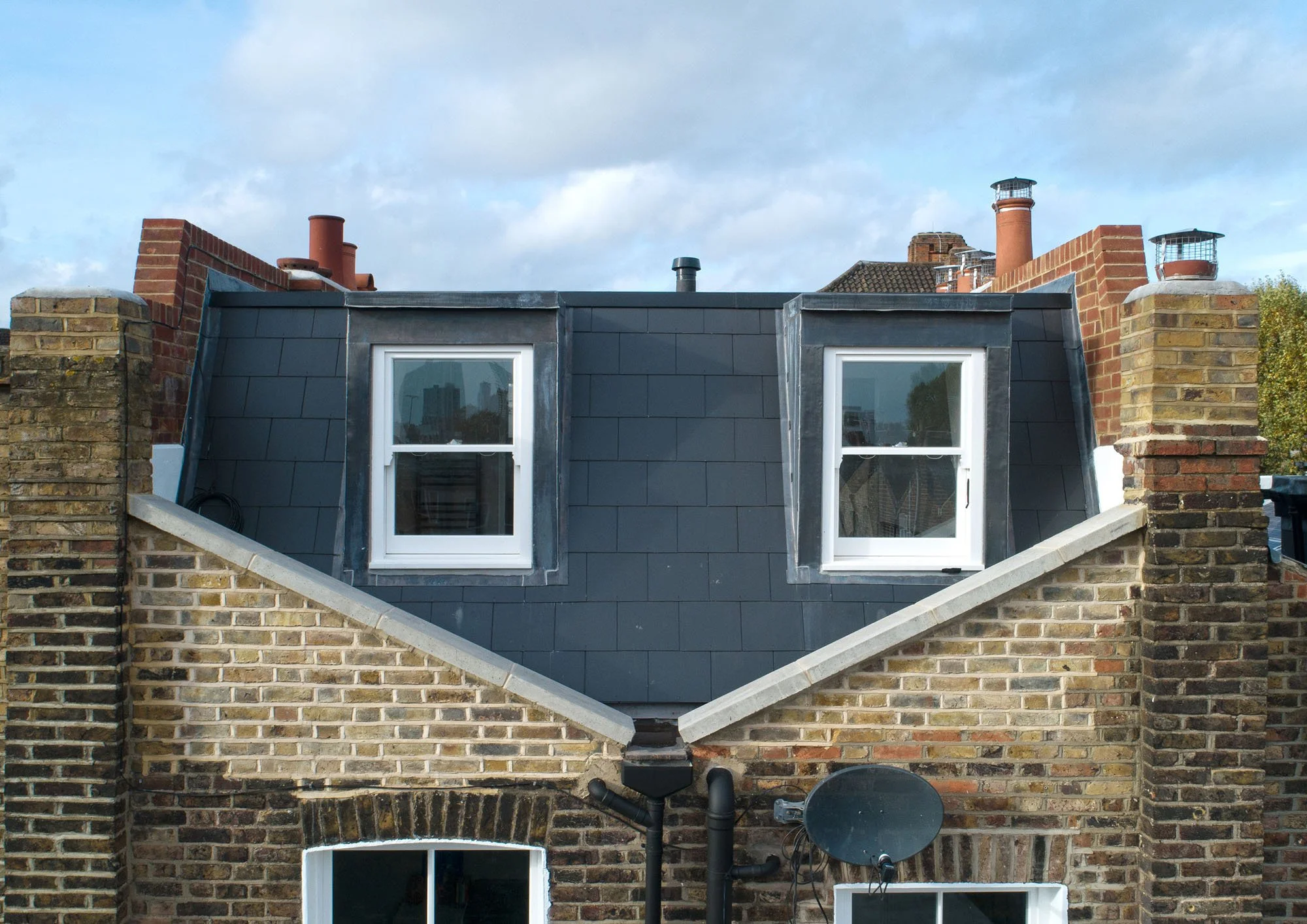
Prebend Street, Islington: the mansard loft extension restored the original butterfly roof symmetry while creating new usable space. This shows why a loft extension is often both a spatial decision and a planning decision, especially in conservation-sensitive London streets.
Key differences between a loft conversion and a loft extension
The practical differences between the two approaches become clearer when viewed side by side.
Loft Conversion vs Loft Extension: Quick Comparison
| Loft Conversion | Loft Extension | |
|---|---|---|
| Roof shape | Existing roof retained | Roof reshaped or extended |
| Head height | Limited by roof geometry | Increased through new structure |
| Construction | Adaptation of existing structure | Partial or full roof rebuild |
| Planning | Often permitted development | Often requires planning |
| Room feel | Sloping ceilings, tighter layouts | Full-height, more usable rooms |
A loft conversion uses the volume already inside the roof. A loft extension creates new space by altering the roof itself.
Many loft conversions fall within permitted development rules. Loft extensions that significantly alter the roof often require planning permission.
If you are comparing this with other ways of adding space, our guide to types of house extensions in London explains how loft projects sit alongside rear and side extensions.
How Victorian homes influence the decision
The structure of the house itself often determines which route is possible.
Victorian terraces were not designed with future loft rooms in mind. Roof structures vary widely, and many have limited head height or awkward internal geometry.
Many in areas like Islington and Hackney share similar constraints, particularly where valley roofs or later alterations reduce usable height.
Key factors include:
The height of the ridge
The pitch of the roof
Internal roof junctions
Existing ceiling structure
These constraints mean that a loft conversion which looks straightforward from the outside may be difficult to achieve in practice.
This is one reason loft projects are often considered alongside wider renovation work. Roof alterations, extensions, and internal reorganisation are closely linked decisions. Our guide to designing extensions for Victorian homes explores this in more detail.
Why the staircase is often the hardest part
Many homeowners assume the main challenge is fitting a room inside the roof.
In practice, the staircase is often the most difficult part of the design.
A new stair must connect the loft to the floor below while maintaining safe head height, clear circulation routes, and comfortable proportions.
It is also governed by building regulations, which set minimum head heights and safe geometry for stairs. These requirements often shape the layout more than expected.
This can affect:
Existing bedroom layouts
Landing positions
Bathroom locations
The overall flow through the house
In many homes, solving the stair properly requires rethinking part of the floor below.
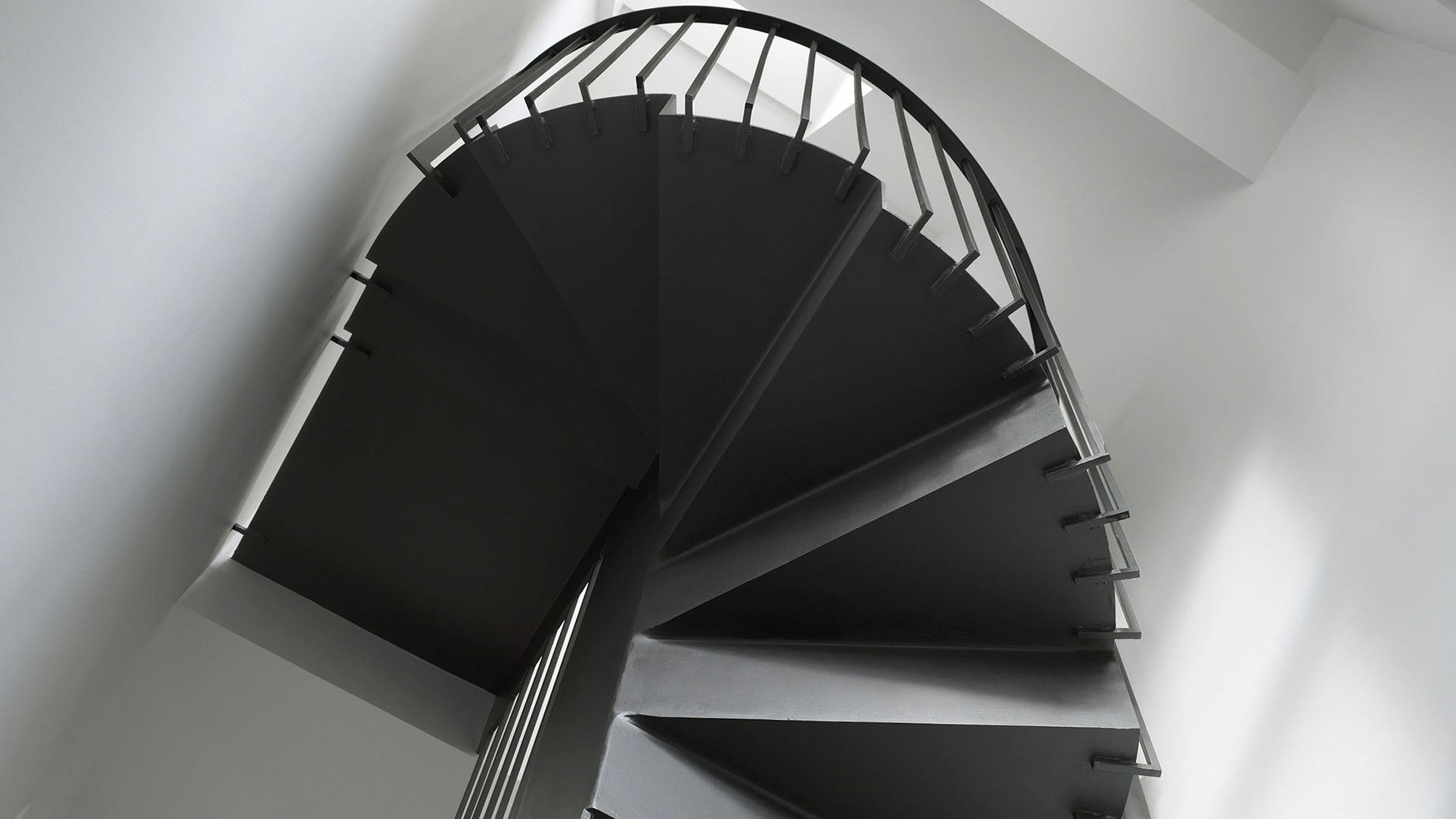
Prebend Street, Islington: a compact folded steel stair unlocks the mansard loft above, creating enough space for an ensuite and fitted joinery around the new upper-floor room. In a Victorian terrace, the stair is often the design move that decides whether the loft becomes genuinely useful space.
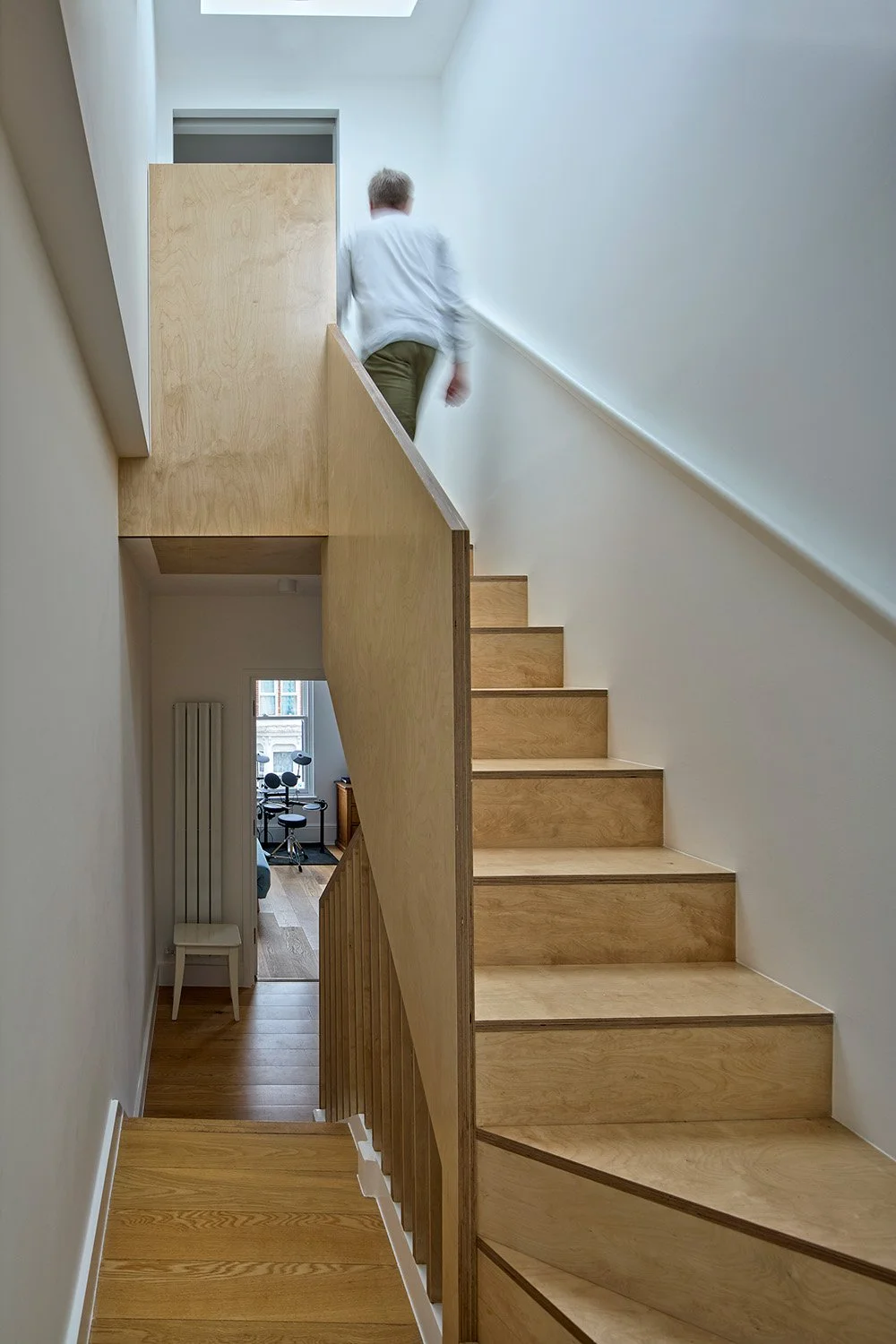
Victorian Loft Conversion and Family Home Retrofit, Hackney: the clients already had planning permission through a loft specialist, but suspected the approved layout could work harder. By rethinking the stair as a compact, carefully placed element, Studio CMA unlocked a calmer loft arrangement with a bedroom, ensuite and separate dressing area.
Thinking beyond the loft itself
Although the work happens in the roof, loft projects rarely affect just one room.
Adding a new floor changes how the entire house is organised.
Bedrooms may shift between floors. Bathrooms are relocated. Circulation and storage need to be reconsidered.
This is why we often treat loft projects as part of a broader strategy for improving the house as a whole. Our guide to extensions as part of a whole-house approach explains how lofts, extensions and internal reorganisation often need to be considered together.
The roof is also one of the biggest sources of heat loss in a typical London home. When it is opened up, there is a rare opportunity to upgrade insulation and airtightness properly. Done well, a loft project can make the entire house feel warmer, quieter and more comfortable, not just the new room.
You can read more about this approach in our guide to architect-led renovations in London.
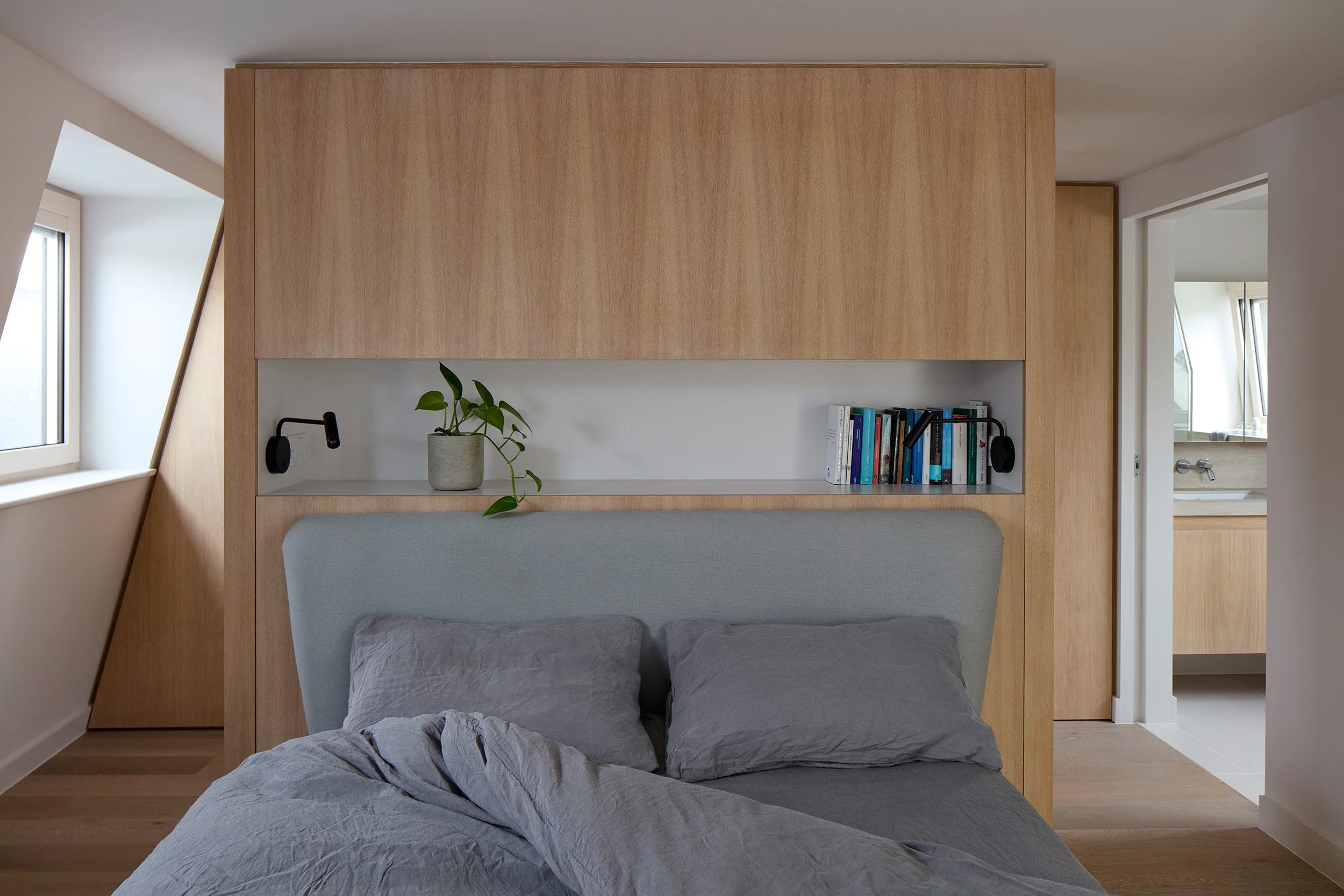
The compact stair made the upper floor work harder. It allowed the loft to become a quiet main bedroom suite, with integrated storage, an ensuite and a separate dressing area, rather than a compromised attic room.
Choosing the right approach for your home
The best solution depends on the specific house and how you want to use the space.
Key questions include:
Does the existing roof have enough usable volume?
Are you comfortable working within constraints?
Or would reshaping the roof create a better long-term result?
For some homes a restrained rooflight-led loft conversion works well.
For others, particularly where valley roofs are involved, a loft extension is the only way to achieve a space that feels generous, calm and easy to live in.
Understanding that difference early helps you set realistic expectations, make better design decisions, and avoid costly compromises later.
For many homeowners, this is the point where early design input becomes valuable. A loft extension architect in London can quickly assess whether your roof can be converted, or whether reshaping it will lead to a better outcome.
That clarity is where good architecture begins.

Choosing between a loft conversion and a loft extension starts with understanding the house itself. Studio CMA helps homeowners compare options, test planning constraints and decide whether the roof can be adapted, or whether reshaping it would create a better long-term result.