
Internal vs External Wall Insulation for London Period Homes
Are you trying to understand the difference between internal and external wall insulation in a Victorian or Edwardian home?
Are you wondering which approach will make your terrace warmer without damaging the character that makes it special?
If so, you are in the right place.
London’s older homes are full of charm, but their solid brick walls were never designed to meet modern comfort standards. They can feel cold in winter, prone to overheating in summer and vulnerable to condensation if upgraded poorly. Insulating them is not simply about adding warmth. It is about understanding how the whole house works.
Wall insulation affects moisture movement, ventilation, heating systems, window detailing and even how future extensions connect to the original structure. Done well, it transforms a draughty house into a warmer, quieter, healthier home with lower running costs. Done badly, it can trap moisture and create long-term problems.
That is why this decision needs to thought about in the context of the whole-house, not treated as an isolated upgrade. When insulation is planned alongside ventilation, heating and future alterations, each improvement supports the next.
If you would like a broader foundation first, read our complete guide to insulating a period London home.
Why Solid Wall Insulation Matters in London
Most Victorian and Edwardian homes in London have solid brick walls. Unlike modern cavity walls, there is no air gap to slow down heat transfer. Heat moves quickly through the wall, which is why rooms can feel cold even when the heating is on.
Cold wall surfaces also increase the risk of condensation. When warm indoor air meets a cold surface, moisture forms. Over time, this can lead to damp patches or mould.
Adding insulation slows heat loss and, when designed using breathable materials, allows moisture to move safely through the structure rather than becoming trapped. This is especially important in older buildings.
A well-insulated solid wall improves comfort, reduces energy demand and makes low-carbon heating such as a heat pump far more effective.
Internal Wall Insulation (IWI)
What It Is
Internal wall insulation is applied to the room-facing side of the external wall. Materials such as wood fibre, cork, calcium silicate or insulated plasterboard are used to reduce heat loss. Many of these systems are vapour open, meaning they allow moisture to pass through gradually rather than sealing it in.
Insulation is typically combined with airtightness measures. Airtightness reduces unwanted draughts, while controlled ventilation systems make sure fresh air continues to circulate safely.
When Internal Insulation Makes Sense
Internal insulation is often the practical solution in London period homes where the external appearance must remain unchanged. In conservation areas, or on the front elevation of a Victorian terrace, altering the façade may not be permitted.
It also works well in flats or buildings where the exterior cannot be modified, and for homeowners who wish to phase improvements room by room during refurbishment. In our guide to insulating a Victorian terrace in London, we show how breathable internal insulation can form part of a carefully staged upgrade.
Benefits
The main advantage of internal insulation is that it preserves the character of the building. The brickwork and architectural details remain untouched. Rooms feel warmer almost immediately after installation, and natural materials can help regulate humidity.
It integrates well with interior redesign, particularly where layouts are being reworked or finishes renewed.
Risks and Considerations
Internal insulation requires precise detailing. Room dimensions reduce slightly, which can matter in narrow terraces. Junctions at floors, ceilings and internal walls must be detailed carefully to avoid cold bridges, which are spots where heat escapes more quickly than the surrounding area.
Material selection is critical in solid-wall construction. Inappropriate systems can trap moisture within the wall, leading to hidden condensation. Airtightness must be designed alongside ventilation so that warm indoor air does not accumulate in vulnerable areas.
Because work takes place inside the home, it can be disruptive. For a deeper understanding of how moisture behaves in older buildings, see our guide to avoiding damp and mould in London retrofits.
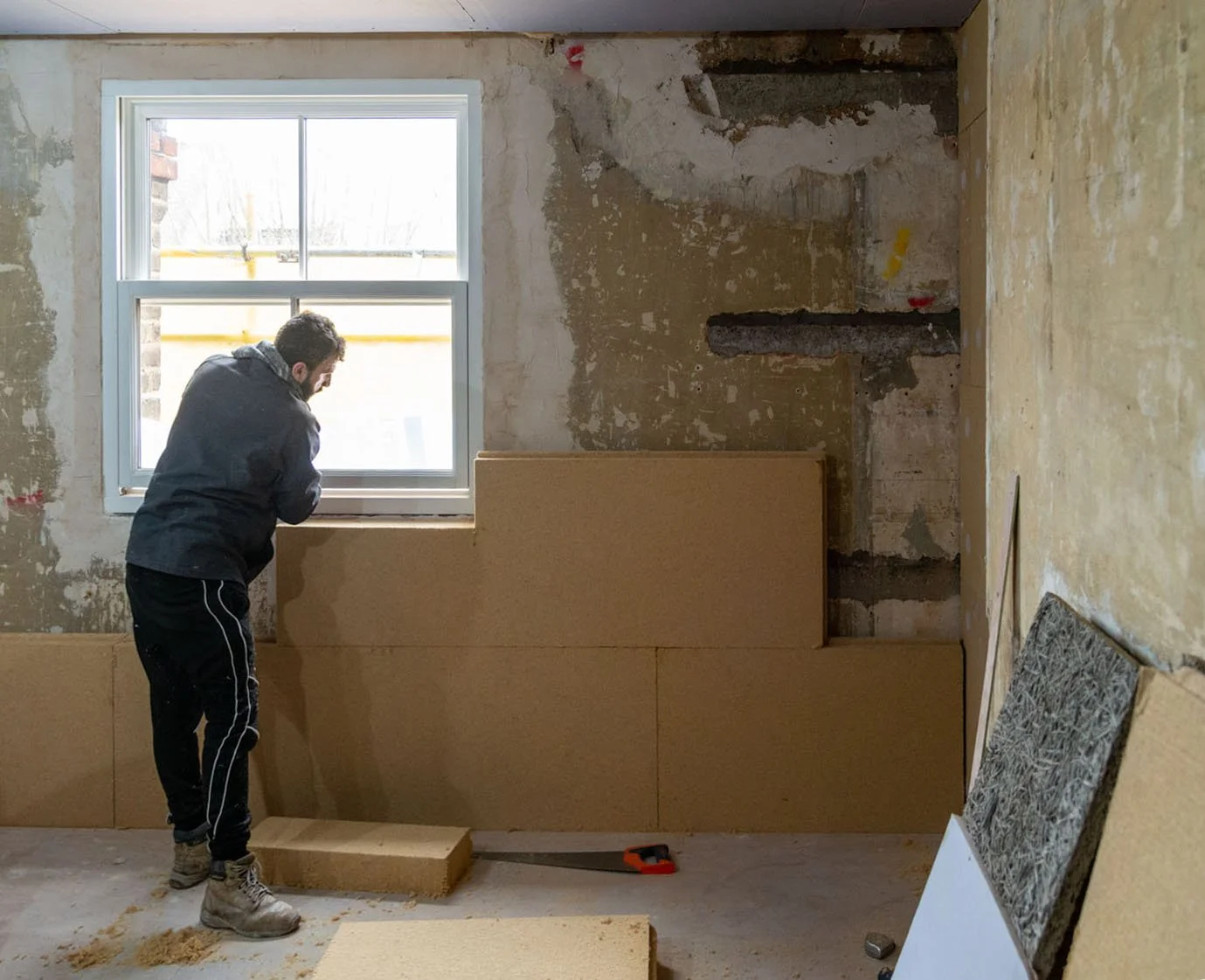
Wood fibre internal wall insulation being fitted to a Victorian semi-detached home in Islington, N19. Internal wall insulation can improve comfort and reduce heat loss while keeping the external appearance of the building unchanged.
See more of our work as an Islington architect
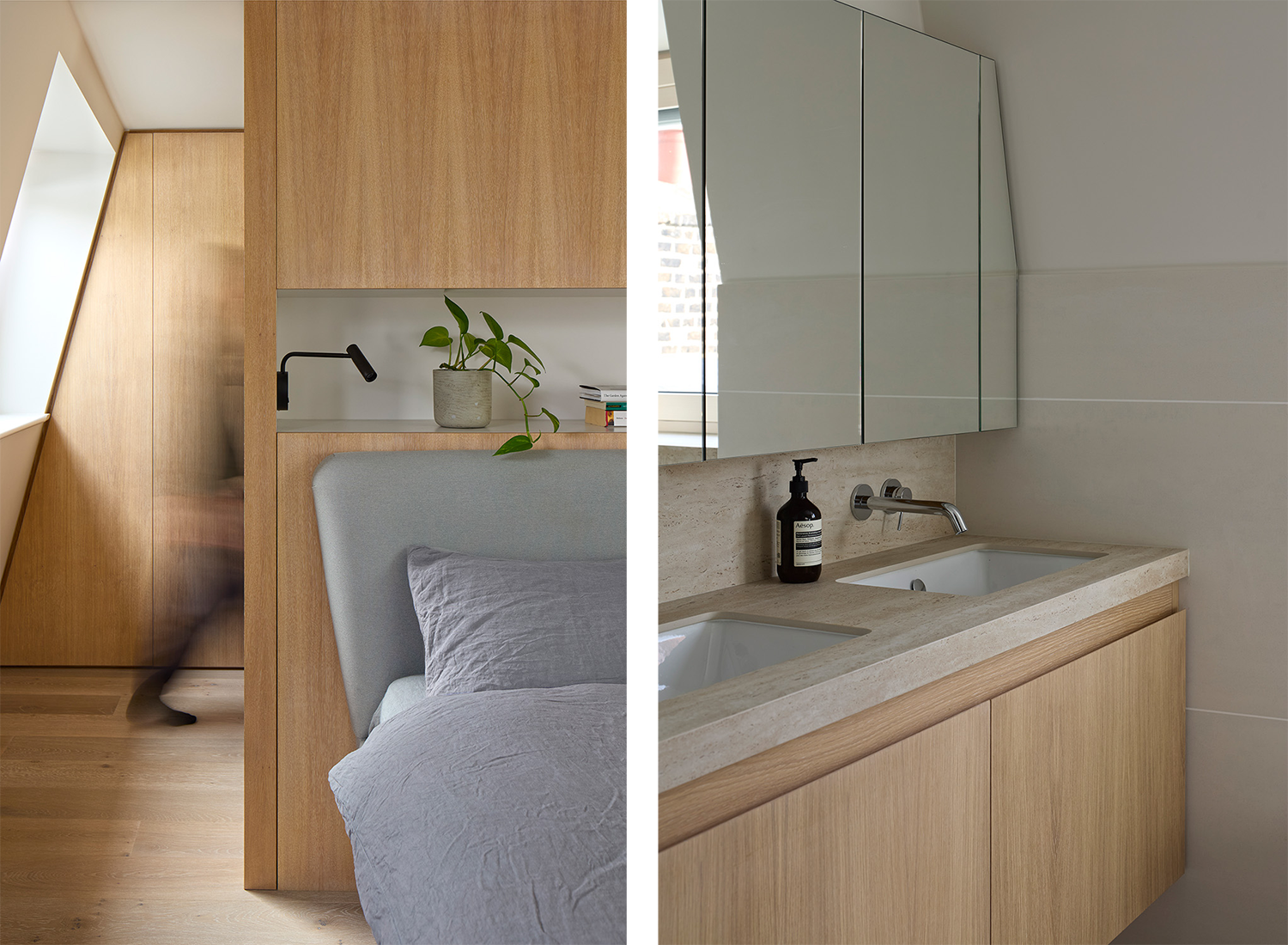
Lower Clapton, Hackney: the finished loft bedroom and ensuite after a Victorian terrace retrofit and loft extension. A warm roof build-up, natural materials and triple-glazed windows help create a calmer, more comfortable space.
External Wall Insulation (EWI)
What It Is
External wall insulation is fixed to the outside of the building and finished with a protective render. Mineral or lime-based renders are often used because they allow the wall to remain breathable.
In simple terms, the building receives a continuous insulated layer that wraps around the structure.
When It Makes Sense
External insulation is often thermally more effective because it reduces many of the cold bridges that occur at floor levels, corners and junctions. It can be particularly beneficial on rear elevations or gable walls where planning constraints are less restrictive.
It is commonly introduced during major refurbishment projects or when building an extension, allowing the insulation to integrate seamlessly with new construction.
Benefits
One of the key advantages is that there is no loss of internal floor space. The continuous external layer creates more even temperatures and reduces draughts caused by thermal bridging.
External insulation also protects brickwork from weather exposure and can improve acoustic comfort. For many homes, it delivers a higher overall level of performance for a similar insulation thickness.
Risks and Planning Considerations
In London, planning permission is often required. External insulation is rarely permitted on principal façades in conservation areas.
Party wall junctions and boundary conditions require careful detailing to avoid gaps or moisture risks. Existing brickwork may need repair before insulation is applied.
Poor design and workmanship can undermine performance. Poor design and workmanship can undermine performance. In some cases, this has led to well-documented failures, which we explain in our guide to external wall insulation failures and how to avoid them.
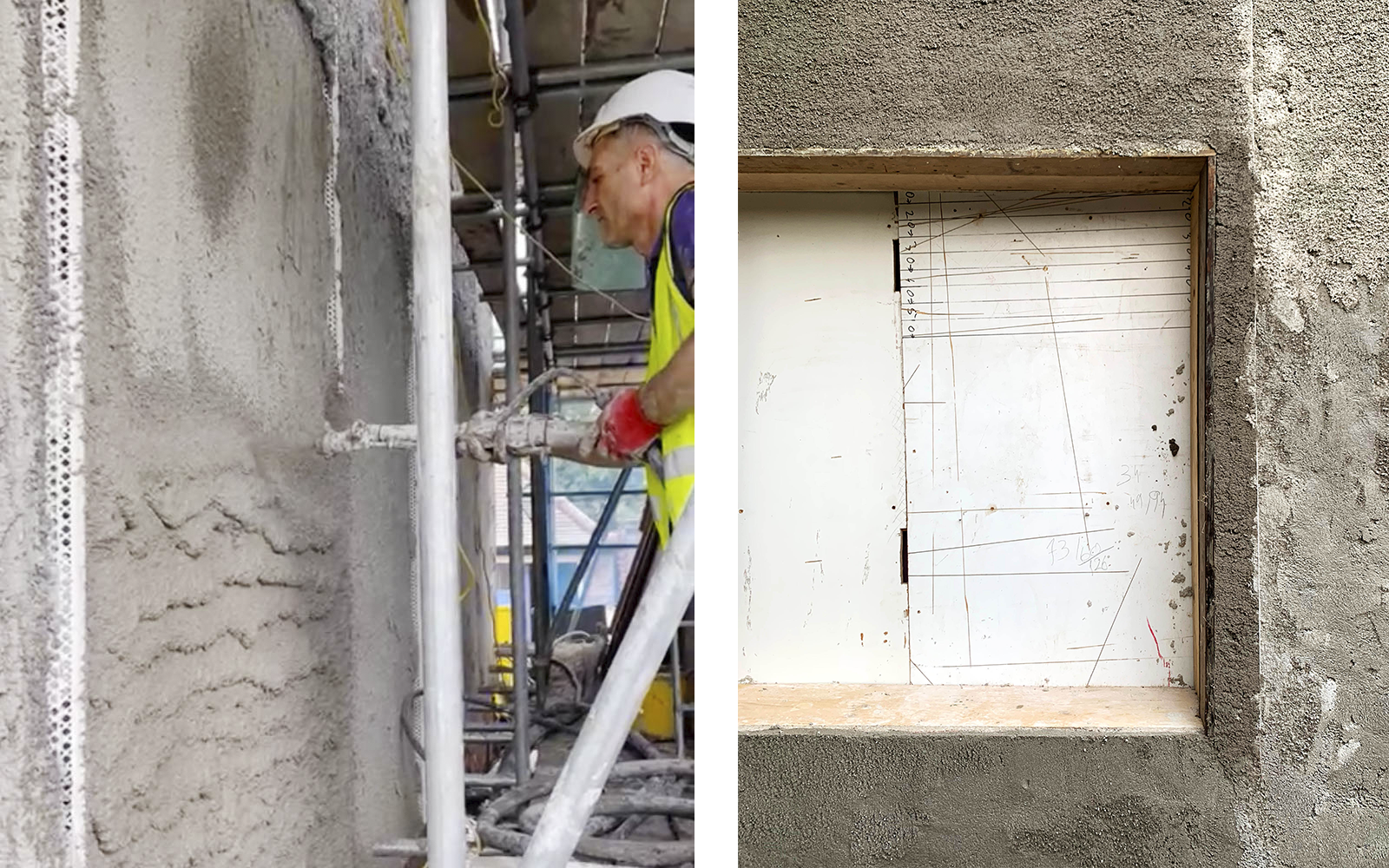
External wall insulation being installed to an interwar semi-detached house in North London. EWI can reduce heat loss and cold bridging, but it needs careful detailing around window openings, junctions and external finishes.
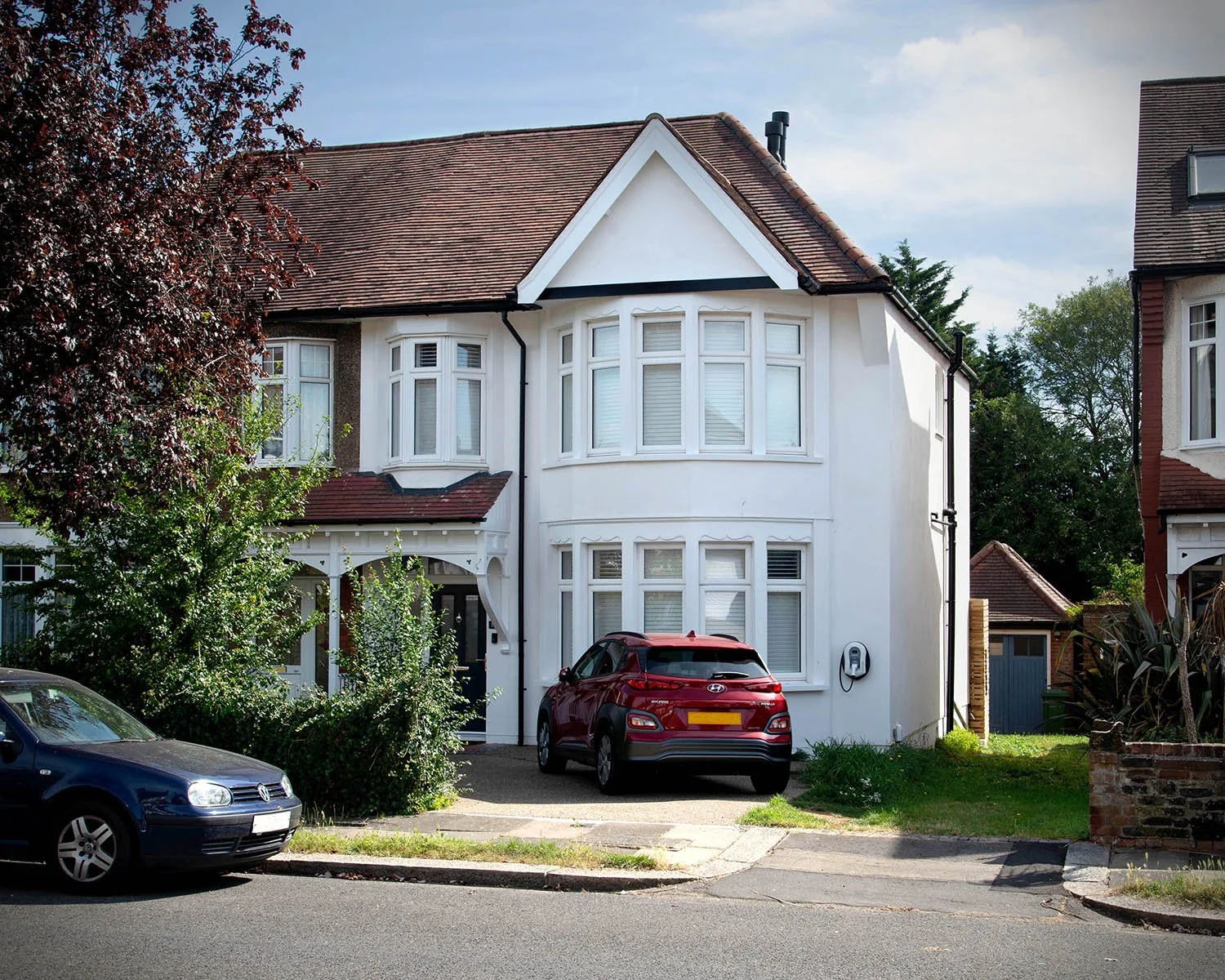
An interwar semi-detached house in North London after external wall insulation and whole-house retrofit upgrades. EWI can improve comfort and reduce heat loss, but it also changes the outside appearance of the home.
Internal vs External: Which Is Better?
There is no universal answer.
Internal insulation is often the right solution where heritage character must be preserved or where planning constraints limit external changes. It suits phased renovation and integrates naturally with interior redesign.
External insulation often delivers stronger overall thermal performance and can reduce cold bridging more effectively. It works well on rear elevations and less-sensitive façades.
In many London terraces, the most effective approach is hybrid. Internal insulation at the front where appearance matters most. External insulation at the rear where performance can be maximised. Designed together as one coordinated system rather than separate upgrades.
You can see how this balance plays out in a real project in our guide to insulating a Victorian terrace in London.
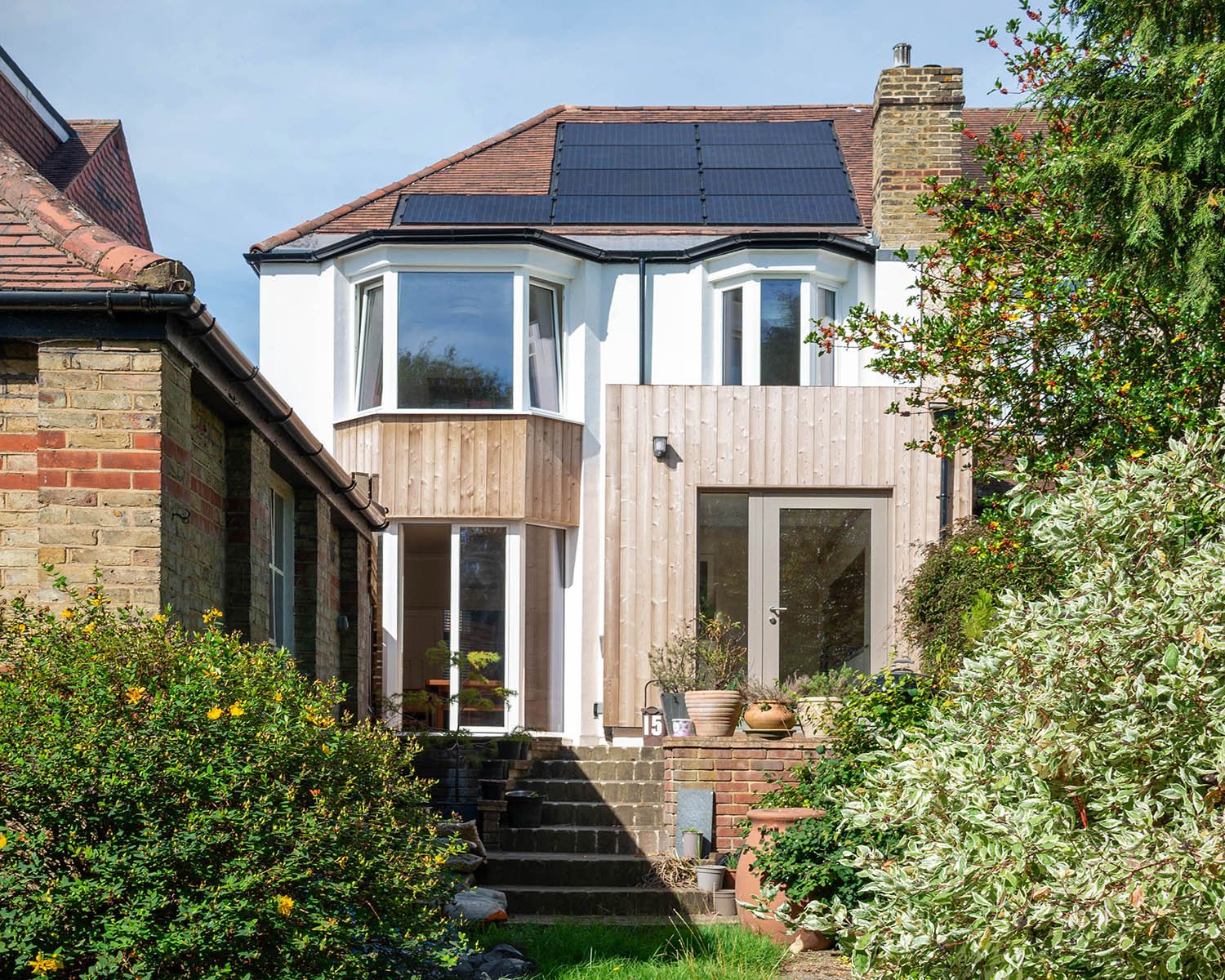
The rear of an interwar semi-detached house in North London following a whole-house retrofit. The right wall insulation strategy depends on the property type, external appearance, moisture movement, junctions and planning constraints.
Why a Whole-House Strategy Matters
Insulation does not operate in isolation. It affects ventilation, airtightness, moisture movement, heating design and the sequence of future improvements.
When these elements are considered together, the difference in comfort is profound. Rooms feel warmer and more stable in temperature. Surfaces stay drier. Heating systems run more efficiently.
Our plain-English guide to airtightness and ventilation in old London houses explains how controlled ventilation works alongside insulation to protect both comfort and building fabric.
Costs, Disruption and Phasing
Costs depend on material choice, existing defects, detailing complexity and the wider scope of works.
Internal insulation can often be introduced gradually as rooms are refurbished. External insulation is usually delivered in one coordinated phase.
The key is early planning. When insulation decisions are aligned with long-term goals, each stage supports the next rather than undoing previous work.
If you are still working out the bigger picture, our guide to how to retrofit a Victorian home in London and where to start explains how to approach these decisions in the right order.
Conclusion: A Warmer, Healthier London Home
Choosing between internal and external wall insulation is not simply a technical decision. It is a strategic one that shapes comfort, durability and long-term performance.
The right solution depends on planning context, building character and how you want your home to evolve.
If your priority is improving energy performance, our Retrofit Strategy Service provides a clear roadmap for sequencing upgrades so they work together.
If you are at an earlier stage and want clarity on budget, planning constraints and how the project could be phased, our Architect’s Home Visit and Appraisal offers a structured feasibility review before you commit to design work.

Wall insulation decisions are rarely simple in London period homes. Studio CMA can help you compare internal and external insulation, understand the moisture risks and choose a retrofit strategy that suits your home.