
Insulating a Victorian terrace in London: a practical guide
Victorian terraces form the backbone of London’s housing stock. They are generous in proportion, rich in detail and built from solid brick and timber. But they were never designed for modern comfort standards, rising energy costs or low-carbon heating.
Many homeowners begin by asking, “Should we insulate the walls?” But in a Victorian terrace, or any older period home, insulation is not a stand-alone upgrade. It affects how heat moves, how moisture behaves and how air flows through the building. If handled in isolation, it can create condensation, mould or uneven temperatures.
That is why it helps to step back and look at the house as a whole before deciding what to insulate. These decisions sit within a wider strategy that considers how the entire home performs.
If you are at an earlier stage, our guide to how to retrofit a Victorian home in London explains where to start and what matters most.
If you want to understand how insulation works in principle, we explain that in more detail in our guide to insulating a period London home.
This article focuses on something more practical.
👉 How insulation decisions actually play out in a Victorian terrace
👉 Where the real constraints sit
👉 And how to make good choices when everything is connected
What Makes a Victorian Terrace Different?
Victorian terraces in London follow a remarkably consistent pattern. They are narrow in plan, usually two or three storeys, with party walls to both sides, a front room facing the street and a kitchen or later extension at the rear.
This repeated layout is what makes them charming, but it also shapes how insulation decisions play out.
Unlike detached houses, a terrace only loses heat from the front, the rear and the roof. The party walls reduce heat loss, but they also create complex junctions where insulation must meet adjoining properties. Small gaps here can undermine otherwise good work.
Front elevations are often constrained by conservation rules, which limits external changes. Rear elevations are more flexible, but many terraces already have extensions of varying quality. Connecting old and new construction without creating weak points in the insulation layer requires careful design.
Chimney breasts, bay windows and suspended timber floors are almost universal. Each one affects how heat, air and moisture move through the building.
Once you understand this geometry, the strategy becomes clearer. The goal is not to treat every element the same, but to respond to how the house actually works.
Why insulation behaves differently in a Victorian terrace
Victorian terraces were not designed with insulation in mind. Solid brick walls, open chimneys and leaky junctions all affect how heat, air and moisture move through the building.
One point is worth highlighting, because it drives many decisions.
👉 When the wall fabric is damp, insulation performance drops significantly.
It is the same effect as wearing a wet jacket. Once the fabric is soaked, it cannot trap warm air, so you feel colder.
This is why many insulation decisions focus as much on keeping the building dry as they do on adding insulation.
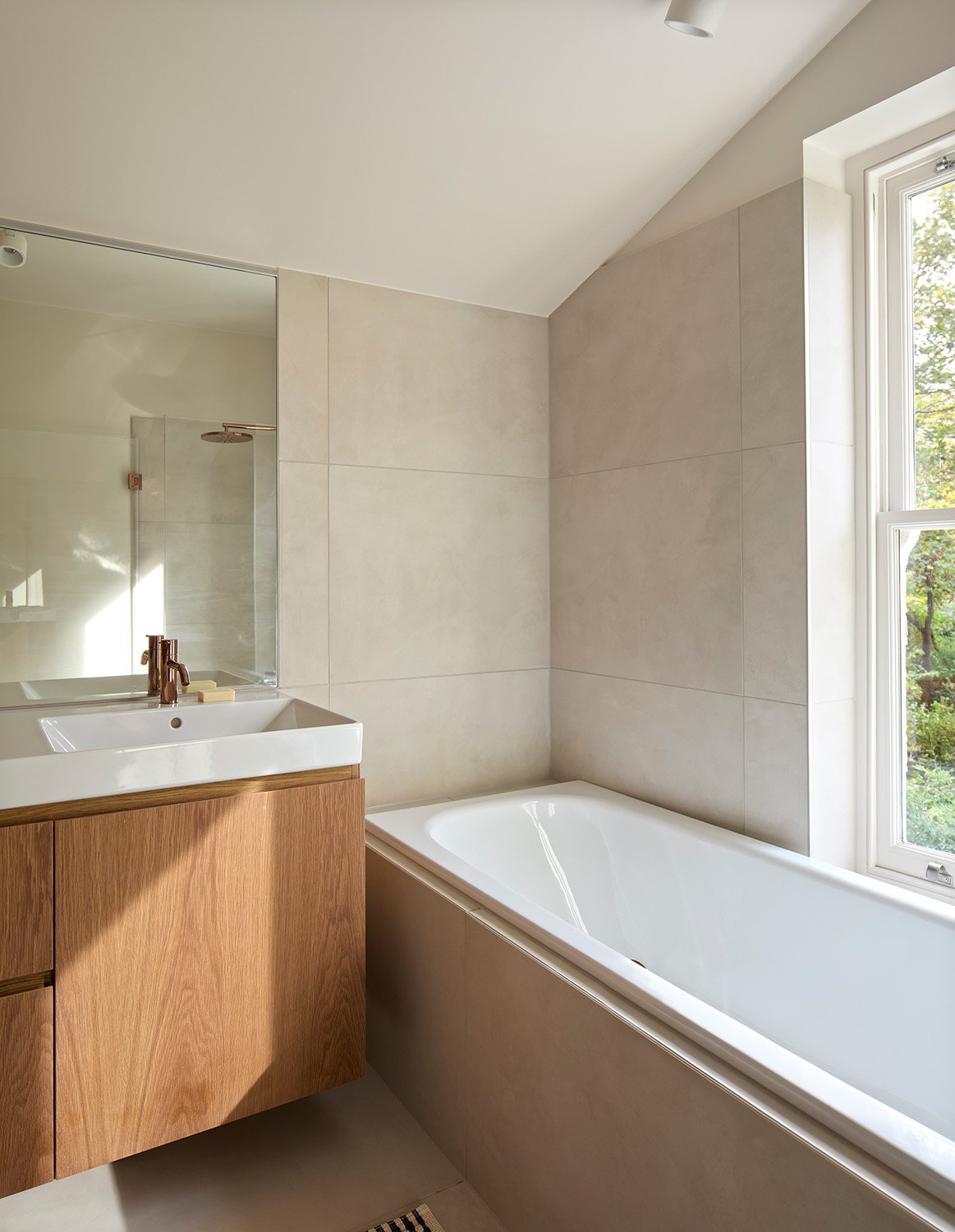
A former rear outrigger bathroom in a Victorian terrace in Hackney, often one of the coldest parts of the house. Insulation and careful detailing transform it into a warm, comfortable space.
See our Lower Clapton Victorian terrace retrofit
How insulation decisions play out in a Victorian terrace
Victorian houses follow a consistent pattern, but insulation decisions are rarely straightforward. What looks simple on a plan quickly becomes more complex once you consider constraints, sequencing and how different elements interact.
External walls
External walls are often where homeowners focus first. They are also where the biggest trade-offs sit.
At the front, conservation rules usually prevent external changes, which pushes the solution towards internal insulation.
At the rear, there is often more flexibility, but existing extensions, boundaries and detailing still shape what is possible.
So the decision is rarely just “internal or external insulation?”
It becomes:
What is actually possible on each elevation?
How do we manage moisture safely?
And how do these choices connect across the house?
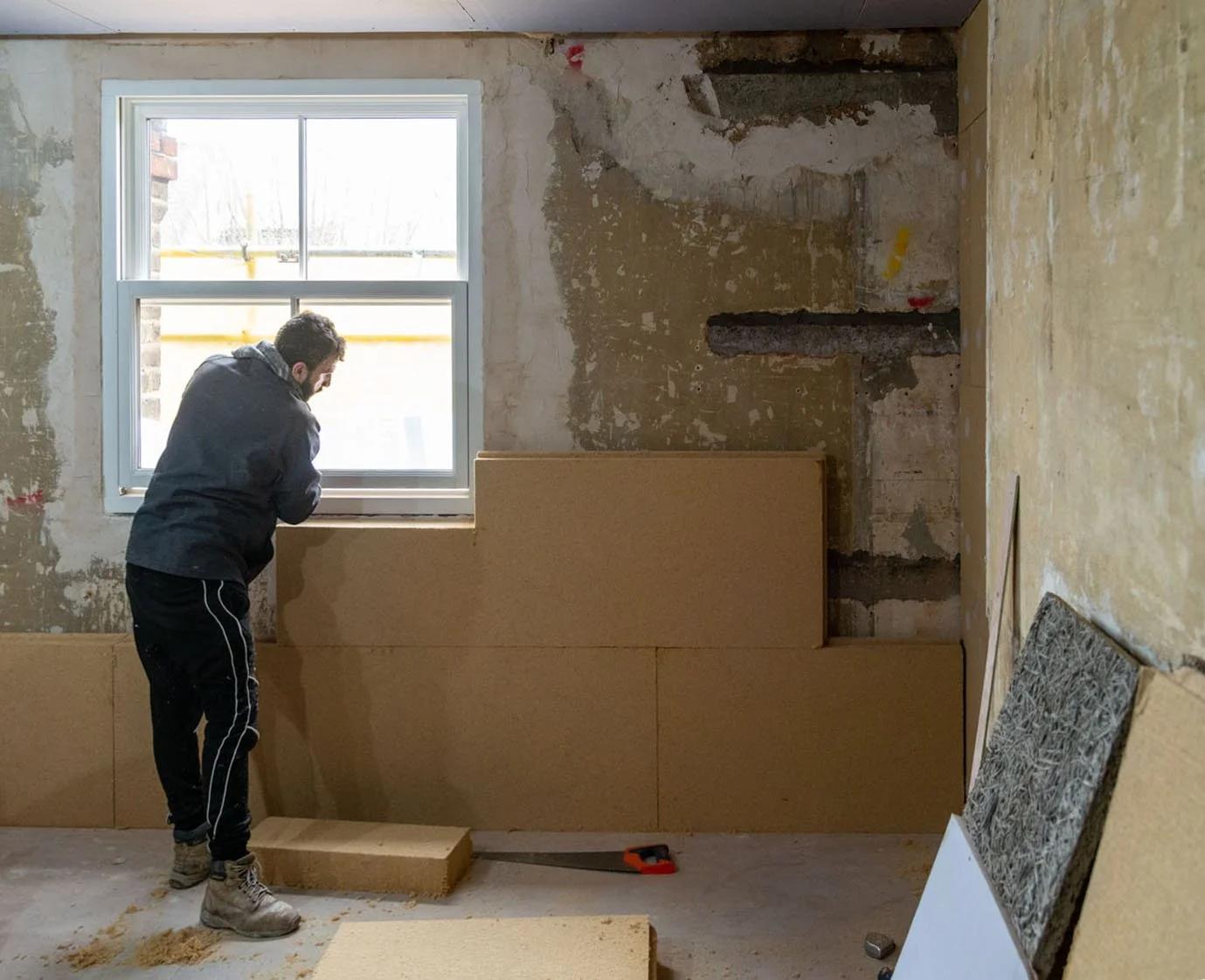
Wood fibre internal wall insulation being fitted to a Victorian semi-detached home in Islington, N19. This breathable build-up helps the brickwork dry, reduces heat loss and prepares the room for a warmer, more comfortable finish.
See more of our work as an Islington architect
Junctions are where performance is won or lost
Most problems do not come from the main areas of insulation. They come from the edges.
Where walls meet floors.
Where walls meet roofs.
Around windows and doors.
These junctions are where heat escapes fastest and where condensation is most likely to appear if the design is not carefully considered.
A well-insulated wall with poorly resolved junctions will often underperform.
This is why insulation is designed as a continuous layer, not a series of isolated upgrades.
Floors
Victorian terraces almost always have suspended timber floors at the front and rear.
These can often be insulated by lifting the boards and working between the joists, but the detail matters.
Blocking airflow incorrectly beneath a suspended timber floor can lead to moisture build-up and timber decay.
So the decision is not just whether to insulate, but how to do it without disrupting how the floor already works.
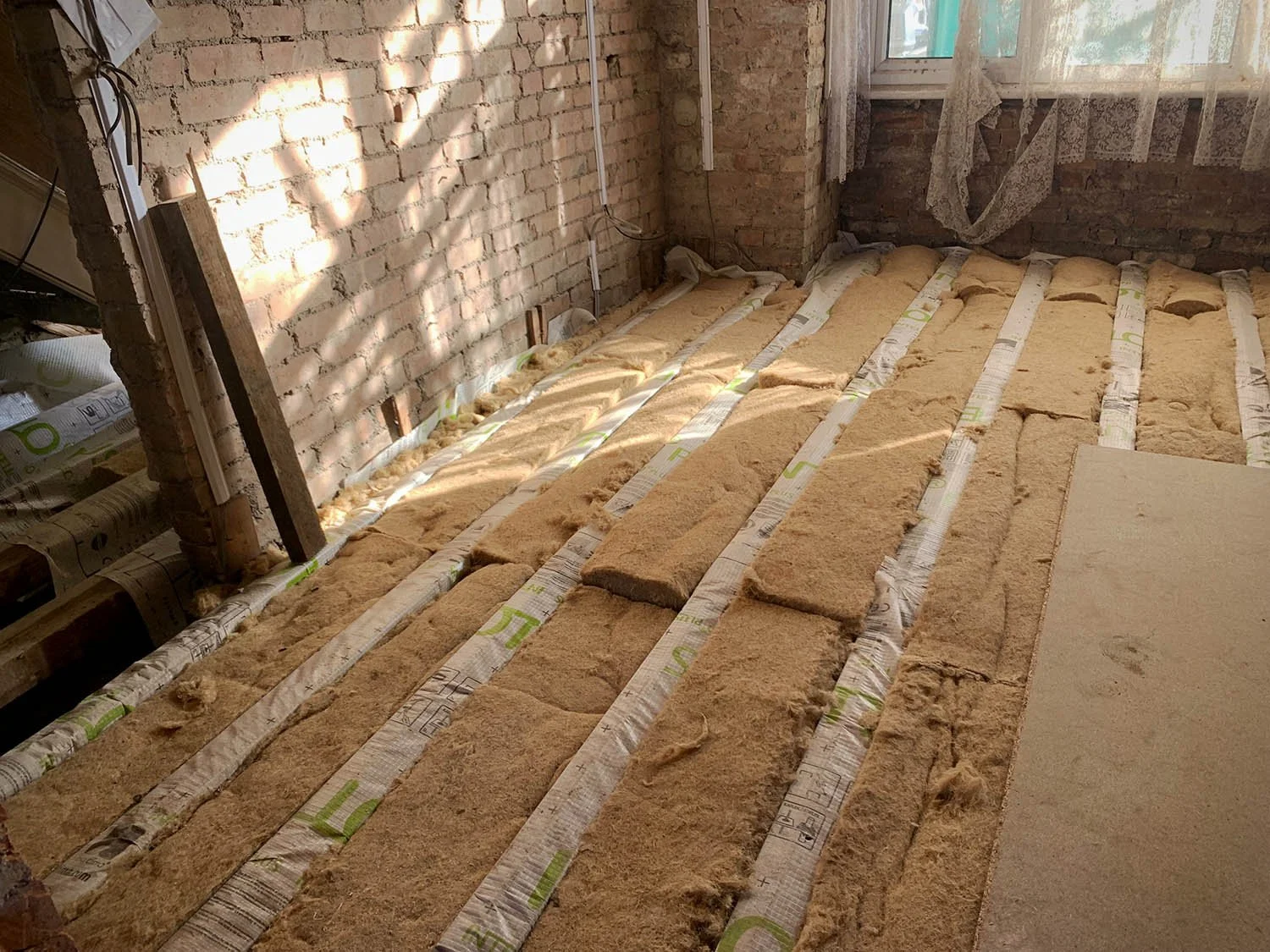
Suspended timber floor insulation in progress in a Victorian terrace in North London. Insulation between the joists and a continuous airtightness layer help reduce draughts and create a warmer ground floor.
Roof and loft
Roof insulation is often one of the most straightforward upgrades, but it still needs to connect properly with wall insulation to avoid gaps in the thermal envelope.
Warm roof upgrades are typically aligned with loft conversions, while ceiling-level insulation is more common in simpler upgrades.
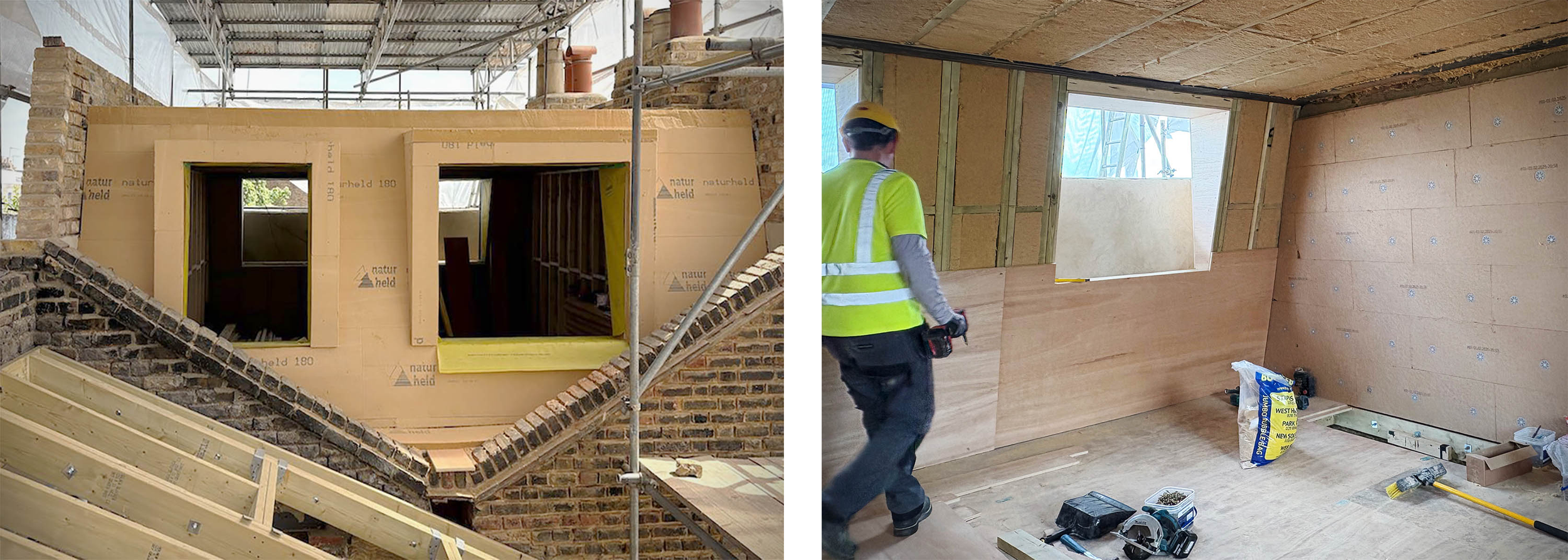
Lower Clapton, Hackney: a Victorian terrace loft extension during installation. Wood fibre insulation forms part of a warm, breathable roof build-up that helps improve comfort and reduce heat loss.
Windows and doors
Upgrading windows can significantly improve comfort, particularly in draught-prone front rooms.
In conservation areas, secondary glazing is often the most practical solution. It improves thermal performance while retaining original timber windows.
As with all elements, the junction between the frame and the wall is critical. Poor sealing here can undermine otherwise good work.
How we choose materials on real Victorian projects
There is no single “best” insulation material for a Victorian house.
What matters is how the material works within the building as a whole, and how it will actually be installed on site.
On most projects, we consider:
How the wall currently handles moisture
Whether the build-up needs to remain breathable
How complex the installation will be
And whether the contractor can execute the detail reliably
In many Victorian homes, this leads to the use of materials such as wood fibre or calcium silicate, because they allow moisture to move and disperse.
But this is not a rule.
👉 Materials are chosen as part of a system, not in isolation.
Sequencing the works in a real project
Budget constraints mean most London homeowners complete their retrofit in stages.
A typical sequence might look like this:
Roof or loft insulation
Airtightness improvements and ventilation planning
Wall insulation
Floor insulation
Window upgrades
Heating system improvements
Each step prepares the house for the next. The wrong order increases risk and cost.
Why timing often matters more than specification
Many insulation upgrades only make sense when other work is already happening.
Internal wall insulation is rarely installed unless rooms are being refurbished
Floor insulation depends on whether floors are being lifted
Roof insulation is often tied to loft conversions
This is why good retrofit projects are coordinated, not piecemeal.
If you are trying to decide how far to go, our guide to how to retrofit a Victorian home in London explains how to prioritise and phase these decisions.
Budget guidance for London Victorian terraces
Costs vary depending on the condition of the home, planning constraints and material choices.
Typical London ranges in 2025:
Internal wall insulation: £180–£250 per m²
External wall insulation: £260–£350 per m²
Loft insulation: £45–£75 per m²
Warm roof: £180–£260 per m²
Suspended floor insulation: £80–£120 per m²
Windows: £1,200–£2,000 per unit
MVHR: £8,000–£15,000
These are starting points. London projects typically carry a 15–25% uplift due to access and complexity.
Common mistakes we see in Victorian terrace insulation
Most of these issues do not come from poor workmanship.
They come from decisions made in isolation, without understanding how the house works as a system.
Common problems include:
Trapping moisture in solid walls
Blocking floor ventilation
Poor detailing at junctions
Mixing systems without a moisture strategy
Over-complicating details beyond what can be built well
If you want to understand these risks in more detail, we break them down in our guide to common retrofit mistakes.
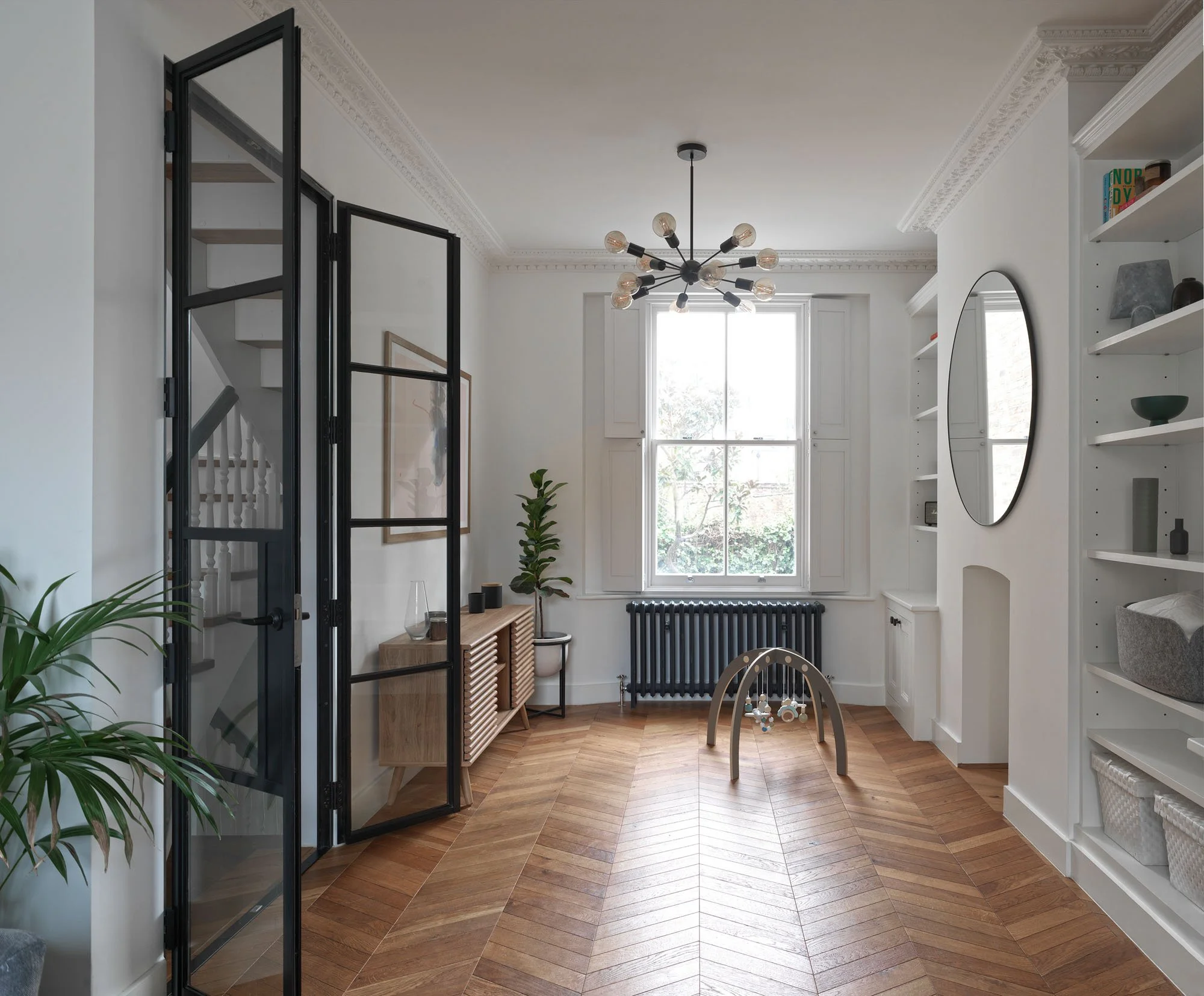
Prebend Street, Islington: a Victorian terrace after a retrofit and loft extension. Careful upgrades helped create a quieter, more stable internal environment while retaining the home’s period character.
A typical example from a Victorian terrace project
On a recent project, the client wanted to improve comfort and reduce heating costs in a mid-terrace house.
Initially, the focus was on insulating the walls.
But once the house was considered as a whole, priorities shifted:
Roof insulation addressed major heat loss
Airtightness improvements reduced draughts
Ventilation was upgraded
Wall insulation was applied selectively
The result was not one big upgrade, but a sequence of smaller decisions that worked together.
The difference was immediately noticeable.
The front room no longer felt cold
Temperatures between rooms became more consistent
The house felt calmer and easier to heat
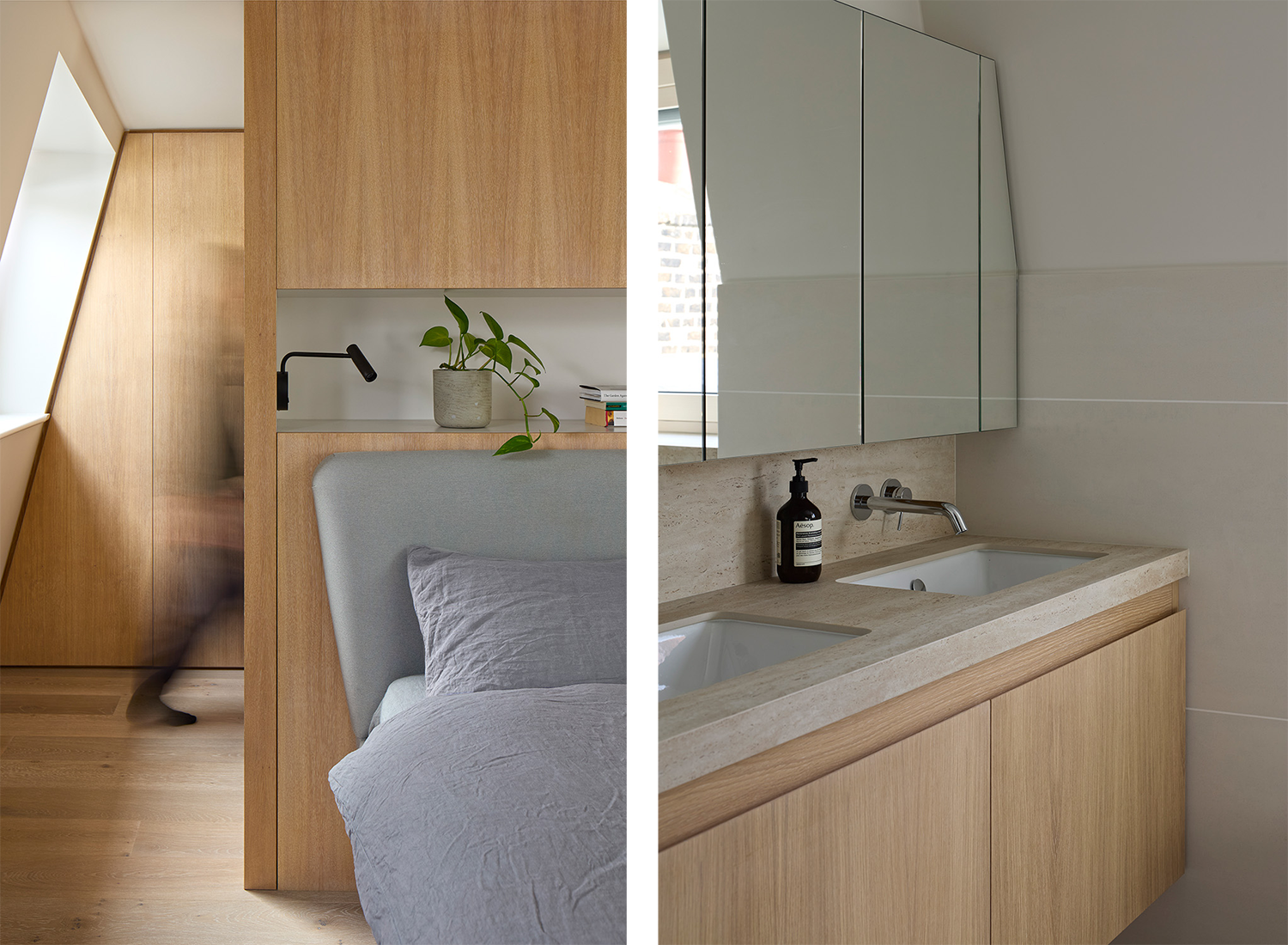
Lower Clapton, Hackney: the new loft bedroom and ensuite after the retrofit and loft extension. Natural materials, a warm roof build-up and triple-glazed windows help create a calm, comfortable space with improved thermal comfort.
Planning a retrofit for your Victorian terrace
A Victorian terrace comes with predictable constraints. Party walls, conservation controls, existing extensions and budget all shape what is realistic.
Before focusing on insulation thickness or systems, it is important to understand what is actually feasible for your home.
Before moving forward, it is worth understanding how these decisions fit together.
Our guide to insulating a period London home explains the principles behind Victorian home insulation and how these upgrades work together as part of a wider strategy.
From there, our Home Visit and Appraisal or Retrofit Strategy service can help you move forward with clarity and confidence.

Planning insulation in a Victorian terrace is easier with a clear strategy. Studio CMA can help you understand where heat is being lost, how moisture moves through the building and which upgrades should happen first.