
How to Brief an Architect in London
What Homeowners Often Get Wrong
If you are planning a significant renovation, extension or retrofit, you may feel pressure to arrive with a clear plan.
You do not need one.
Most thoughtful London homeowners begin with something less defined but more important. A sense that the house is not working as it should. A recognition that daily life could function better.
An architectural brief is not a list of rooms. It is a framework for decision-making. It defines priorities, constraints and investment before design is tested.
If you are unfamiliar with how structured projects develop, our Architect-Led Renovations in London page explains how decisions are shaped carefully, stage by stage.

Early conversations help shape a clear and confident brief.
The Difference Between Vague and Valuable
Many projects begin with statements such as:
“We want to open up the back.”
“We’d like it to feel modern.”
“We need more space.”
These are instincts, not briefs. They describe form, not purpose.
A stronger brief sounds different:
“We host eight people most Sundays and the kitchen cannot accommodate that comfortably.”
“We plan to stay here for at least fifteen years and want the house to adapt as our children grow.”
“The rear rooms are consistently cold in winter and we want to improve comfort and reduce energy demand.”
“We are prepared to invest between X and Y if it delivers long-term quality and lower running costs.”
The difference is direction. The second set defines behaviour, time horizon and measurable intention. It allows trade-offs to be made deliberately.
That is the foundation of working with an experienced architect in London.

Early sketches help express ideas that are difficult to put into words.
Start With How the House Performs
Before drawings or finishes, assess performance.
Where are rooms consistently cold?
Where does condensation form?
Which spaces feel disconnected?
Does circulation restrict natural movement?
Architecture responds to use and performance, not aspiration alone.
In many Victorian and Edwardian properties, modest adjustments to layout can transform daily life. But only when the underlying issues are clearly identified.
If you are preparing an architectural brief for a renovation, focus first on what is not functioning.
Define What Must Improve
Serious projects are outcome-led.
You may want:
• Consistent thermal comfort
• Reduced energy consumption
• Lower long-term maintenance exposure
• Completion aligned with a defined timeframe
• A clear investment range
If sustainable home improvement in London is important to you, state it directly. Improving energy performance in older brick buildings requires deliberate early decisions. It cannot be layered on later without consequence.
Clarity of intention is more important than technical language.
Be Open About Budget
Budget transparency strengthens a project.
An approximate range allows early cost testing to guide design while options remain flexible. It prevents time being spent developing schemes that do not align with financial parameters.
For context on how scope and responsibility influence fees, see Architect Fees in London.
Structured projects also test build costs early rather than waiting for a final figure. Our article on How Architects Use Early Cost Planning to Reduce Risk explains how this protects scope and reduces late change.
Honesty about investment enables better decisions.

Material palettes help clarify mood, tone and atmosphere.
Sustainability Is Strategic, Not Cosmetic
In London’s period housing stock, renovation choices affect comfort and durability for decades.
If breathable construction, lower heating demand or long-term resilience matter to you, they must form part of the initial brief.
Performance of the building fabric, meaning how walls, floors and roofs manage heat and moisture, shapes strategy more than surface finishes. A retrofit-led approach differs fundamentally from cosmetic refurbishment.
State long-term priorities clearly. They influence every decision that follows.
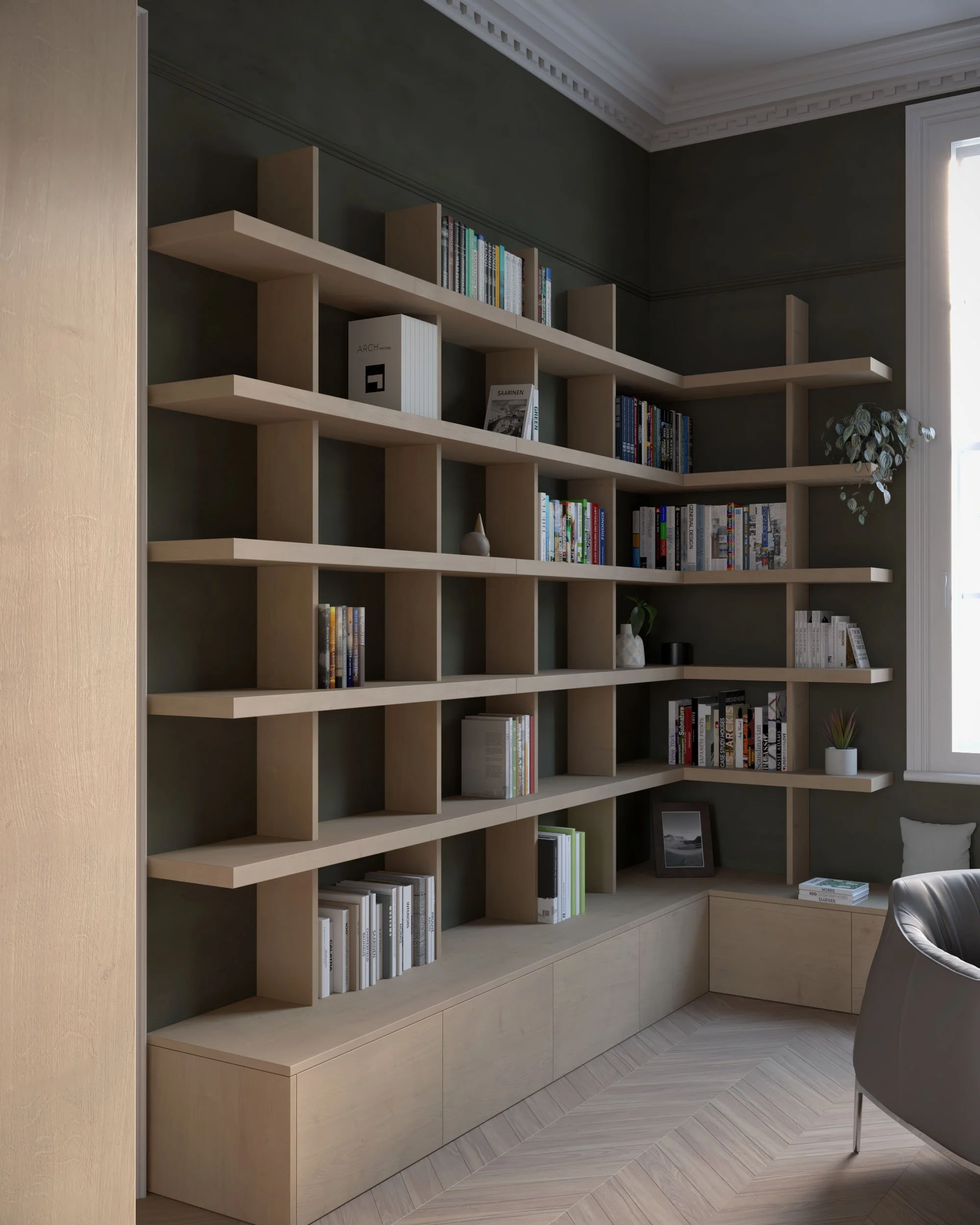
A well-briefed project leads to spaces that feel calm, generous and personal.
Allow the Brief to Mature
A brief should not be fixed before design begins.
It is a working hypothesis.
As planning constraints, structural realities and cost feedback emerge, priorities refine. A smaller intervention may prove more effective than a larger one. Reconfiguration may deliver greater value than extension.
This is disciplined progression, not indecision.
For an overview of how renovation stages unfold in London, see our Renovation Timeline in London.
Structured projects improve through testing.

Exploring variations and possibilities before settling on the right direction.
You Are Not Being Judged
Working with an architect in London is a professional collaboration.
You are not expected to present finished solutions. You are expected to define what matters and where uncertainty exists.
The architect’s role is to interrogate assumptions, test feasibility and align ambition with regulation, cost and long-term performance.
If you are unsure whether professional guidance is necessary at an early stage, our article on Why Hire an Architect in London explains the strategic value of architectural involvement before construction begins.
A considered brief does not require certainty. It requires willingness to think carefully.

Well considered details are a natural outcome of a clear and thoughtful brief.
Final Thoughts
Learning how to brief an architect in London is not about producing a document. It is about defining direction.
When you can articulate:
What is not working.
What must measurably improve.
What investment range is realistic.
What long-term performance matters.
You reduce risk and increase control.
The most successful renovations are not rushed into. They are shaped deliberately from the outset.
If you would like to test your thinking against a structured professional framework, our Architect-Led Renovations in London page outlines how projects are developed step by step.
For those ready to explore feasibility in more detail, a focused early review through our Home Visit and Appraisal provides a measured starting point before committing to full design work.