
Architect Fees in London
Understanding Costs for Major Home Renovations
When homeowners search for architect fees in London, the question is usually straightforward:
How much will this cost, and what does that fee actually cover?
In London, major renovations and extensions often involve period homes, conservation areas, retrofit ambition and dense urban constraints. Architectural fees sit within a wider construction budget and should be understood in relation to project scale, coordination and oversight.
This page explains how architect fees in London are structured, what influences architect cost in London, and why percentage comparisons only make sense when scope is clearly defined.
For an overview of how significant projects are structured from briefing to completion, see Architect-Led Renovations in London.
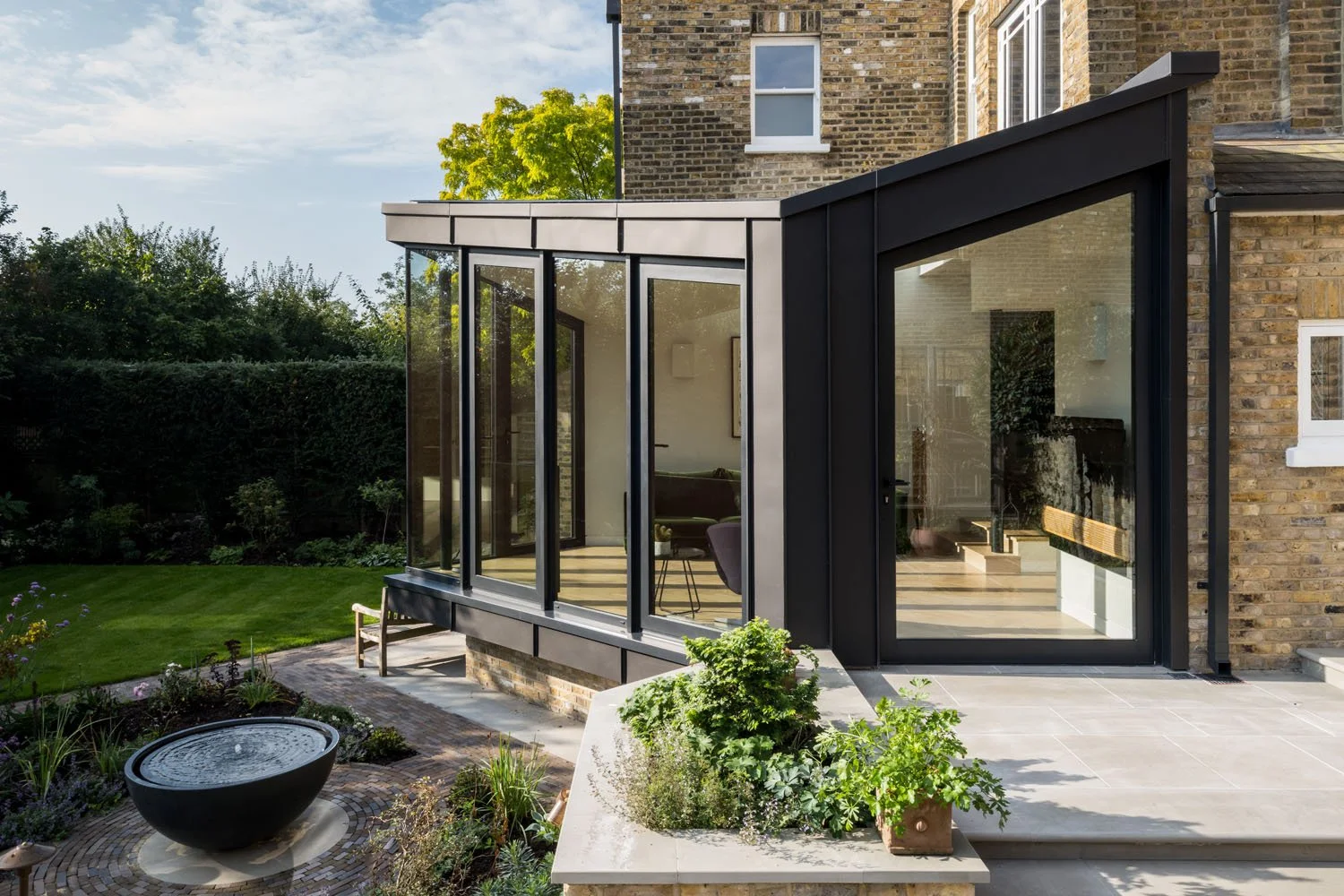
Architect fees need to be understood in relation to the value they help protect. At Culverden Road, design, structure, glazing, landscape and construction sequencing all had to be coordinated carefully to deliver a calm, resolved garden room.
How Architect Fees Are Structured in London
Architect fees in London are typically arranged using one or a combination of the following models.
Percentage of Construction Cost
For comprehensive services, the most common approach is an architect percentage fee calculated against the final construction cost.
This aligns responsibility with project scale. As construction budgets increase, coordination, technical detailing and construction-stage involvement usually increase as well.
Fixed Fees
Fixed fees are appropriate where scope is clearly defined and limited, such as feasibility work or a tightly bounded stage.
Where the brief evolves or planning strategy changes, the scope and fee may need to be reviewed.
Stage-Based Fees
Most meaningful renovation projects are structured around RIBA stages, with fees allocated to defined deliverables at each stage. This provides transparency about what is included during briefing, planning, technical design and construction.
Clarity of scope matters more than the fee label.
How Much Does an Architect Cost in London?
There is no single figure for architect cost in London.
Fees depend on:
Construction budget
Condition and age of the property
Whether the home is listed or within a conservation area
Planning strategy and number of submissions
Level of retrofit ambition
Extent of involvement during construction
For major residential renovation and extension projects in London, full architectural services typically range between 10% and 15% of construction cost, depending on scope and complexity.
Smaller or technically demanding projects often sit toward the upper end of this range.
Larger or more straightforward projects may sit lower.
Listed buildings and ambitious retrofit strategies often require additional professional input.
These figures relate to architectural services only and exclude VAT and other consultants.
The percentage itself is only meaningful when the scope of service is understood.
What Architect Fees Actually Fund
Architect fees are not simply payment for drawings.
They fund professional time across the life of a project, including:
Structured briefing and option testing
Planning strategy and submission
Technical design suitable for accurate contractor pricing
Coordination of structural engineers and other consultants
Construction-stage review and oversight
In London, where build costs are high and period fabric can conceal unknown conditions, careful technical development is central to cost control.
For a deeper explanation of this professional input, see What You Are Really Paying For When You Hire an Architect.

Architect fees are not simply payment for drawings. At Prebend Street, a Victorian terrace loft extension in Islington, careful testing, technical coordination and detailed design work were needed to turn an awkward roof space into a calm, buildable stair house and upper-floor extension.
Why Fees Vary Between Projects
Architect fees renovation London projects attract are often higher proportionally than new build work.
Working within existing buildings involves:
Opening up and investigating unknown conditions
Integrating new structure into old fabric
Navigating conservation and neighbour constraints
Coordinating retrofit upgrades without compromising moisture balance or thermal performance
An extension close to permitted development differs significantly from a whole-house refurbishment in a conservation area.
Fees reflect the level of professional time required, not simply floor area.
RIBA Stages and Financial Control
Most coordinated renovation projects follow defined stages. Each stage carries a different level of financial influence.
Stage 0–1: Briefing
Clarifying priorities, constraints and realistic budget parameters.
At Studio CMA, this work is carried out through our Architect’s Home Visit & Appraisal.
This initial stage establishes what is feasible for your property, budget and planning context before design begins. It brings together briefing, early cost planning and site understanding so that decisions are grounded from the outset.
Early cost thinking begins here and continues through concept design. The effect of sequencing decisions at this stage is explained in early cost planning for London renovation projects.
The real question is not only what the architect’s fee costs. It is how well the design process protects the wider project budget. Early cost forecasting helps homeowners understand likely investment levels before planning, technical design and construction decisions become fixed.
Stage 2: Concept Design
Developing spatial strategy and testing feasibility against budget and planning context.
Cost planning is refined alongside design so that ambition and financial capacity remain aligned.
Stage 3: Planning
Preparing proposals suitable for submission.
At this stage, proposals are often tested through 3D modelling, energy strategy and cost modelling.
Planning drawings are not construction drawings and are not sufficient for accurate contractor pricing.
Stage 4: Technical Design
Producing detailed information suitable for competitive pricing and construction.
This stage focuses on documentation, coordination and procurement, including choosing and appointing the right builder.
Clear technical information at this stage materially improves pricing accuracy.
Stage 5: Construction
This stage requires continued professional oversight during the build to review quality, respond to site conditions and protect design intent. The implications of removing that oversight are set out in architect involvement during construction.
Reducing professional involvement at later stages may lower fees, but it also reduces oversight at the point where financial exposure is greatest.
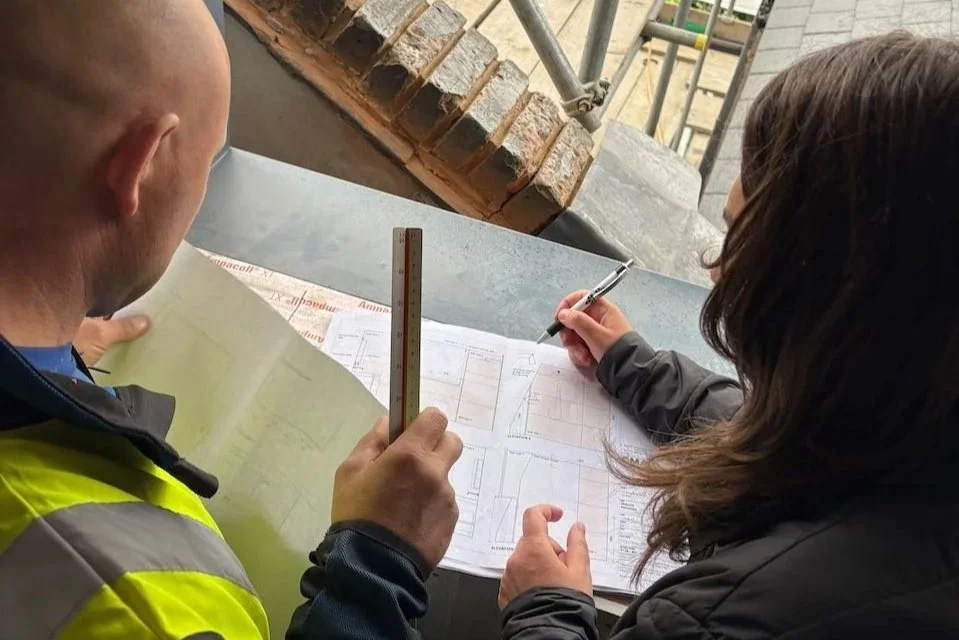
Architectural value continues during construction. Site-stage involvement helps protect design intent, coordinate details and resolve questions before they become costly changes.
Why Architect Fees Cannot Be Compared in Isolation
Comparing architect percentage fee UK guidance without understanding scope is unreliable.
Two practices quoting a similar percentage may differ significantly in:
Technical detail
Level of construction-stage involvement
Tender management
Consultant coordination
A lower fee usually reflects reduced professional time somewhere in the process.
That reduction does not remove complexity. It simply transfers responsibility and decision-making elsewhere, often into the construction phase where changes are more expensive and less controlled.
Percentage comparison without scope comparison is not meaningful.
Architect Fees Within the Wider Project Budget
Architectural fees are typically a modest proportion of total construction cost.
Yet they influence:
How well the project is defined before tender
How accurately contractors can price the work
How effectively technical coordination is managed
How closely the built result reflects the design intent
In London’s dense urban context, with period homes and conservation sensitivities, coordinated design and careful technical documentation are central to financial control.
Architect fees should therefore be considered alongside overall project scale and complexity, not treated as a standalone number.
How We Approach Fees at Studio CMA
We begin with structured briefing.
An initial consultation allows us to understand the property, ambitions and likely planning route. If aligned, the next step is our Home Visit and Appraisal.
This stage provides an informed basis for discussing scope, construction budget and stage-based fees.
Where a client chooses to pursue a more ambitious planning strategy or retrofit approach, the additional professional time required is made explicit.

Understanding architect fees starts with understanding scope. Studio CMA helps homeowners clarify ambition, budget, planning route and the level of professional support needed to protect value before committing to a major London renovation.
Final Thoughts
Architect fees in London vary because buildings, planning conditions and ambitions vary.
The more useful question is not simply how much an architect costs, but how complex the project is and what level of professional oversight it requires.
In major London renovations, disciplined coordination and clear technical development are central to managing construction cost effectively. Architectural fees reflect that responsibility.
If you are planning a substantial renovation or extension, understanding the structure of the process is the logical next step. Our Architect-Led Renovations in London page explains how projects are sequenced from briefing through to construction, and how fees sit within that wider framework.
Last reviewed and updated 2 March 2026 to reflect current best practice in residential architecture, fee structures, and long-term home projects.