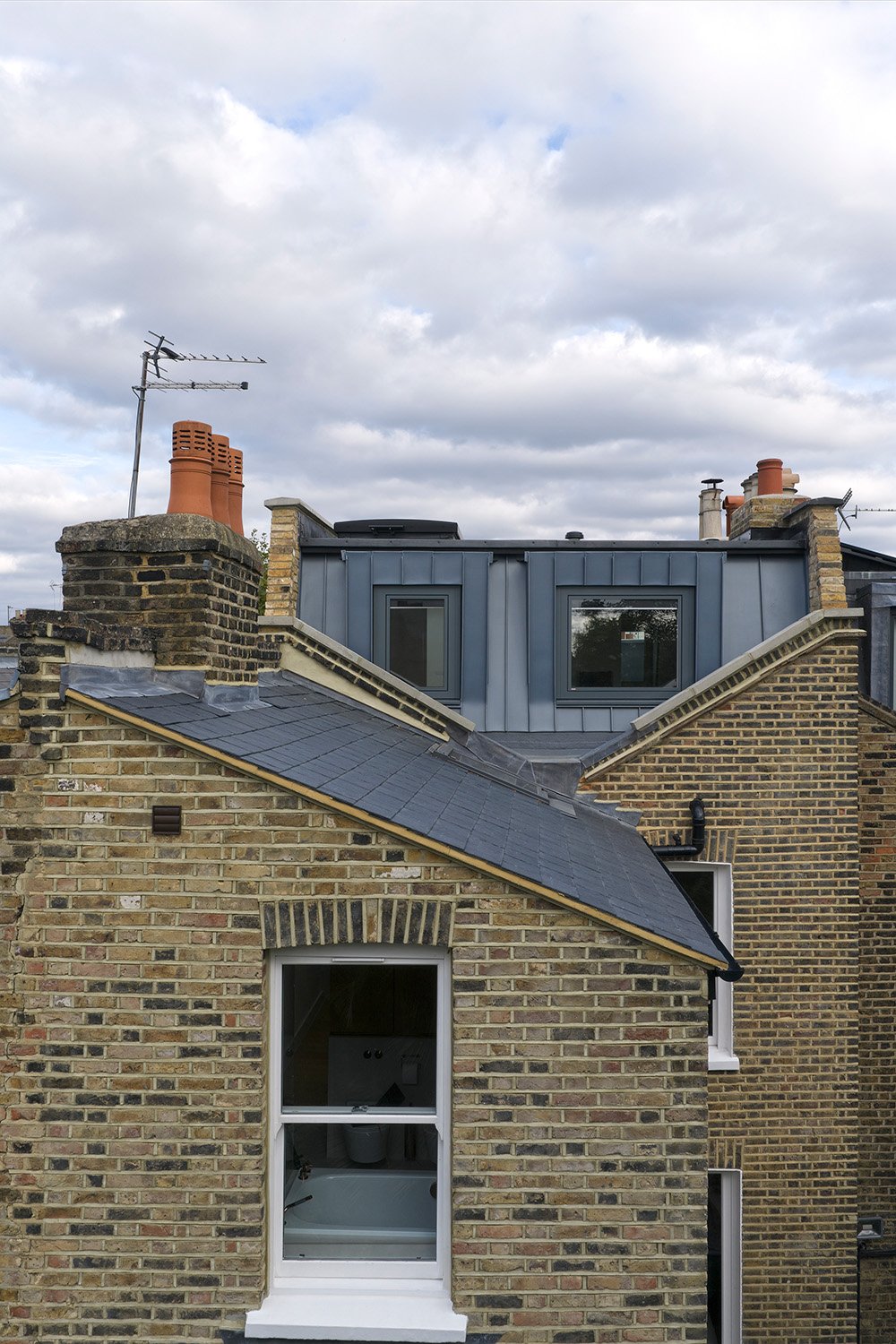
Victorian Loft Conversion and Family Home Retrofit, Hackney
Soft-Spoken House
A calm, energy-efficient renovation of a Victorian family home in Lower Clapton, Hackney. Studio CMA reconfigured the upper floors and designed a compact loft conversion, combining careful spatial planning with a fabric-first retrofit approach to improve comfort, storage and day-to-day living.
The brief
When the owners bought their Victorian house in Lower Clapton, the family was young. Over time, as their family grew to include two young boys, the house began to feel less in tune with how they lived. Bedrooms were spread across different floors, the bathroom was small, storage was limited, and several rooms were uncomfortable to use. Some spaces were too hot in summer and too cold in winter.
They wanted a home that felt calm, well-organised and easy to live in. Welcoming but minimal. Spacious without feeling excessive. A house that worked quietly in the background of everyday family life.
Rethinking the obvious solution
They had already tried to improve the house once. Soon after moving in, they extended the kitchen, guided largely by a contractor. The process was stressful, and the result never quite felt right.
Later, they secured planning permission for a loft extension designed by a specialist loft company. But again, something did not convince them. The layout felt inefficient and wasteful of space. They began to wonder if the house could do better.
That moment of doubt led them to speak to an architect.
A structured and considered approach
They discovered Studio CMA through social media and felt an immediate connection. Our first conversation focused less on form and more on how the house felt to live in. There was an easy understanding about balance, proportion and comfort, and a shared belief that good design should feel calm rather than forced.
After their earlier experience, structure and transparency mattered. They were drawn to our clear process, beginning with a Home Visit and Appraisal.
This early stage combined a careful review of the existing house, early cost forecasting and energy modelling. It allowed everyone to understand what was possible before committing to detailed design, and where the budget would have the greatest impact.

Editing the house, not overloading it
From the outset, we agreed the priority was the upper floors. The challenge was to create a proper main bedroom suite within a compact roof extension, bring both boys’ bedrooms together on the first floor with a generous family bathroom, and significantly improve comfort throughout the house. The solution came not from grand gestures, but from careful calibration and editing.
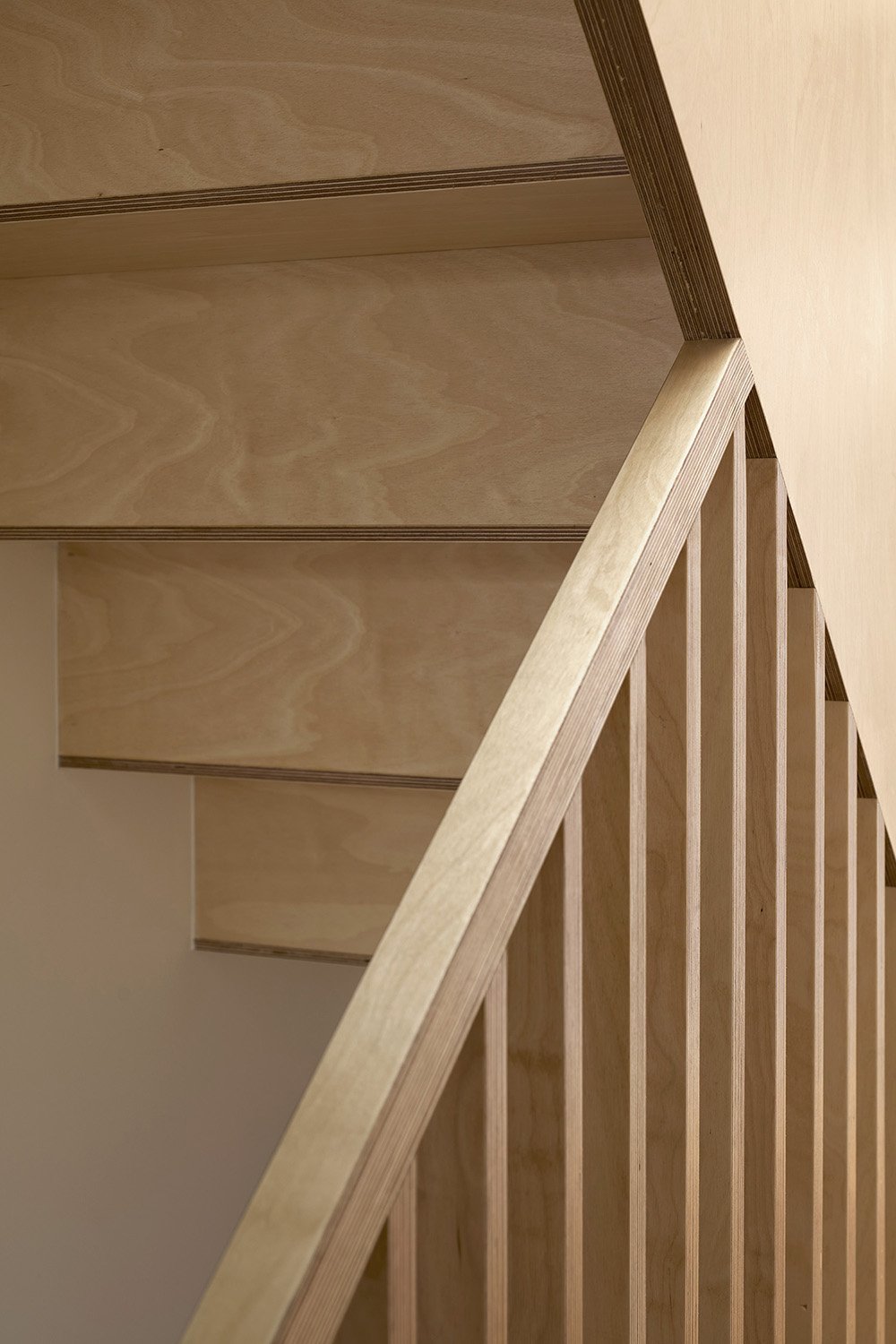
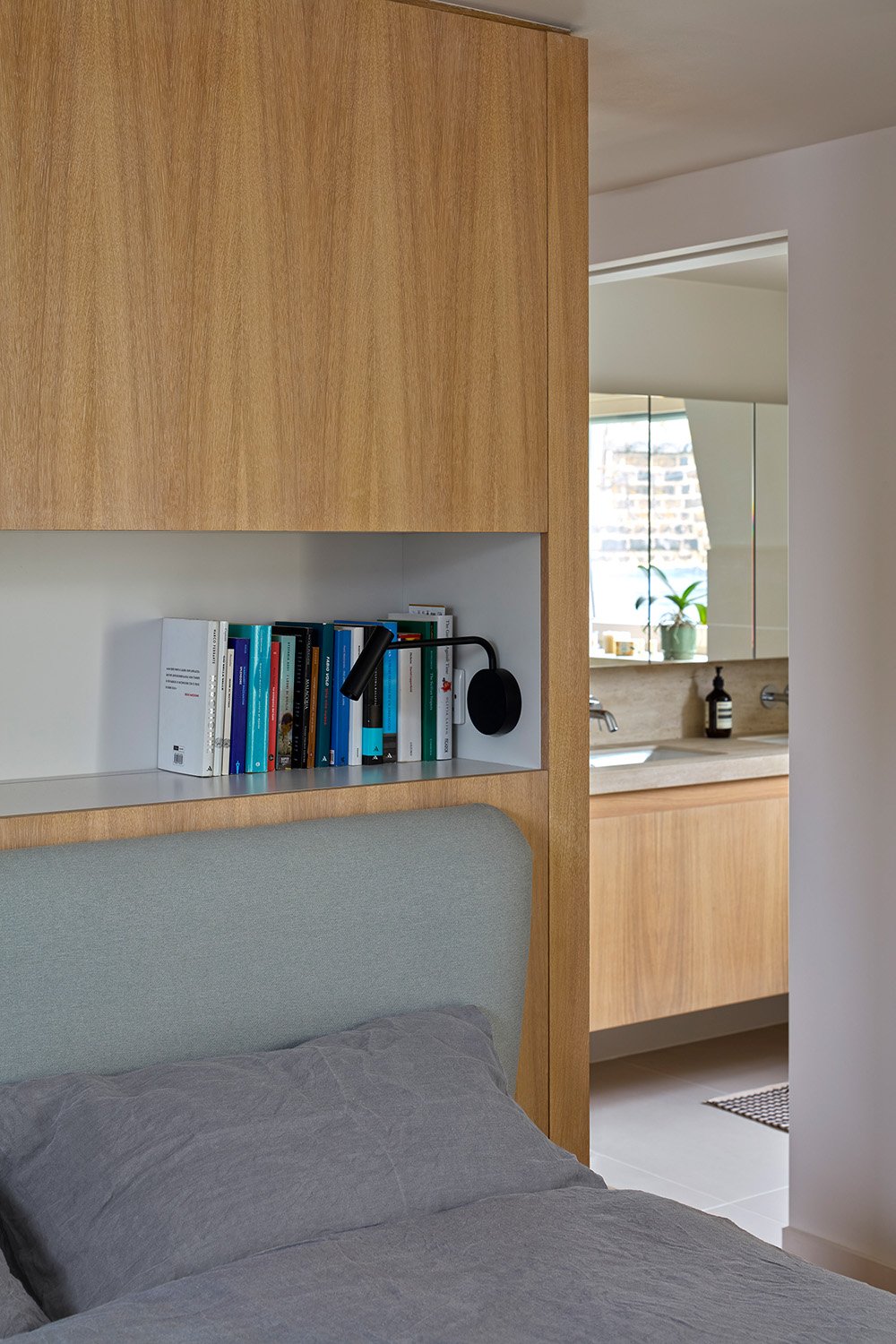
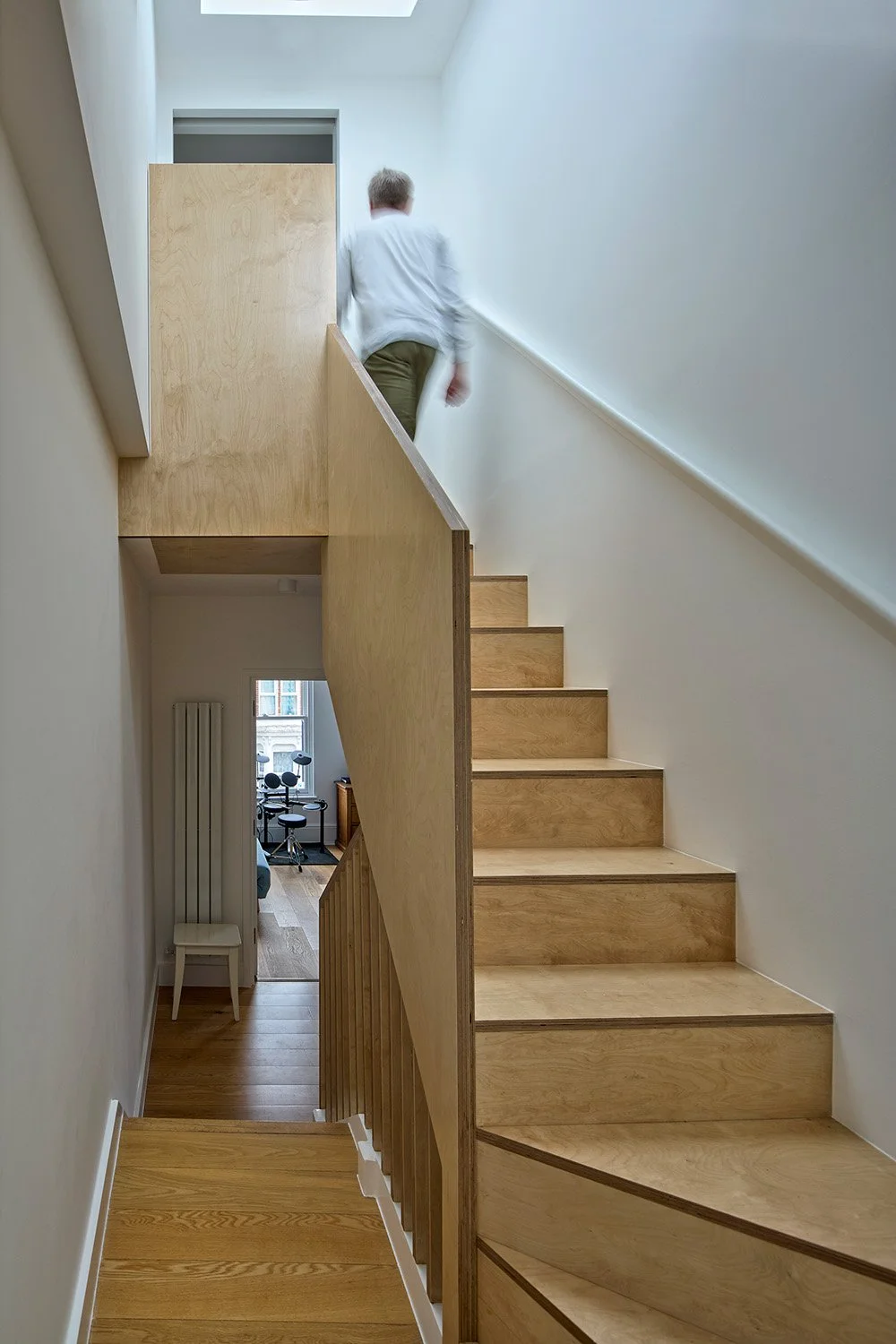
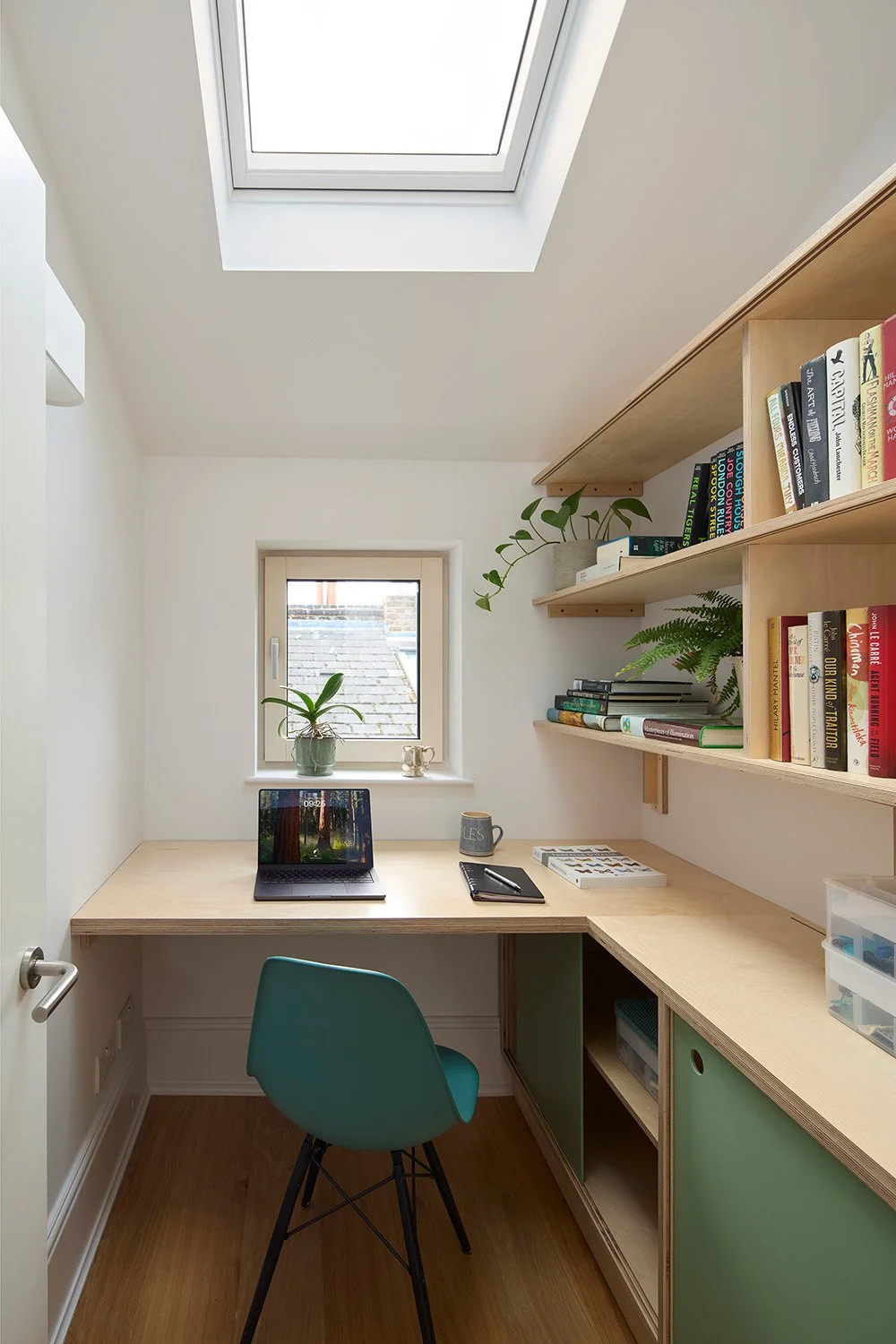
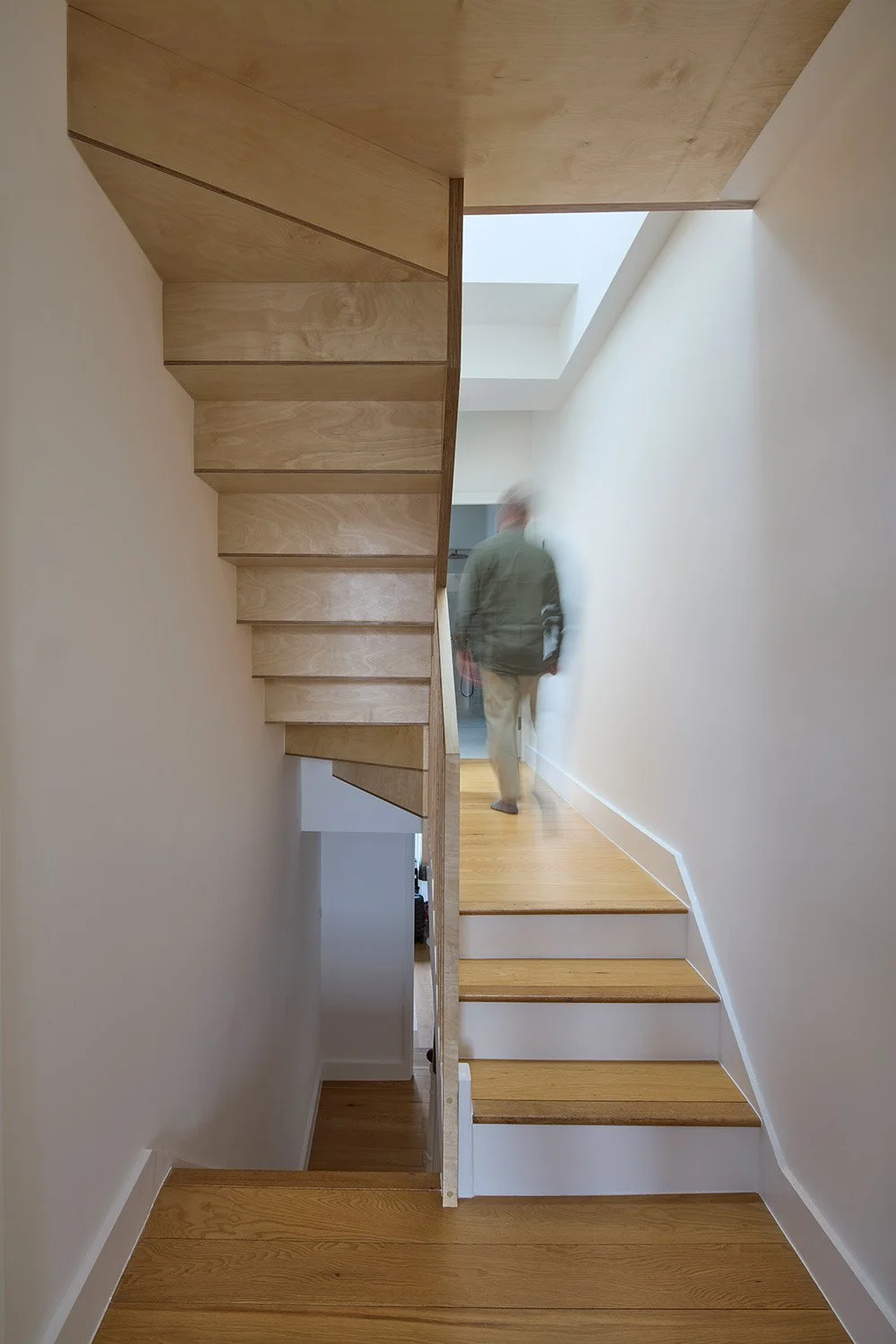
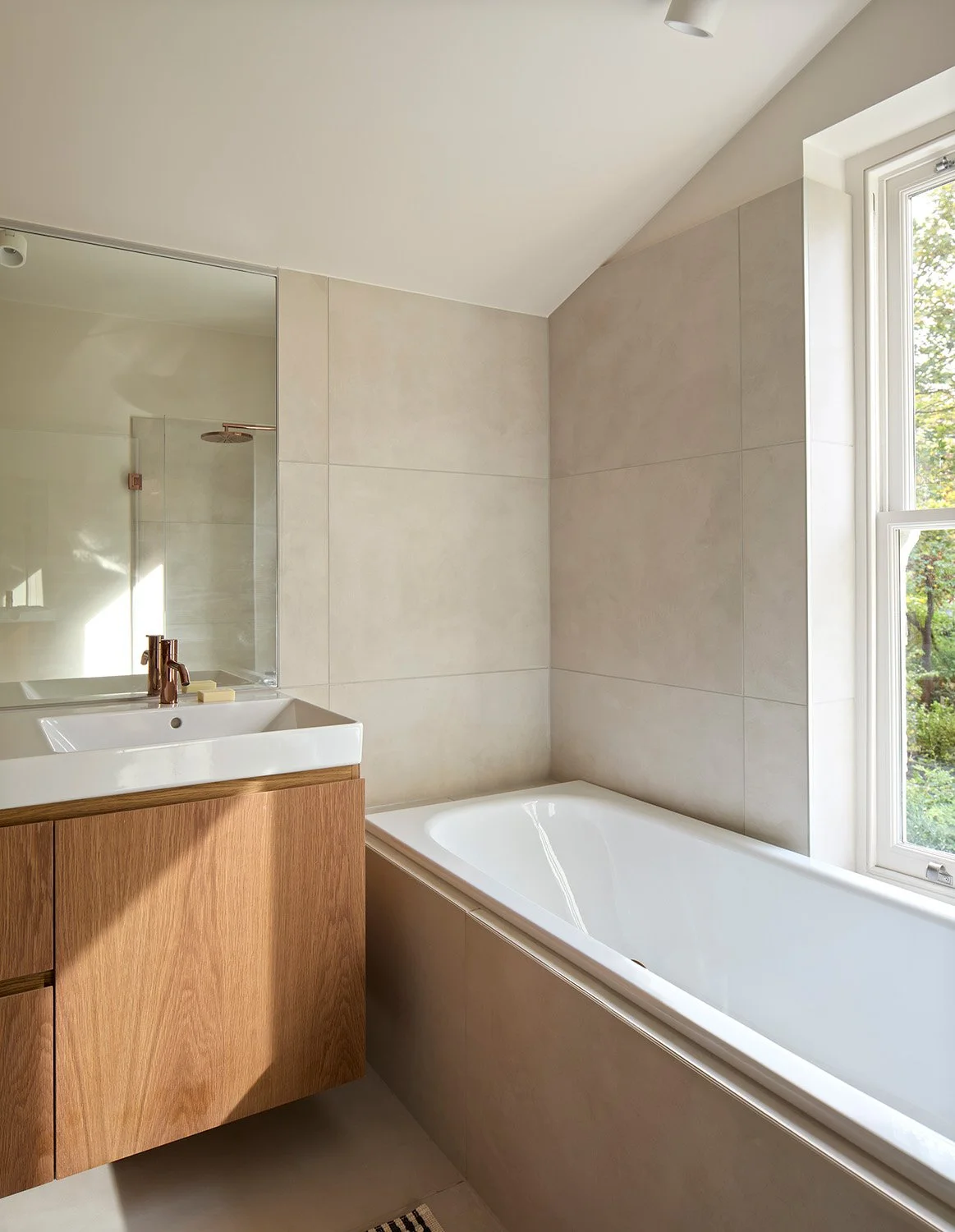
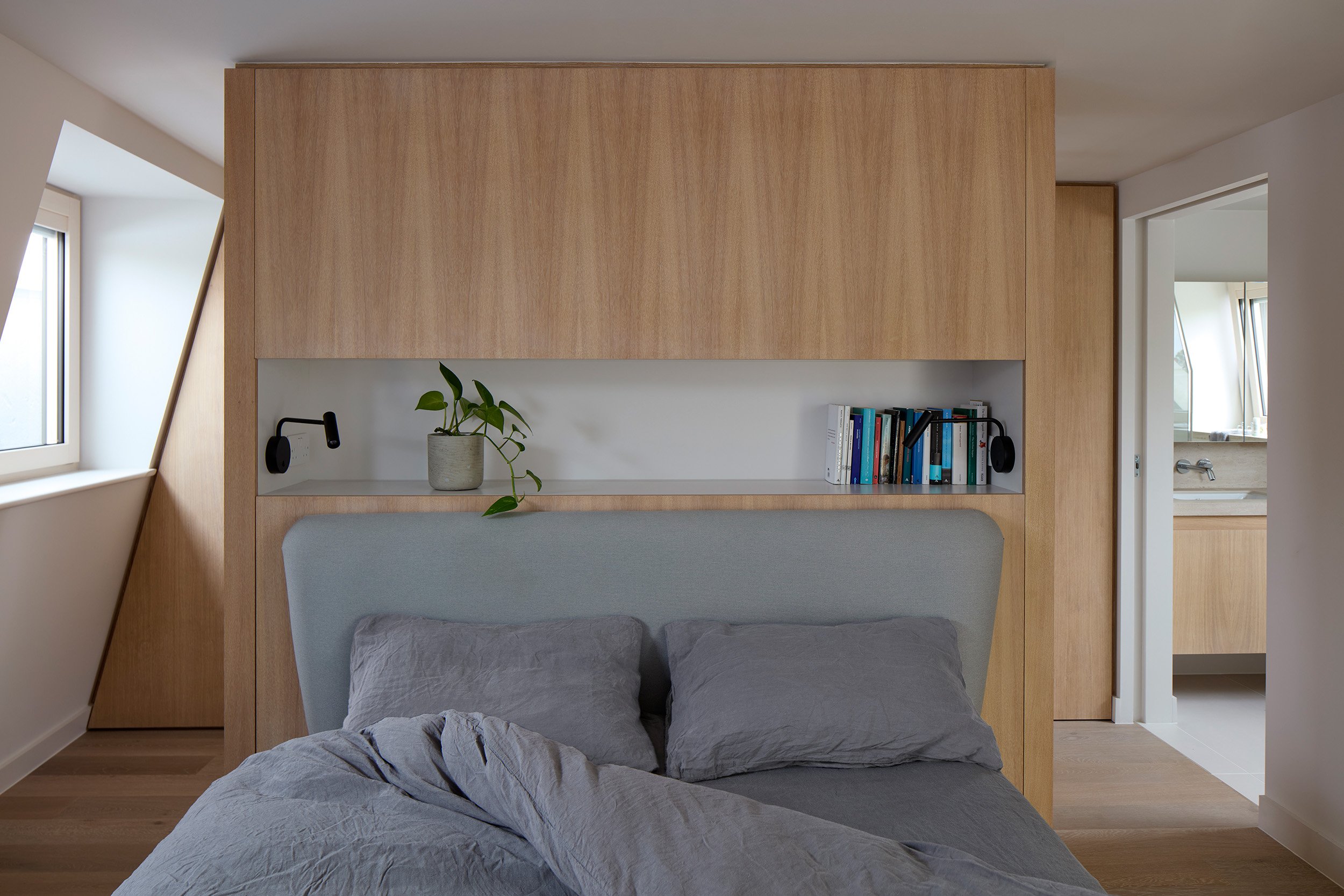
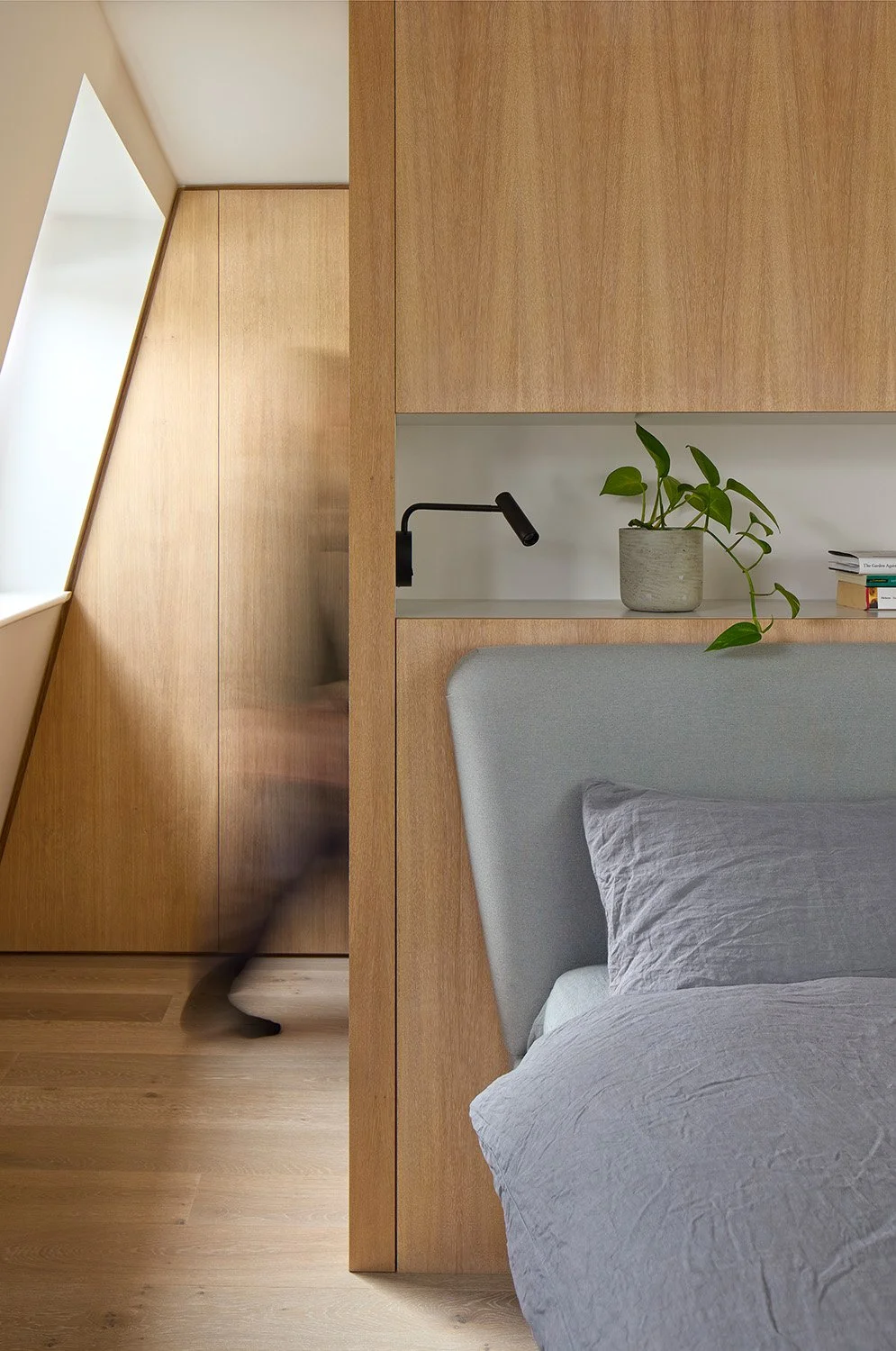
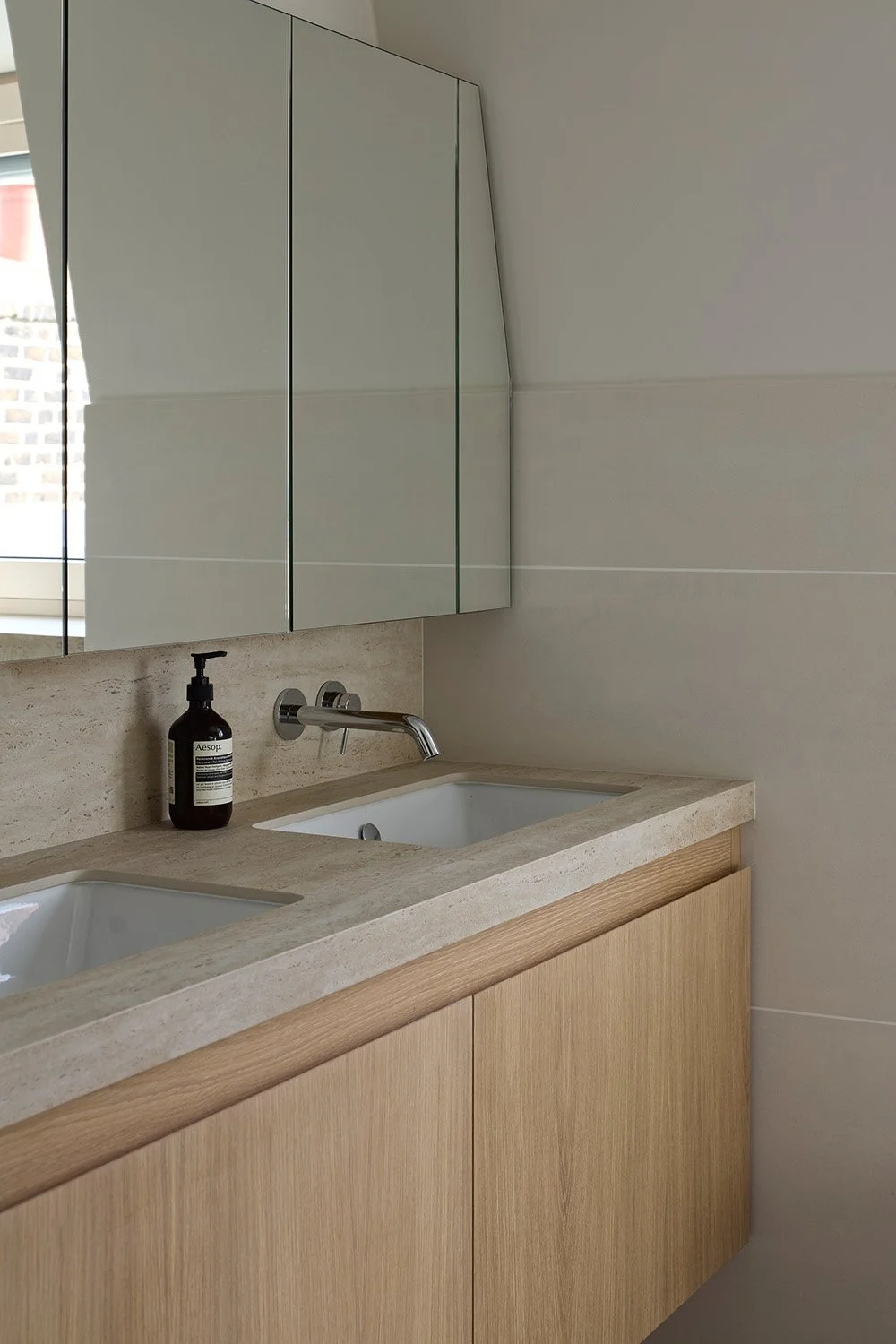
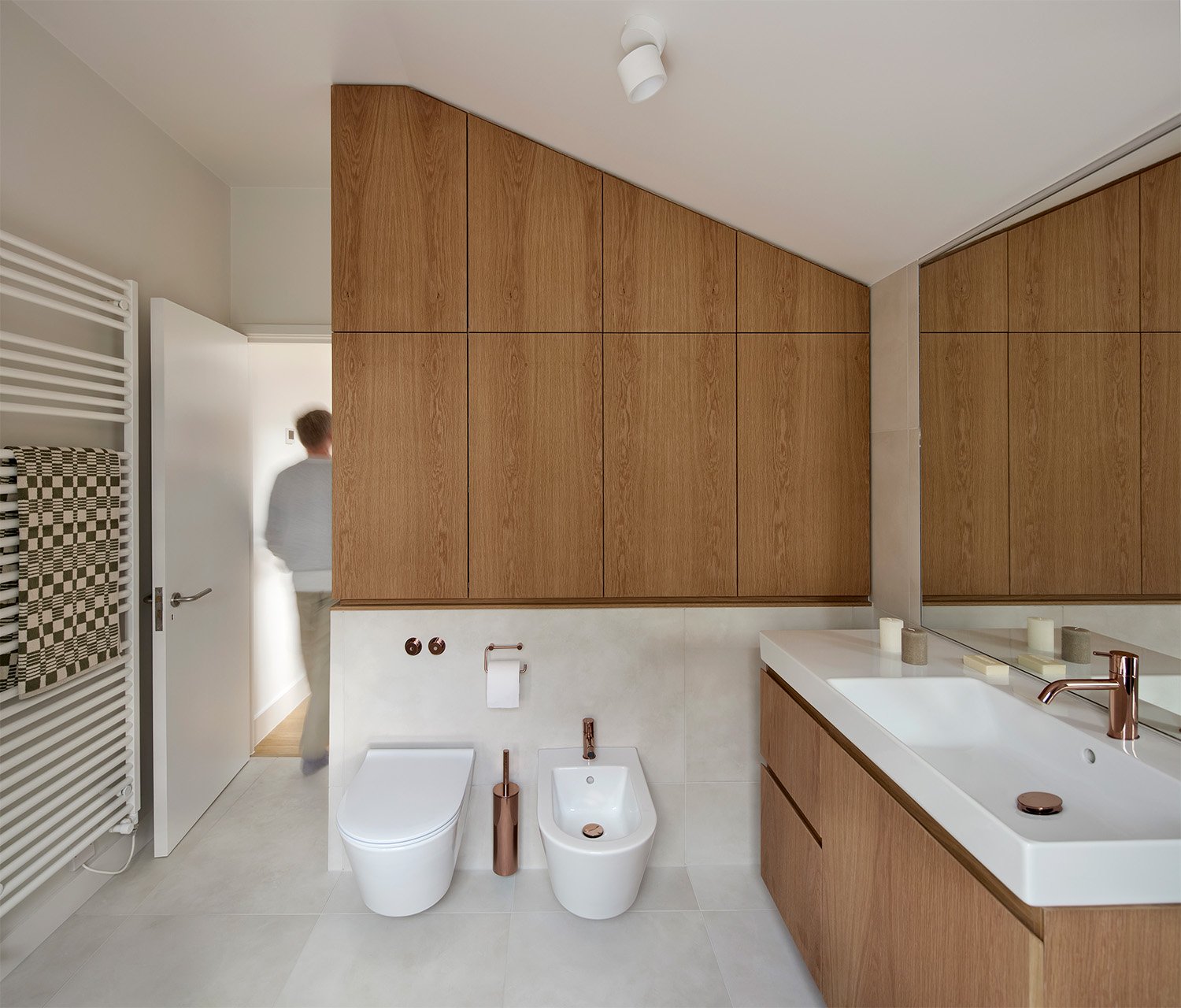
A compact, well planned stair became the key move. It unlocked valuable space in the loft, allowing for a calm main bedroom with dressing area and ensuite tucked neatly under the roof. The first floor was reconfigured so the boys’ rooms now sit side by side, each with space to study, play and grow. A larger family bathroom replaced the old cramped layout, and a small, efficient study was created where it made most sense. The lower ground floor now includes flexible guest accommodation alongside the au pair’s room.
Every decision was deliberate. Nothing was oversized. Nothing was wasted.
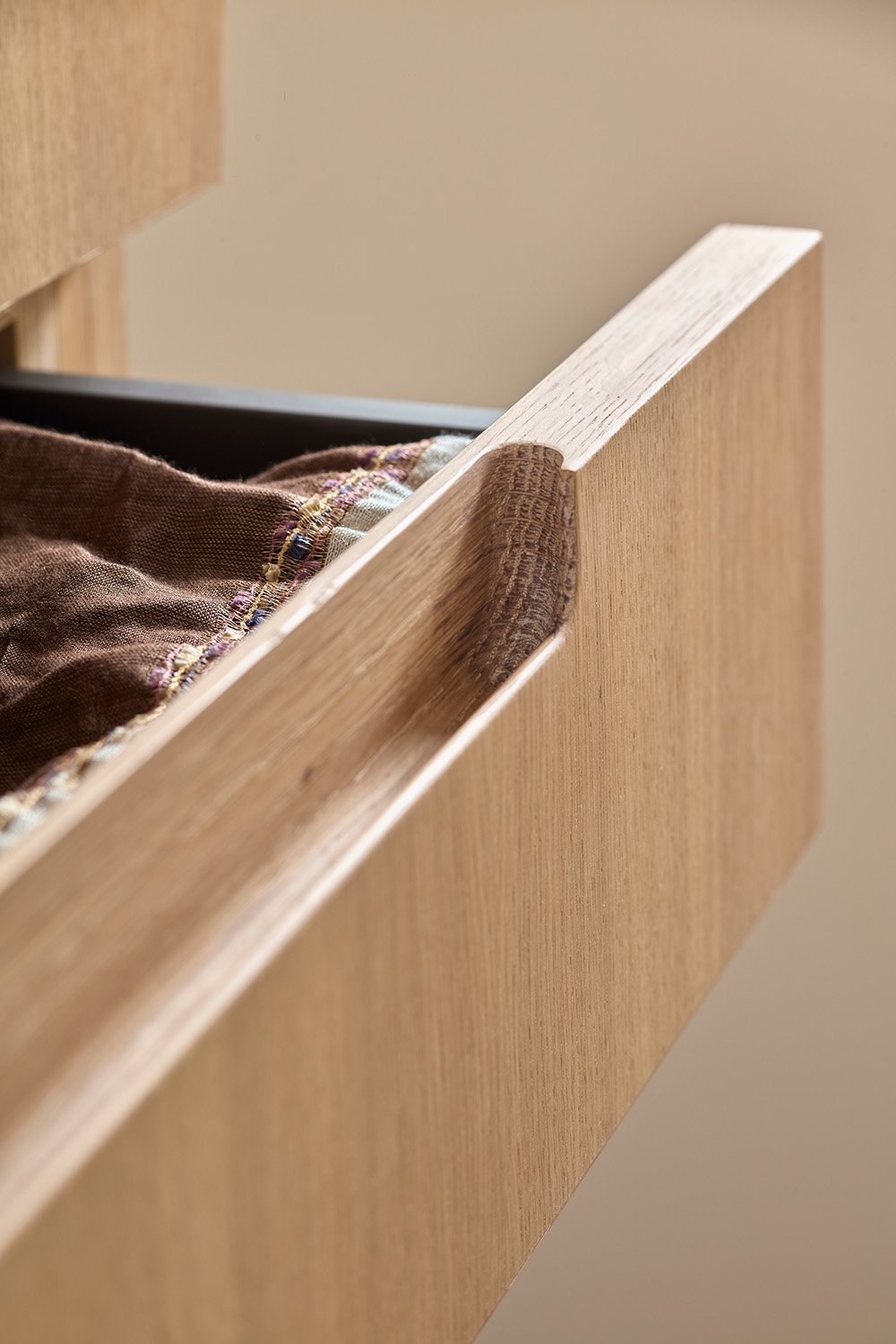
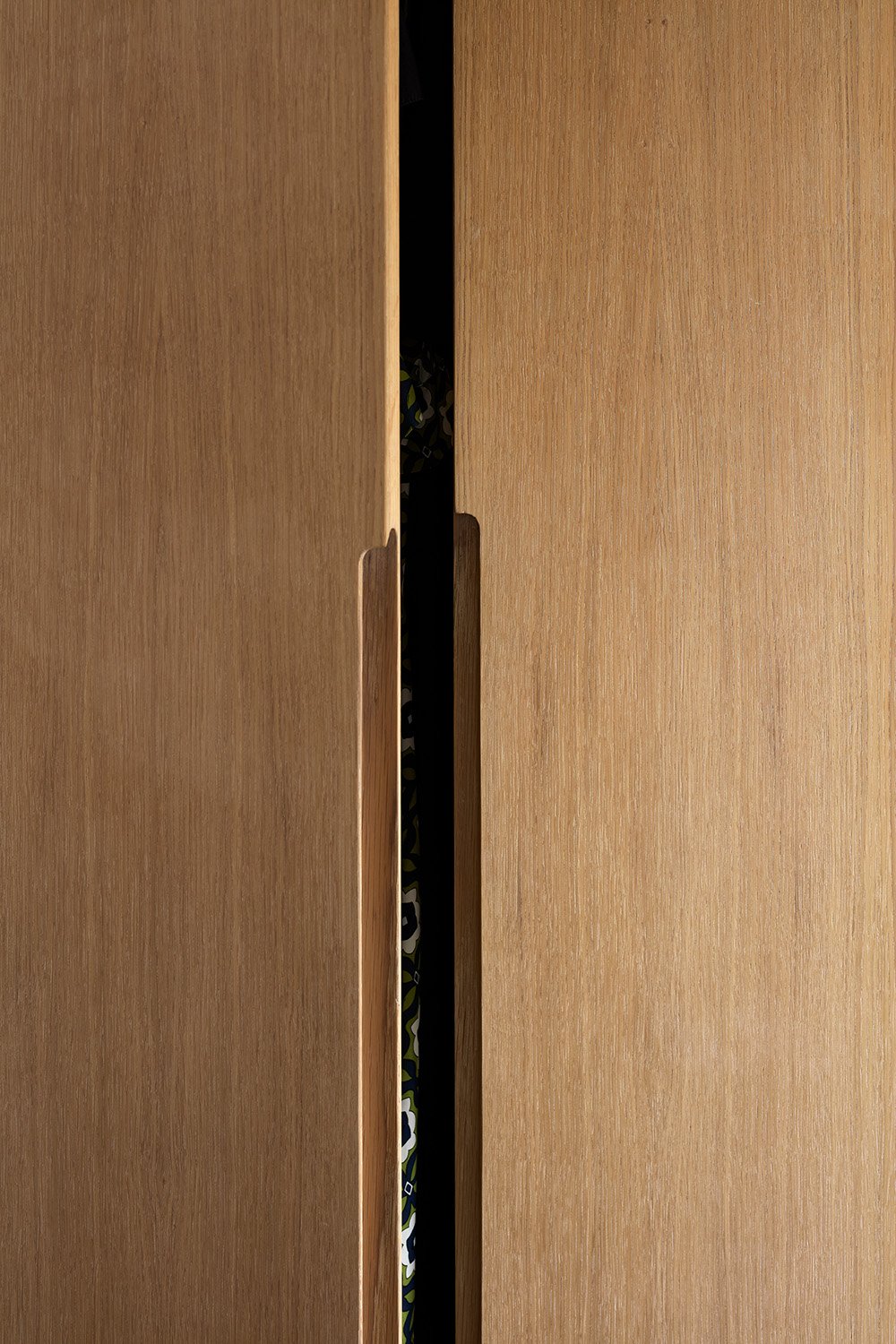
Storage played a critical role in how the house now feels. Removing the chimney breast allowed for generous built-in wardrobes, freeing the lower floors from clutter.
“Getting rid of the chimney breast was such a good decision. We now have huge wardrobes. We’ve moved so much stuff out of the lower floor. It’s made the whole house feel calmer.”
Comfort through a fabric-first retrofit
The sustainability upgrades were modest but correct for the age of the house. Internal wall insulation was added to almost every wall, airtightness was improved, and breathable materials were used throughout as part of a
whole-house retrofit strategy.
These measures were treated as essential rather than optional. The impact has been immediate and tangible.
“The insulation has made a massive difference. I’m so much warmer now. I don’t have to wear three sweaters at home anymore.”
Living in the house now
Living in the house now feels fundamentally different. The main bedroom has become a quiet retreat, a place of privacy and calm.
“You can go upstairs and feel like you’ve got this peaceful space. It’s like a sanctuary.”
Both adults now have places to work without disruption, making everyday tasks easier to fit around family life. Each child has a bedroom that supports how they live, with enough room for a desk, instruments, play, and friends.
The house has also become a place that can comfortably host others. Over Christmas, five guests stayed for nearly a week, with everyone having their own room and access to bathrooms.
“It’s now a house where you can really host people. It’s not extravagant, but now everyone has what they need. It’s just the right setup for our family.”
A quietly balanced home
For us, Soft Spoken House captures what this project is really about. A careful balancing of space, comfort, storage and sustainability. A series of consistent, sensible decisions made over time. Not a house that shouts for attention, but one that quietly supports the lives unfolding inside it.
Good design does not need to be dramatic to be effective. Sometimes, the most successful homes are the ones that simply feel right.