
Do You Need MVHR in Your London Home?
Revised 21/02/2026
You make the house warmer.
You reduce the draughts.
And then something unexpected happens.
The windows start to steam up.
The air feels heavier.
Bedrooms feel stuffy in the morning.
In many London homes, especially Victorian and Edwardian properties, improving insulation and tightening the building changes how it behaves. What used to escape through gaps now stays inside.
Without a clear ventilation strategy, moisture and stale air begin to build up.
This is where Mechanical Ventilation with Heat Recovery, or MVHR, often enters the conversation.
It is not necessary in every home. But in the right context, it can make a noticeable difference to how your home feels day to day. Fresher air. More stable temperatures. Less condensation. A quieter, calmer environment.
If you are planning a wider upgrade, our guide to home retrofit explains how insulation, ventilation and heating come together as a whole-house approach.
If you are exploring ventilation more broadly, our guide to ventilation strategies in period homes walks through the full range of options, from simple extract fans to whole-house systems like MVHR.
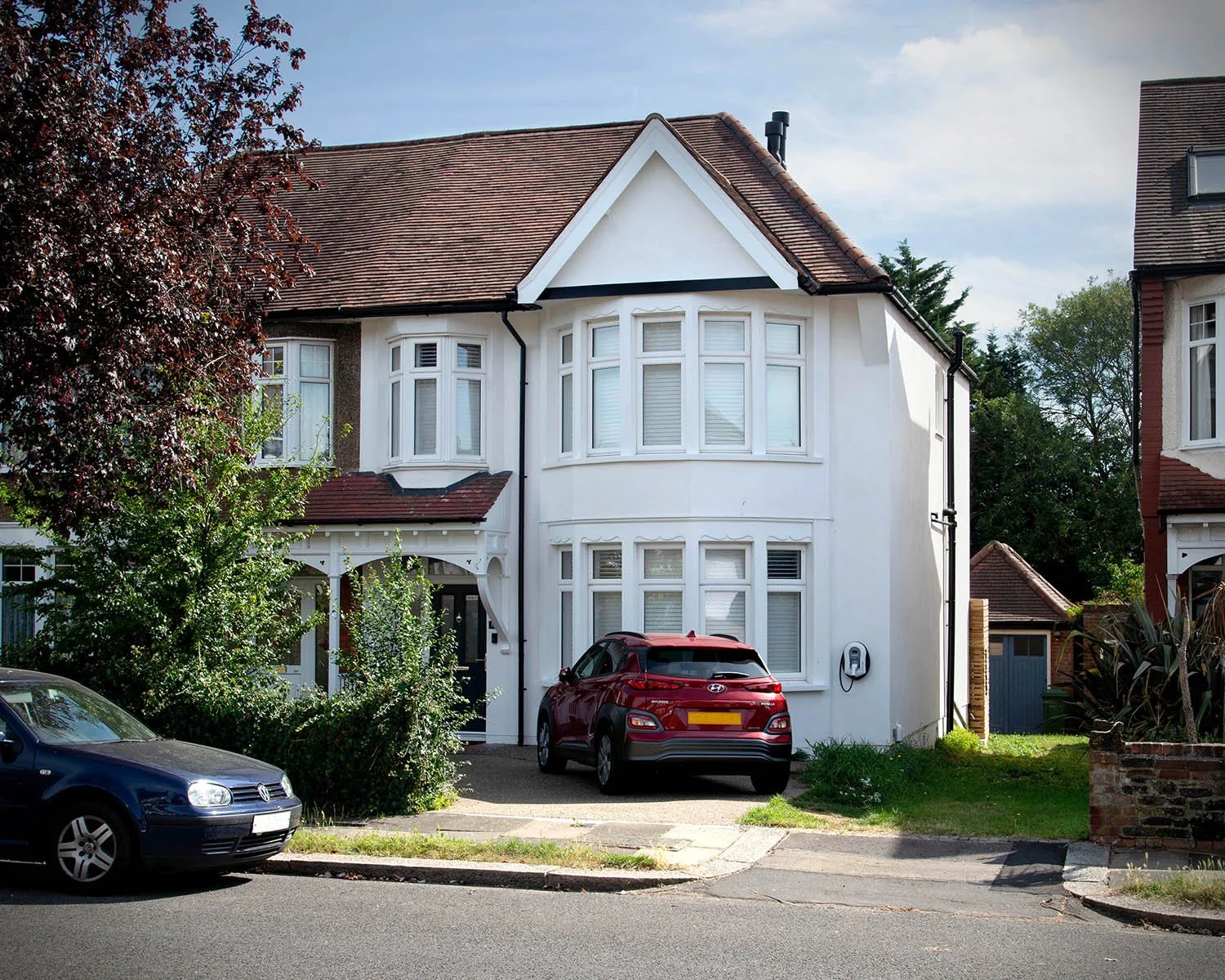
A whole-house retrofit can bring insulation, airtightness, ventilation and heating together, so systems like MVHR work as part of the building rather than as an isolated add-on.
Why Ventilation Becomes a Problem in Retrofit
Improving a home does not just make it warmer. It changes how air and moisture move through the building.
Older homes were never designed to be airtight. They relied on a constant trickle of air through gaps, chimneys and construction joints. As you improve insulation, upgrade windows, and reduce draughts, that background ventilation disappears.
A useful way to think about this, reflected in modern retrofit guidance, is to look at the combined effect of the improvements you are making, not just each change in isolation.
As you upgrade insulation, replace windows, and reduce draughts, you are steadily making the building more airtight. That is what improves comfort and energy performance.
But it also changes how the building deals with moisture.
There is a simple principle behind this:
The tighter you make the building, the more carefully you need to manage how it is ventilated.
Even a single well-executed upgrade can have an impact. When several improvements are combined, that effect becomes much more noticeable.
This is where many projects run into problems.
The building is improved, but the way it breathes is not.
The result is often familiar:
Condensation on windows and colder surfaces
Bedrooms that feel stale by morning
Moisture lingering after cooking or showering
An increased risk of mould over time
This is why ventilation needs to be considered as part of the overall upgrade strategy, not added later once issues begin to appear.
If you are improving insulation, our guide to insulating a London home explains how this affects moisture and ventilation.
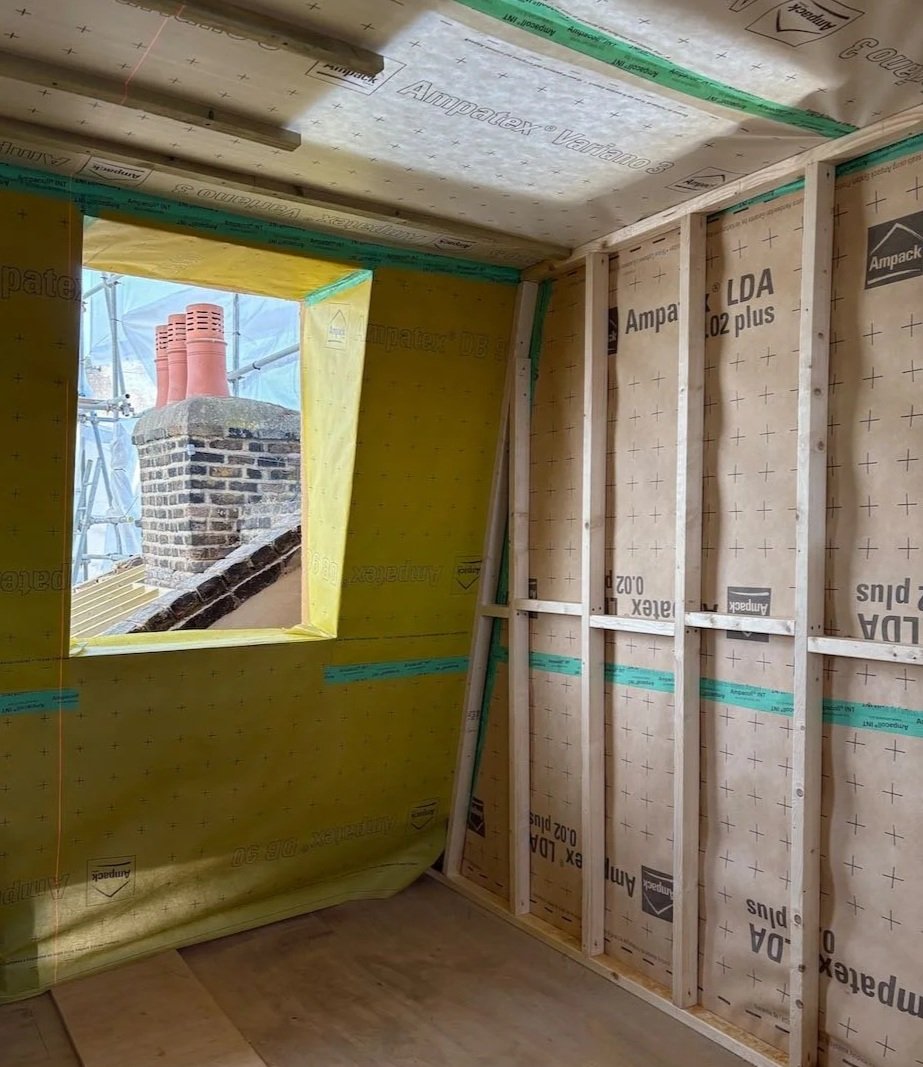
As insulation and airtightness improve, a home needs a clearer ventilation strategy. Moisture and stale air can no longer rely on uncontrolled draughts to escape.
What an MVHR System Does (In Simple Terms)
An MVHR system quietly manages the air in your home for you.
It brings in fresh air and removes stale air at the same time, all day, every day.
Fresh, filtered air is supplied to living spaces and bedrooms
Stale, humid air is extracted from kitchens and bathrooms
Most of the heat that would normally be lost is kept inside
You do not need to think about it once it is working properly. You just notice the difference.
Rooms feel fresher.
Air feels lighter.
Condensation is reduced.
Temperatures are more even from room to room.
In a busy London context, there are added benefits:
Less need to open windows onto noisy streets
Filtered air coming into the home
A more controlled, consistent internal environment
An MVHR system is one of the most effective ways of providing controlled ventilation in a modern home retrofit in London, particularly where airtightness has been improved.
When an MVHR System Makes Sense in a Retrofit
MVHR tends to earn its place in more comprehensive projects.
It is most at home where the building is already being opened up and improved.
It is often worth considering when:
You are undertaking a full renovation or major refurbishment
Floors or ceilings are already being opened up
Insulation levels are being significantly improved
Draughts and uncontrolled air leakage are being reduced
Long-term comfort and air quality are priorities
The best time to install MVHR is during a major refurbishment, when the building is already being opened up.
At that point, ductwork can be integrated properly, and the system can be designed as part of the whole, rather than squeezed in later.
This is why MVHR is most commonly introduced as part of a whole-house retrofit, not as a standalone upgrade.
When an MVHR System May Not Be Worth It
MVHR is not always the right answer.
In lighter refurbishments, it often brings more disruption than benefit.
It may not make sense where:
The building remains relatively leaky
The refurbishment is light-touch
There is limited space for ductwork
Budget is better focused on insulation or other improvements
In these situations, simpler systems can do the job well enough, with far less intervention.
Our guide to ventilation strategies in period homes explains when continuous extract or demand-controlled systems may be more appropriate.
The Real Constraint in Period Homes
The challenge with MVHR is rarely the unit itself. It is how you fit it into an existing building.
Victorian and Edwardian homes were not designed to carry ductwork through every room. Ceiling voids are often shallow. Floor zones are tight. Proportions matter.
That creates a practical constraint:
Where do the ducts go
How do you avoid lowering ceilings
How do you maintain the character of the space
Retrofitting MVHR after a renovation is complete is usually difficult, disruptive, and rarely ideal.
This is where many projects come unstuck. The system is considered too late, when the opportunity to integrate it properly has already passed.
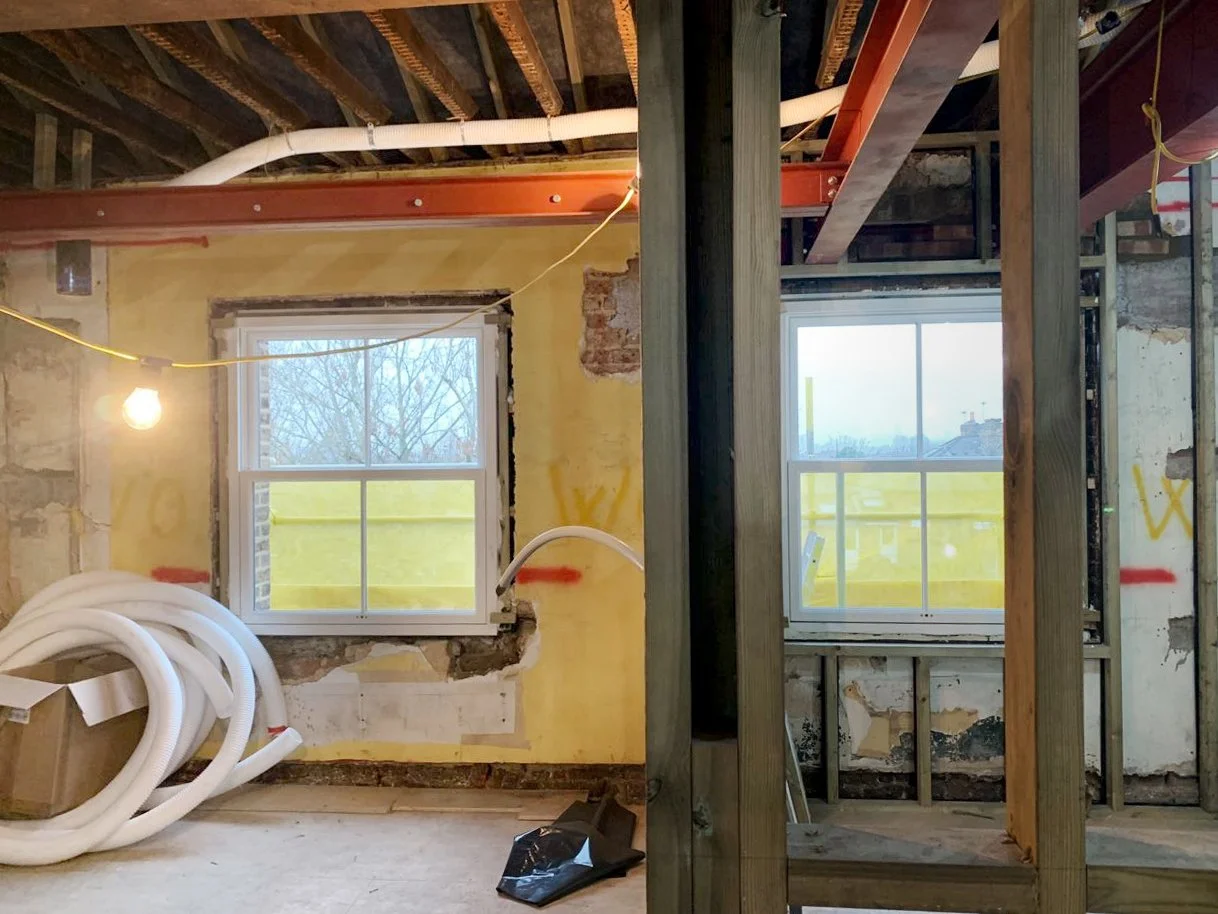
MVHR ductwork being coordinated through the exposed structure of a London period home during renovation. This is why ventilation needs to be planned early, before ceilings and finishes are reinstated.
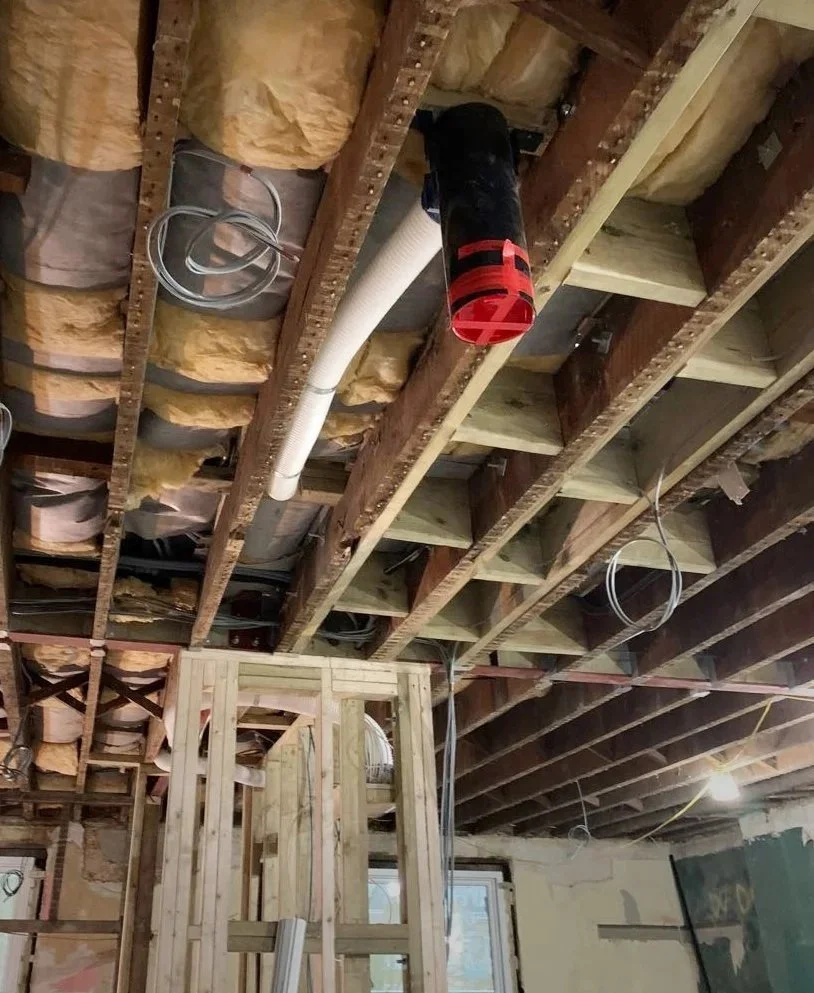
The hardest part of MVHR in a period home is often not the unit itself, but finding a sensible route for the ductwork through the existing structure.
Why MVHR Goes Wrong
Most problems with MVHR are not caused by the system itself.
They come from when and how it is introduced.
Common patterns we see include:
Deciding to install MVHR late in the project
Trying to retrofit it into a finished layout
Adding it without improving insulation or airtightness
Treating it as a standalone upgrade rather than part of a wider plan
The result is predictable.
The system feels intrusive.
It underperforms.
It does not deliver the comfort people were hoping for.
This is not a technology problem. It is a sequencing problem.
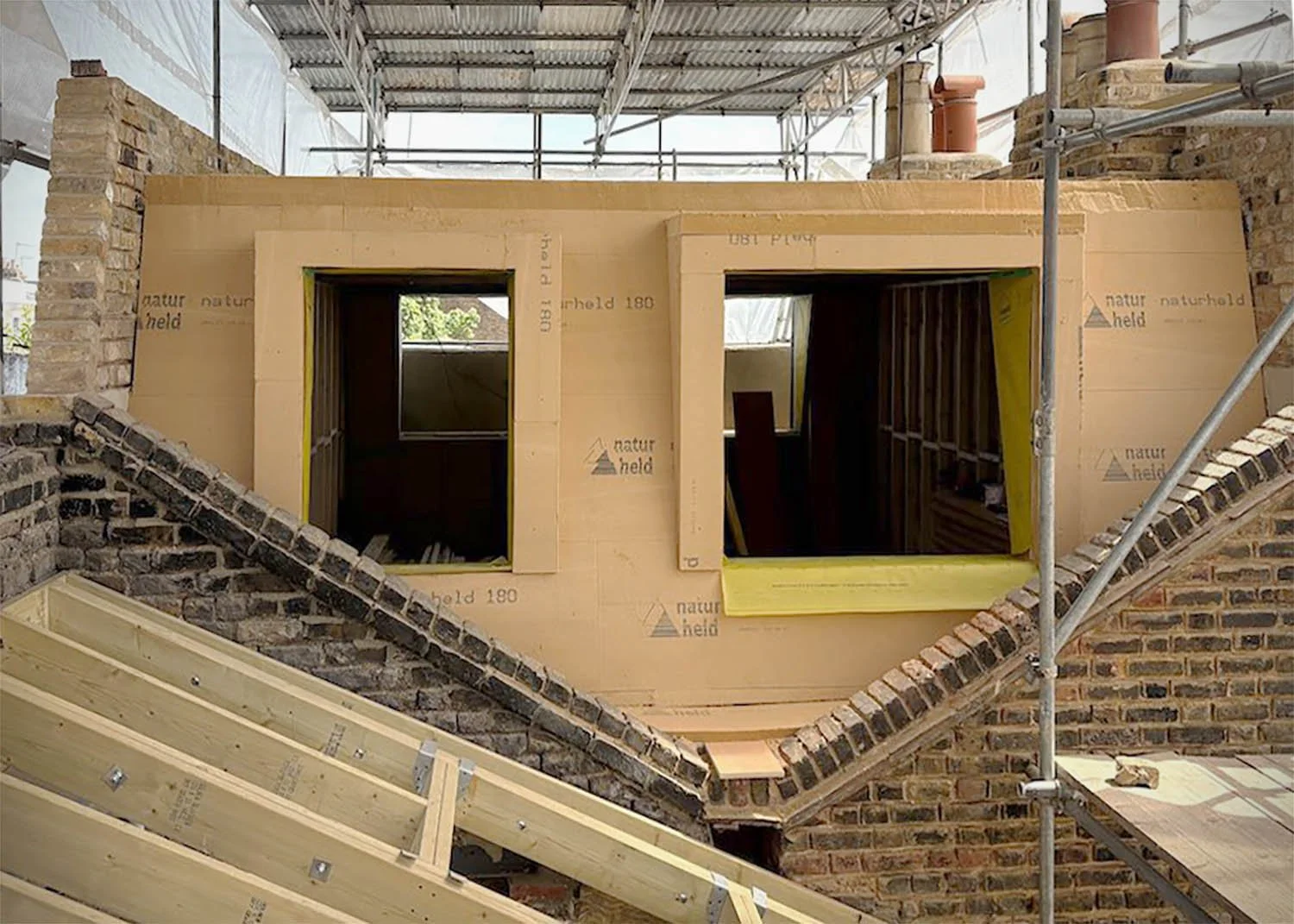
MVHR works best as part of a coordinated retrofit strategy, where insulation, airtightness, ventilation and heating are considered together.
MVHR Only Works as Part of a Whole-House Approach
MVHR works best when it is part of a coordinated approach to upgrading the building.
That usually means:
Improving insulation
Reducing uncontrolled air leakage
Designing the heating system to suit the new performance
Managing moisture properly throughout
This is often described as a fabric first retrofit approach, where you improve the building itself before adding systems.
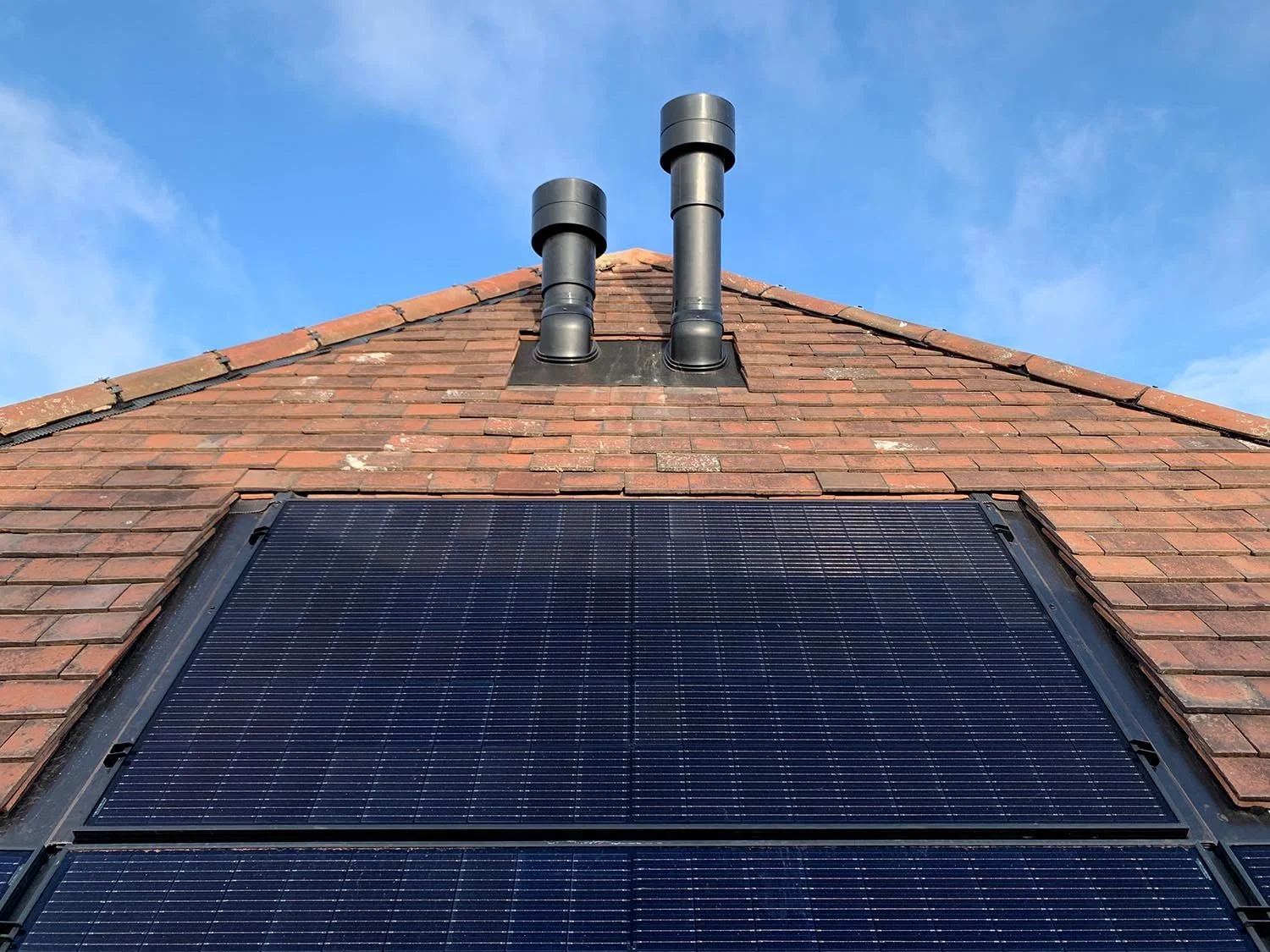
The Orchard, North London: MVHR roof terminals and solar PV panels on an interwar semi-detached house retrofit. Whole-house ventilation needs to be coordinated with roof design, renewables and the wider retrofit strategy.
If you are planning wider upgrades, our guide to fabric first retrofit explains why this sequence matters.
MVHR also becomes more relevant when preparing homes for lower-temperature heating. Our article on making your home heat pump ready shows how ventilation, heat demand and system design need to work together.
How to Decide If You Need MVHR
There is no single answer, because every home and every project is different.
But there is a useful starting point.
If you are upgrading insulation, windows and airtightness together, you need a ventilation strategy.
From there, the question becomes which type of ventilation makes sense.
In deeper refurbishments, MVHR often justifies itself.
In lighter upgrades, simpler systems are usually more appropriate.
If you are still weighing options, it is worth understanding the full range in our guide to ventilation strategies in period homes, before deciding whether MVHR is the right fit.
Frequently asked questions
-
Not always. In many older homes undergoing light refurbishment, simpler ventilation systems are enough. MVHR tends to make more sense where the building is being significantly improved and made more airtight.
-
It can be, particularly during a full renovation. The key question is whether the building is being upgraded enough for the system to work properly, and whether it can be integrated without compromising the space.
-
It can, but it is rarely straightforward. MVHR works best when it is designed in from the beginning of a renovation. Adding it later is often disruptive and less effective.
-
As part of a wider refurbishment, installed costs often fall between £3,000 and £6,000 depending on layout complexity.
-
A well-designed system should be very quiet. Noise issues typically arise from poor installation or incorrect commissioning.
-
Filters are usually replaced every 6 to 12 months to maintain performance.

A retrofit strategy helps decide whether MVHR is appropriate by looking at insulation, airtightness, heating, moisture and ventilation together.
Next Steps
Ventilation decisions work best when they are made in context, not in isolation.
This is exactly what our Retrofit Strategy Service is designed to do.
It sets out:
The right sequence of upgrades
How insulation, airtightness, ventilation and heating work together
Whether systems like MVHR are appropriate for your home
This gives you clarity before detailed design begins, and helps avoid costly changes later on.
If you are at an early stage, an Architect’s Home Visit and Appraisal can help assess whether MVHR makes sense for your building, layout and budget.
If you would like to discuss your project, you can book a free 45-minute Project Consultation.