
Ventilation in Period Homes: What Actually Works
Why ventilation matters more than you think
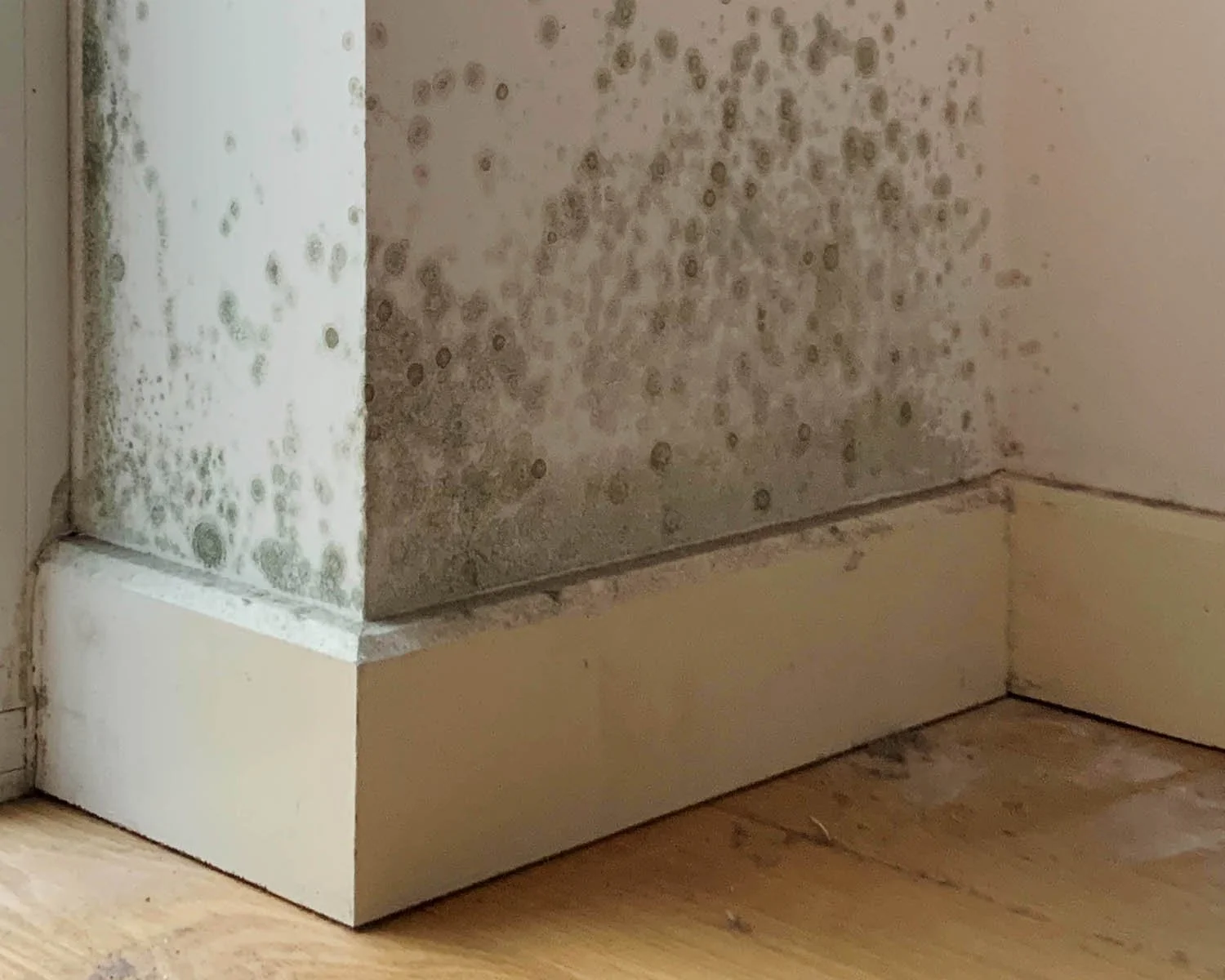
Condensation and mould are often signs that moisture is not being removed from the home in a controlled way. In period homes, ventilation needs to work with insulation, heating and the existing building fabric.
Most people only think about ventilation when something goes wrong.
Condensation on windows. Mould in corners. A room that feels stale or damp no matter how much you heat it.
These are not isolated problems. They are signs that moisture is not being removed from the home in a controlled way.
Everyday life produces moisture. Cooking, showering, drying clothes, even breathing. In a well-functioning home, that moisture is carried away before it builds up. When it is not, it settles on colder surfaces and gradually leads to condensation and mould.
Ventilation is what allows a home to stay dry, healthy and comfortable. It is not an add-on. It is part of how the building works, particularly when thinking about ventilation in period homes where airflow has changed over time.
How older homes used to manage air and moisture
Victorian and Edwardian houses were never designed with modern ventilation systems. Air simply moved through them.
Open fires pulled air up chimneys throughout the day. Windows were not airtight. Gaps around floors, doors and joinery allowed air to move freely between rooms and voids.
These homes lost a lot of heat, but they also had a constant supply of fresh air. Moisture was diluted and carried away before it could build up.
Over time, this has changed.
Chimneys have been sealed. Windows replaced. Draughts reduced. Insulation added. Each step improves comfort and reduces heat loss.
But it also reduces the unintended airflow that the building once relied on.
As homes become more efficient, ventilation can no longer be left to chance. It needs to be considered as part of a home retrofit.
Why problems often appear after improvements
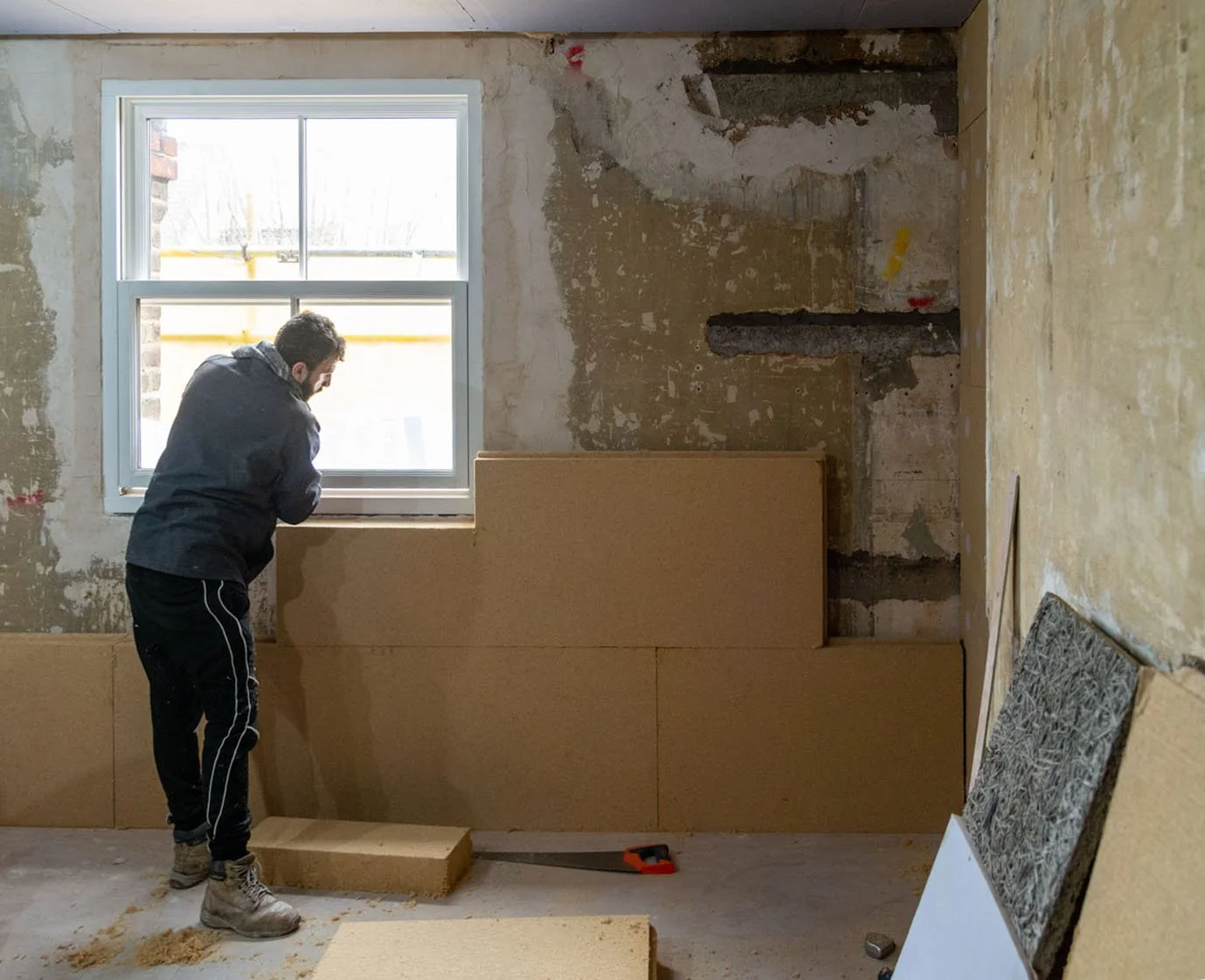
Ashley Road, Islington N19: wood fibre internal wall insulation being fitted to a Victorian semi-detached home. As insulation improves and draughts are reduced, ventilation needs to be considered more carefully.
It is common for ventilation issues to appear after a home has been improved.
New windows are installed. Floors are sealed. Insulation is added. The house feels warmer and less draughty.
Then condensation starts to appear.
This is not because the work was wrong. It is because the balance has changed.
Less air is escaping. The same amount of moisture is being produced. Without a clear path out of the building, that moisture lingers.
At the same time, period homes are built from materials that absorb and release moisture. Brick, lime plaster and timber all store moisture and dry out gradually. Changes to insulation and airflow affect how this drying process works.
Ventilation helps maintain that balance. Without it, moisture begins to accumulate in places where it did not before.
If you are already seeing signs of damp or mould, it is often a sign that insulation, ventilation and heating are no longer working together. Our guide to avoiding damp and mould in period properties explains this in more detail.
The different ways a home can be ventilated
There is no single solution that suits every home. The right approach depends on how far the building has been upgraded and how it is used day to day.
The right solution depends less on the system itself and more on how far your home has already been upgraded.
In practice, most homes fall into a few broad patterns when considering how to ventilate an old house.
Opening windows
This is the simplest form of ventilation and the one period homes have always relied on.
Opening windows provides a quick change of air and can remove moisture effectively in the short term. It also helps with overheating in summer.
The limitation is that it depends on people remembering to do it. In winter, it also means losing heat. As homes become more insulated and less draughty, relying on windows alone becomes less reliable.
Background ventilation
Many replacement windows include small vents that allow a constant trickle of air into the home.
These can help maintain a low level of airflow without needing to open windows. In lightly upgraded homes, they can support everyday ventilation and help reduce moisture build-up.
However, the amount of air they provide is limited and not controlled. They do not actively remove moisture, and on their own are rarely enough once insulation has improved and draughts have been reduced.
They tend to work best as part of a wider approach rather than as a complete solution.
Extract ventilation
Bathrooms and kitchens typically use extract fans to remove moisture at source.
When they are working well, they deal with the most concentrated sources of moisture. Steam from showers and cooking is removed before it can spread through the home.
The limitation is that they only operate when switched on or triggered. Outside those moments, there is no ongoing ventilation. They also do not provide a consistent flow of air through the rest of the house.
They are an important part of most homes, but rarely sufficient on their own once a building becomes more airtight.
Continuous extract systems
Some homes use a continuous system that gently extracts air from wet rooms throughout the day.
Instead of switching on and off, these systems run at a low, steady rate. This helps maintain more consistent moisture control, particularly in homes where insulation has been improved and natural airflow has been reduced.
In some cases, the system can respond to conditions inside the home. Airflow increases when humidity rises, for example during cooking or showering, and reduces again when the air is drier. This can help avoid unnecessary heat loss while still managing moisture effectively.
These systems can work well where insulation is improving but the building is not being made highly airtight. They are often less disruptive to install than whole-house systems and can be a practical step when improving ventilation as part of a wider refurbishment.
The limitation is that they still rely on fresh air entering the building through vents or gaps elsewhere. Warm air is continuously being removed and replaced with cooler outdoor air, so there is no recovery of heat.
Whole-house ventilation with heat recovery (MVHR)
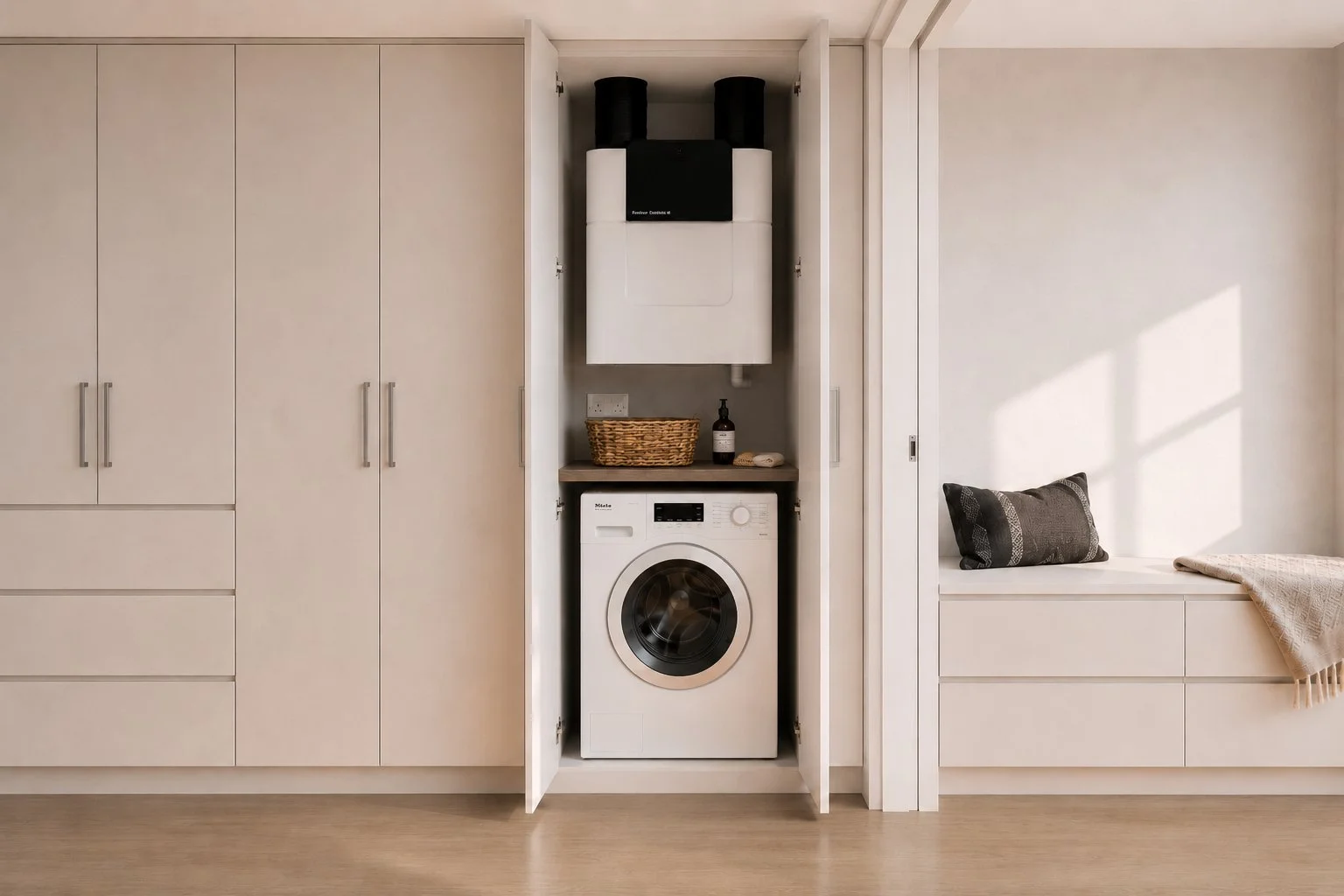
An MVHR unit can be integrated discreetly into joinery or utility storage. In more airtight retrofit projects, controlled ventilation can help remove moisture while retaining more heat.
At the other end of the spectrum are balanced systems that supply and extract air throughout the home.
Mechanical ventilation with heat recovery, often referred to as MVHR, brings in fresh air and removes stale air at the same time. The heat from outgoing air is transferred to the incoming air, which reduces heat loss.
In well-insulated and reasonably airtight homes, this can lead to more stable internal conditions. Air quality improves and rooms feel consistently fresh.
It does require space for ductwork and needs to be planned early in a project. It is not always straightforward to introduce into an existing building without disruption, particularly in smaller or more constrained properties.
It is most effective where insulation and airtightness have already been addressed. Without that, the benefits are reduced.
For a deeper explanation of costs, constraints and suitability, see our guide to mechanical ventilation with heat recovery in London homes.
What’s likely to work in your home
Most homes fall into a few broad situations, depending on how far they have been upgraded.
In homes that have only been lightly improved, simple measures often go a long way. Opening windows regularly and ensuring extract fans are working properly can be enough to manage everyday moisture.
As insulation is added and draughts are reduced, more consistency is needed. Continuous extract systems or improved background ventilation can help maintain a steady flow of air without relying on manual intervention.
Where a home is being refurbished more extensively, particularly where airtightness is improving and insulation levels are increasing, a more coordinated approach becomes necessary. At this point, whole-house systems such as MVHR begin to make sense.
The key is that the level of ventilation should match the level of upgrade.
Where things often go wrong
Most ventilation problems in period homes are not caused by a lack of systems. They are caused by a lack of coordination.
A common example is sealing a home to improve comfort but not providing an alternative path for moisture to escape. The house becomes warmer, but moisture builds up in corners and on colder surfaces.
Another is relying entirely on windows. This can work for a time, but it depends on behaviour and tends to fall short in colder months when windows remain closed.
In some cases, systems are added too late in the process. By the time issues appear, it is more difficult and more disruptive to retrofit a solution.
Ventilation works best when it is considered alongside insulation and heating from the outset.
Ventilation is part of a wider strategy
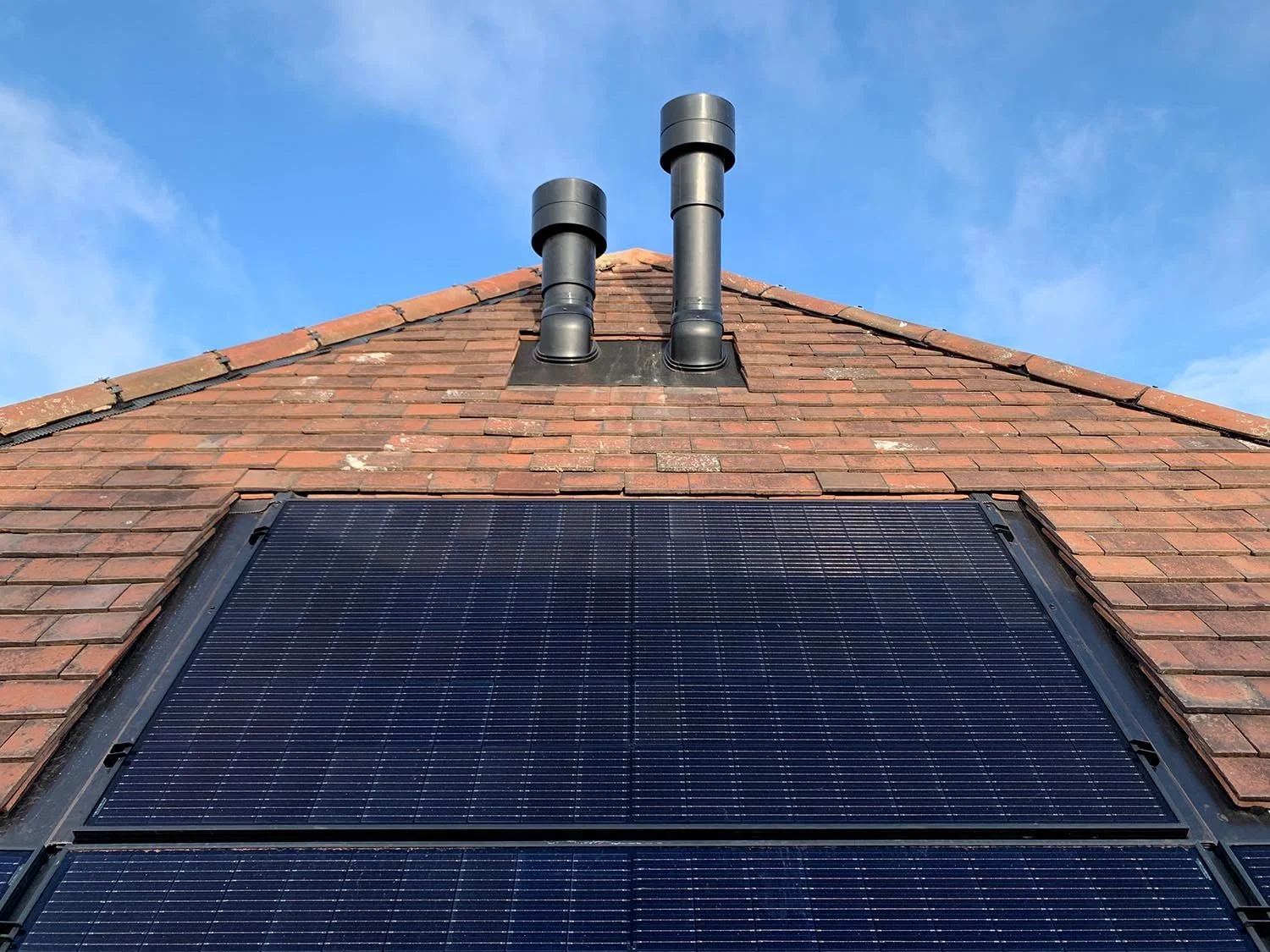
The Orchard, North London: MVHR roof terminals and solar PV panels on an interwar semi-detached house retrofit. Whole-house ventilation needs to be coordinated with roof design, renewables and the wider retrofit strategy.
Ventilation cannot be looked at in isolation.
Improving insulation changes how heat is retained. Increasing airtightness changes how air moves through the building. Heating systems depend on predictable heat demand.
All of these are connected.
This is why a fabric first approach is often the starting point. Improving the building fabric reduces heat loss and helps stabilise internal conditions. Ventilation can then be designed to support that, rather than compensate for underlying issues.
Alongside insulation and heating, ventilation in period homes plays a critical role in how a building performs once it has been upgraded.
As airtightness improves, the way air moves through the building changes. We explore this relationship in more detail in our guide to airtightness in period homes.
If you are planning a wider upgrade, it helps to think about ventilation as part of the overall performance of the home, rather than a separate decision.
When a coordinated approach becomes important
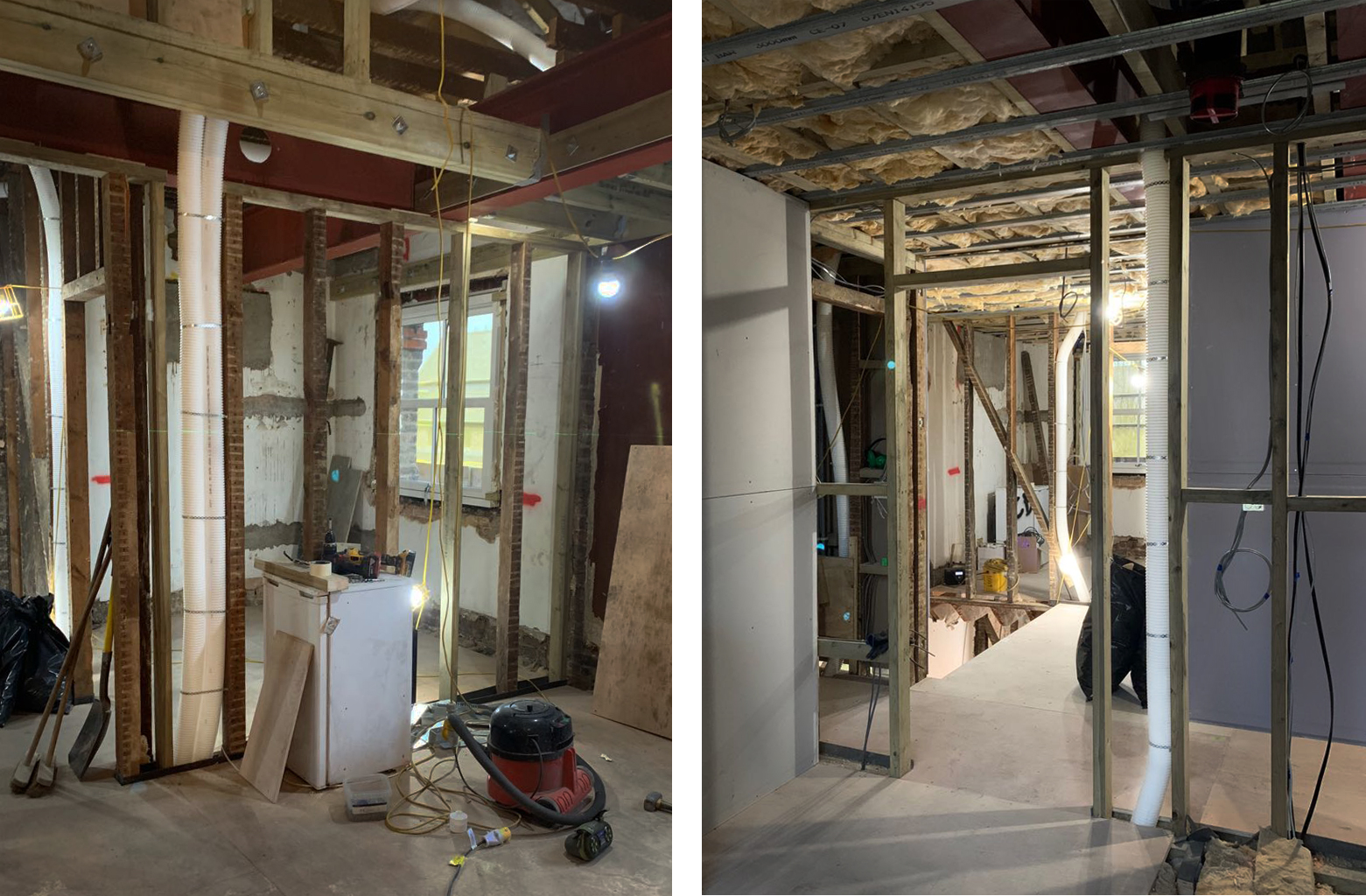
MVHR ductwork being coordinated through the exposed structure of a London period home during renovation. Ventilation systems are much easier to integrate before ceilings, joinery and finishes are fixed.
A more considered ventilation strategy is usually needed when:
significant insulation is being added
draughts are being reduced across the building
layouts are being reconfigured
persistent condensation or mould is already present
At this point, ventilation becomes part of a whole-house retrofit strategy, not an add-on.
This is often the point where simple fixes stop working and a more considered approach becomes necessary.

A retrofit strategy helps decide how insulation, airtightness, ventilation and heating should work together before detailed design begins.
Next steps
Ventilation sits alongside insulation, airtightness and heating. It is one part of how a home performs as a whole.
If you are unsure which approach is right for your home, this is exactly what the Retrofit Strategy Service is designed to clarify. It sets out how insulation, airtightness, ventilation and heating should be coordinated to improve comfort, manage moisture and reduce energy use.
If you would prefer to start with a conversation, a free 45-minute Project Consultation is a good place to begin.

Ventilation decisions are easier with a clear whole-house strategy. Studio CMA can help you understand how air, moisture, insulation and heating need to work together in your period home.