
Do You Need an Architect for a House Extension?
What Most London Homeowners Misunderstand Before They Build
If you are planning a rear extension, side return, loft conversion or full-width addition, this question usually arises early.
Do you need an architect for a house extension?
The legal answer is simple. You are not required to appoint one.
But that is rarely the real issue.
Most London homeowners are not asking about legality. They are asking whether their extension is straightforward enough to proceed without professional design leadership, or complex enough that independent architectural input will protect their investment.
That distinction is often underestimated.
For many clients, this decision sits within a wider strategy for improving the home as a whole. An extension rarely exists in isolation. It changes how the rest of the house works. You can read more about how we approach extensions and spatial transformations.
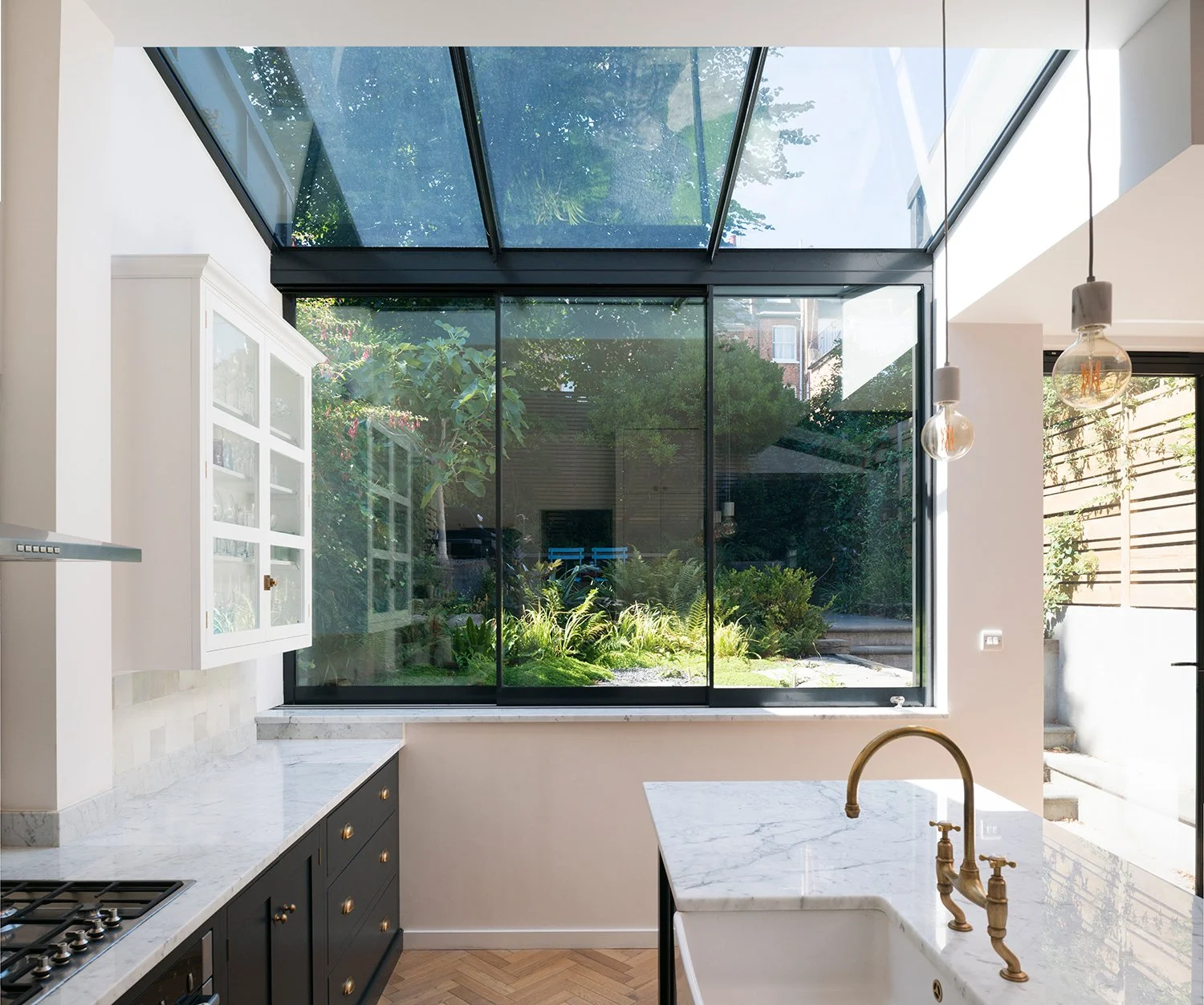
Gladsmuir Road, Islington: a side return and rear extension to a Victorian terrace, designed to bring daylight deeper into the plan and reconnect the kitchen with the garden. A good extension is not just extra floor area. It changes how the whole house works.
Quick Answer
You do not legally need an architect for a house extension in the UK.
However, many London extensions involve structural alteration, planning sensitivity and technical coordination. When projects reach this level of complexity, independent design leadership can help avoid costly mistakes and ensure the finished space works well as part of the whole home.
The Legal Position
There is no law in the UK that requires you to appoint an architect for a house extension.
You will still need:
Planning permission, where required
Building regulations approval
Structural calculations
Party wall agreements if works affect adjoining properties
Drawings can be prepared by architectural designers, technicians or builders offering design-and-build services.
So legally, you can proceed without an architect.
There has recently been industry discussion about proposals that could require greater professional oversight on certain planning applications in the future. At the time of writing, no such rule has been enacted. The debate reflects wider concerns about design quality and accountability in domestic projects.
Planning approval confirms acceptability in principle. Building regulations confirm minimum technical compliance. Neither guarantees that the finished space will feel generous, comfortable or coherent with the rest of the house.
Legality is not the same as quality.
Why Extensions Are More Complex Than They Appear
On a plan, an extension can look simple. A rectangular footprint. A new kitchen. More light.
In reality, most London extensions involve decisions that affect structure, planning risk, energy performance and cost.
Planning Sensitivity
Rear extensions are assessed for depth and overshadowing.
Side returns are judged on their impact on neighbouring windows.
Conservation areas require careful attention to materials and detailing.
An experienced house extension architect understands how to shape proposals so they align with borough policy before submission, reducing the likelihood of refusal or redesign.
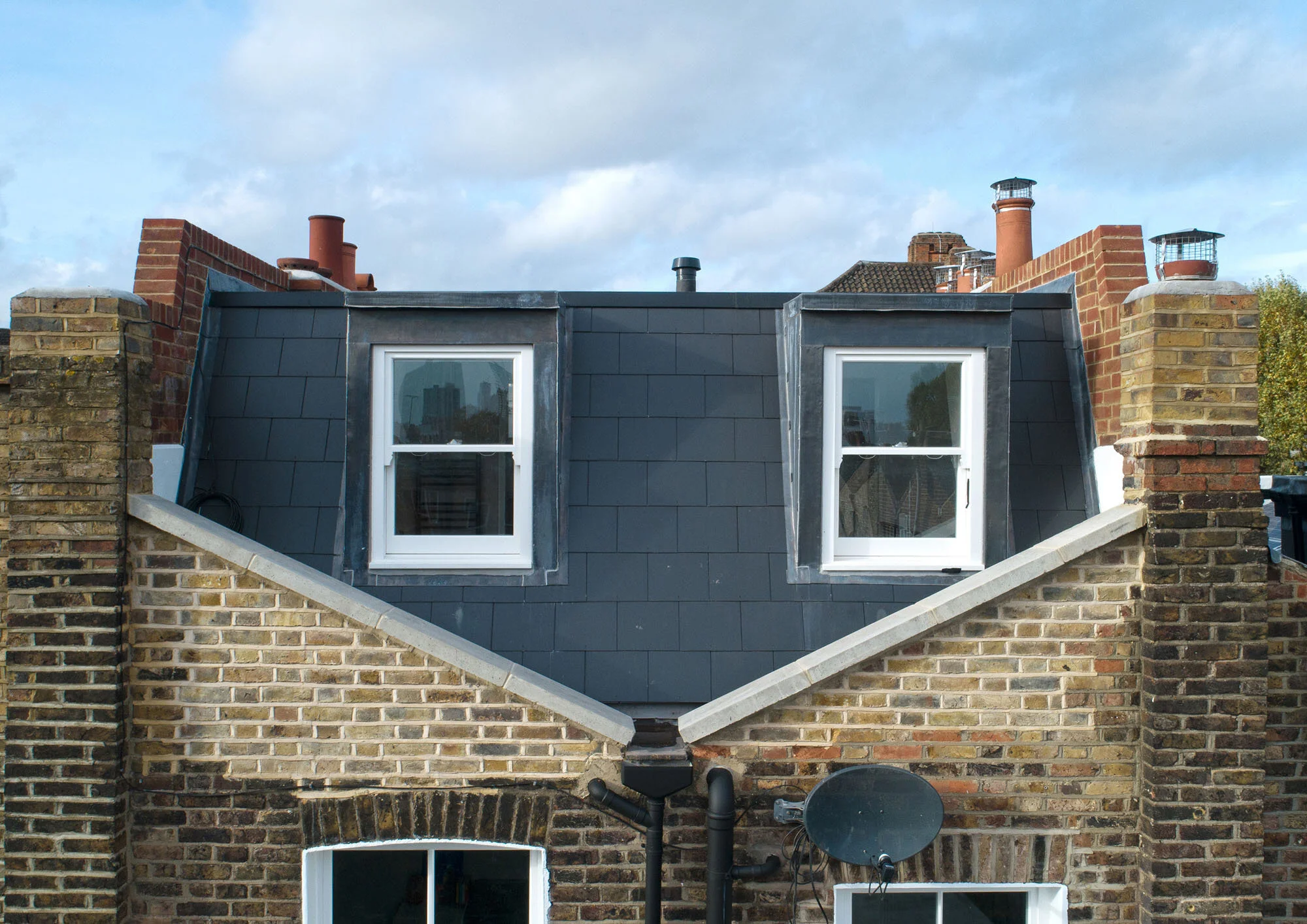
Prebend Street, Islington: a mansard loft extension to a Victorian terrace, designed to restore the original butterfly roof symmetry while creating usable new space. In sensitive London settings, planning strategy and design quality need to be considered together.
Structural Intervention
Most extensions are not separate buildings. They involve cutting into the existing house.
That can mean:
Removing load-bearing walls
Inserting steel beams
Altering foundations
Connecting new roofs into old structures
Victorian and Edwardian houses rarely behave predictably. Brickwork may not be straight. Floors may not be level.
The junction between old and new construction is often where technical problems arise.
Drainage and Services
Rear extensions frequently sit over existing drains.
Shared sewers are common in London.
Approval from Thames Water may be required.
Heating systems may need upgrading. Electrical capacity may need review.
If these constraints are not identified early, they surface during construction, when changes are more expensive.
Light, Height and Proportion
Many extensions increase floor area but fail to improve how the home feels.
Common issues include:
Ceiling lines that feel compressed once steel beams are installed
Deep rooms where daylight only reaches the rear glazing
Glare from poorly positioned rooflights
Overheating from unshaded glass
An architect for an extension is not simply arranging walls. They are shaping volume, light and movement through the space.
These qualities cannot easily be corrected once built.
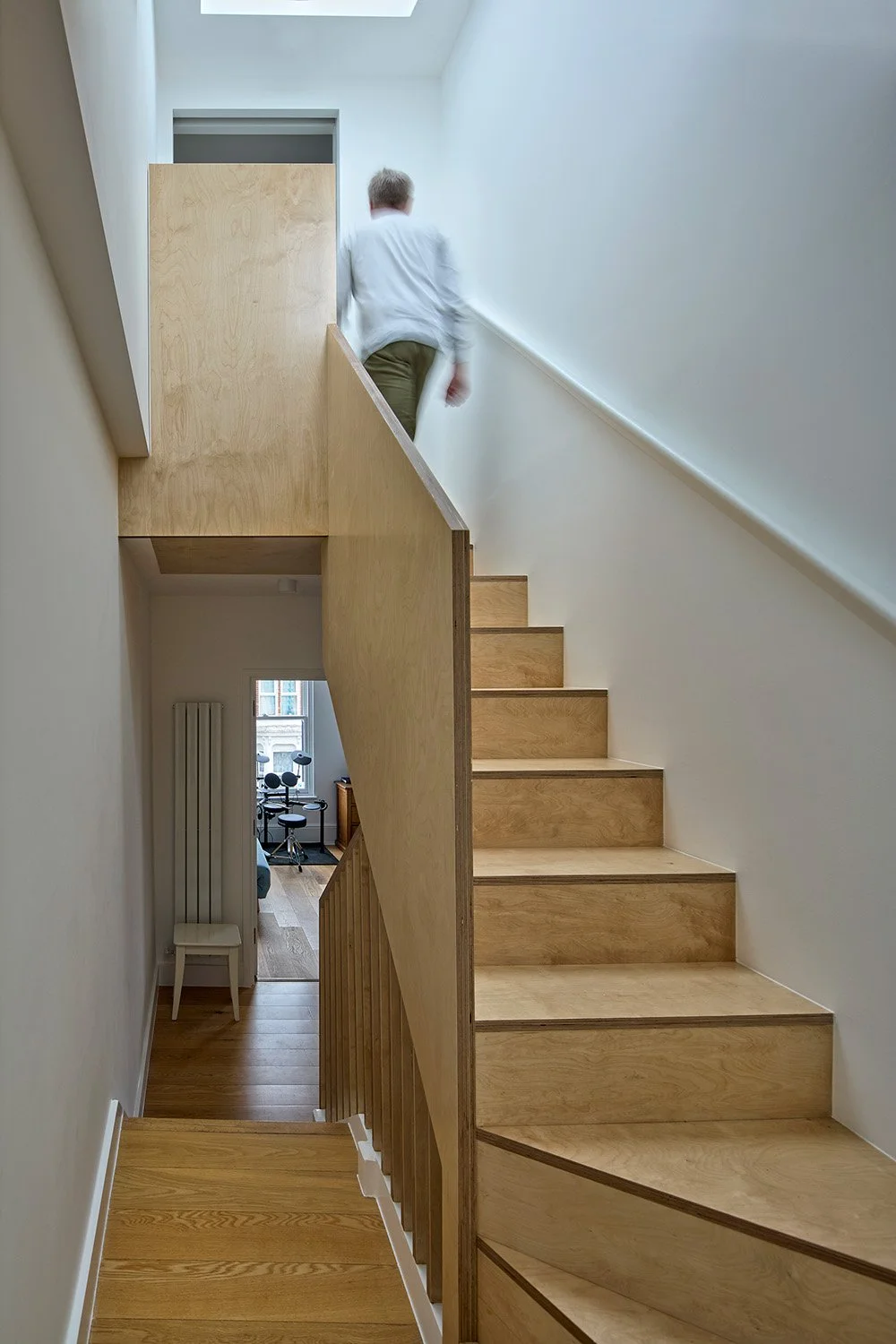
Victorian Loft Conversion and Family Home Retrofit, Hackney: a compact new stair unlocked valuable space within the loft while bringing daylight down through the house. The best extensions improve movement, proportion and everyday use, not just floor area.
Where Extensions Commonly Go Wrong
Most problems do not arise from poor workmanship. They arise from underdeveloped design before construction begins.
Budget Drift
Initial estimates often exclude structural complexity, drainage diversion or specification upgrades.
Without structured design development and cost alignment, variations accumulate during construction.
Even modest London extensions represent significant investment. Cost clarity early in the process matters. For a broader discussion, see Home Extension Costs in London.
Planning Refusal or Delay
A proposal that slightly exceeds policy guidance can trigger refusal.
Redesign adds professional fees. Delays increase contractor costs.
Careful alignment with borough policy from the outset reduces this risk.
Heat Loss and Condensation
Where steel beams pass through external walls or insulation is interrupted, heat escapes more easily. This is known as thermal bridging.
In older solid-wall homes, poorly detailed junctions can create cold surfaces where moisture condenses. Over time this can lead to mould or fabric damage.
These issues are rarely visible at completion. They emerge later.
Detailed technical coordination during design helps prevent them.
Architect vs Builder on an Extension
Some builders offer design-and-build services. Some work with technicians. Some have strong practical design experience.
The distinction is not about capability. It is about where design responsibility sits.
An architect’s primary role is to lead and coordinate the design before construction begins. A builder’s primary role is to construct the work.
In some arrangements, these roles are combined. In others, they remain independent.
Understanding that difference is important before committing to either route.
If you have already decided to appoint a professional and are choosing between routes, we explore this further in Architect vs Builder in London.
If you want to understand how structured design leadership fits within the wider renovation process, you can read about our Architect-Led Renovations in London.
When You May Not Need an Architect
There are situations where appointing an architect may not be necessary.
For example:
Very small additions with no structural wall removal
Straightforward permitted development works
Projects with limited spatial ambition
Low financial exposure
If the geometry is simple and the technical risk modest, proceeding without architectural involvement may be reasonable.
The key is an honest assessment of complexity.
The Real Question Behind the Fees
Often the hesitation is about cost.
Architectural fees are visible. Design risk is not.
Yet most London extensions involve substantial capital investment.
The real question becomes:
Who is accountable for shaping and protecting that investment?
A well-designed extension can improve comfort, reduce running costs and enhance property value. Poorly resolved work can feel awkward despite being larger, or require corrective work later.
If you are weighing cost against value, it may help to understand how fees are structured in more detail in Understanding Architects’ Fees for Major Home Projects.

A good early conversation can clarify whether your extension is straightforward, technically sensitive, or part of a wider whole-house transformation. Studio CMA helps homeowners test options before committing to design, planning or construction.
A Practical Way to Decide
You are more likely to benefit from appointing an architect for an extension if:
Structural walls are being removed
The property is in a conservation area
Neighbour impact is sensitive
Energy performance matters to you
The project budget is significant
You are seeking spatial transformation rather than simply additional area
Most London house extensions fall into this category.
A Measured Conclusion
You do not legally need an architect for an extension.
But many London extensions involve structural alteration, planning sensitivity and long-term performance considerations that benefit from independent design responsibility.
The decision is less about regulation and more about accountability.
An architect for an extension is responsible for shaping the space, coordinating technical detail and aligning ambition with budget before construction begins.
For many homeowners, that clarity becomes valuable once the scale of decisions is understood.