
How Much Does a House Extension Cost in London?
Extension cost London” is one of the first things homeowners search when they begin thinking about changing their home. It feels like a simple question, but the answer is rarely straightforward.
Costs vary widely depending on design, structure, and how the new space connects to the rest of the house. This guide explains what really shapes extension cost in London so you can approach your project with clarity.
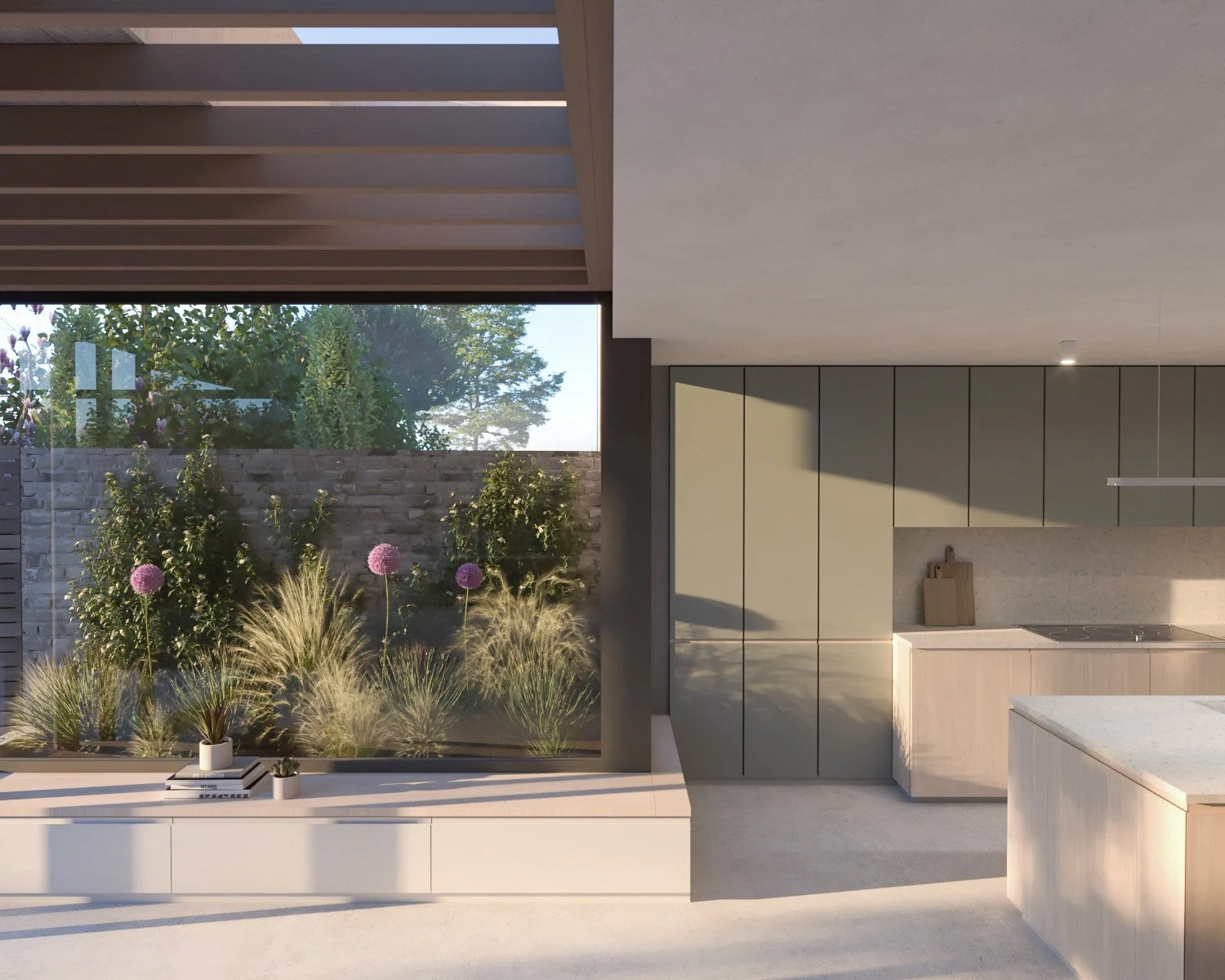
Planter House, Walthamstow: a planted side setback brings daylight, ventilation and greenery into the kitchen. It shows why the best-value extension is not always the largest one, but the one that makes the existing home work harder.
Why extension cost is one of the first questions people ask
If you are considering extending your home, one of the first questions is cost. How much does a house extension cost in London, and what should you realistically budget for?
It sounds like a simple question. But the answer depends on far more than size alone.
Most projects begin with a moment of friction. The kitchen feels too small. The layout no longer works. The house that once felt right now feels constrained.
At that point, the question becomes:
Should we move or extend?
Before any drawings are made, homeowners want to understand whether extending is financially realistic.
The difficulty is that most headline figures do not reflect the full picture.
Two extensions of the same size can cost very different amounts. A simple rear extension with standard windows sits at one end of the range. A project with structural alterations, large glazing panels, and upgraded insulation sits at the other.
At this early stage, most homeowners are working with rough assumptions about cost and what is possible. Some of those assumptions turn out to be quite different once the house is properly assessed.
If you would like an initial sense of what might be realistic for your home, our Home Visit and Appraisal is designed to provide early clarity before design work begins.
Typical extension costs in London
Although every project is different, it is still useful to understand the kind of total budget many homeowners are working with.
In practice, a modest London extension project will often start from around £100,000 for construction, and many well-considered projects fall more realistically into the £150,000 to £250,000 range once size, structure, glazing, and specification are taken into account. More complex schemes can go beyond this.
These figures should be treated as broad guidance rather than fixed promises.
They also need careful interpretation. Some published figures include VAT, while others refer to construction cost only. Professional fees, planning costs, surveys, and contingency are usually additional to the headline number.
Several factors influence where a project sits within this range.
Location affects labour and logistics. Design complexity affects how the extension is built. Materials and finishes influence cost directly. And the condition of the existing house often determines how much structural work is required.
This is why extension cost cannot be understood through size alone.
In practice, while lower-end budgets are sometimes possible, they often rely on simpler construction approaches, more standard materials, and smaller or less refined openings and finishes.
As projects are explored in more detail, many homeowners begin to see how decisions around layout, glazing, materials, and energy performance affect both the feel of the space and how the house performs over time. At that point, priorities often shift.
It is quite common for initial budgets to move upward as these trade-offs become clearer.
This does not mean costs are uncontrollable. With careful design and realistic cost forecasting, it is possible to align budget and ambition. But it does mean it is helpful to approach early figures with an open mind, rather than assuming the lower end of a range will deliver the same outcome.
Early design decisions also play a significant role in shaping cost. Exploring different approaches to layout and space can help clarify what is possible. Our guide to early design ideas for extending your home looks at this in more detail.
Extension Cost Per m² in London
Alongside total project budgets, many builders describe extension cost in terms of a price per square metre.
This is often used as a quick way to compare projects or sense-check feasibility.
Typical ranges in London are often quoted between:
£2,500 and £4,500 per square metre
At first glance, this seems helpful. But it can also be misleading if taken too literally.
Two extensions of the same size can require very different levels of work. A straightforward rear extension with standard construction is very different from a project involving structural alterations, large areas of glazing, and upgraded insulation.
The cost per square metre is not a fixed price. It reflects design decisions, materials, and how the extension integrates with the existing house.
Smaller extensions can also appear more expensive on a per-square-metre basis, because fixed costs such as foundations, structure, and services are spread over a smaller area.
This is why cost per m² is best understood as a guide rather than a reliable prediction.
In practice, the most useful question is not “what does it cost per square metre?”, but:
“what level of design, performance, and quality are we aiming for, and what does that mean for the overall budget?”
The biggest factors that affect extension cost
Several elements tend to influence extension cost more than anything else.
Understanding these early helps avoid surprises later.
Size and type of extension
Larger extensions generally cost more, but the type of extension matters just as much.
A rear extension is often simpler to construct than a side return or double-storey addition.
For a broader overview, it helps to understand the different types of extensions, including rear and side return layouts.
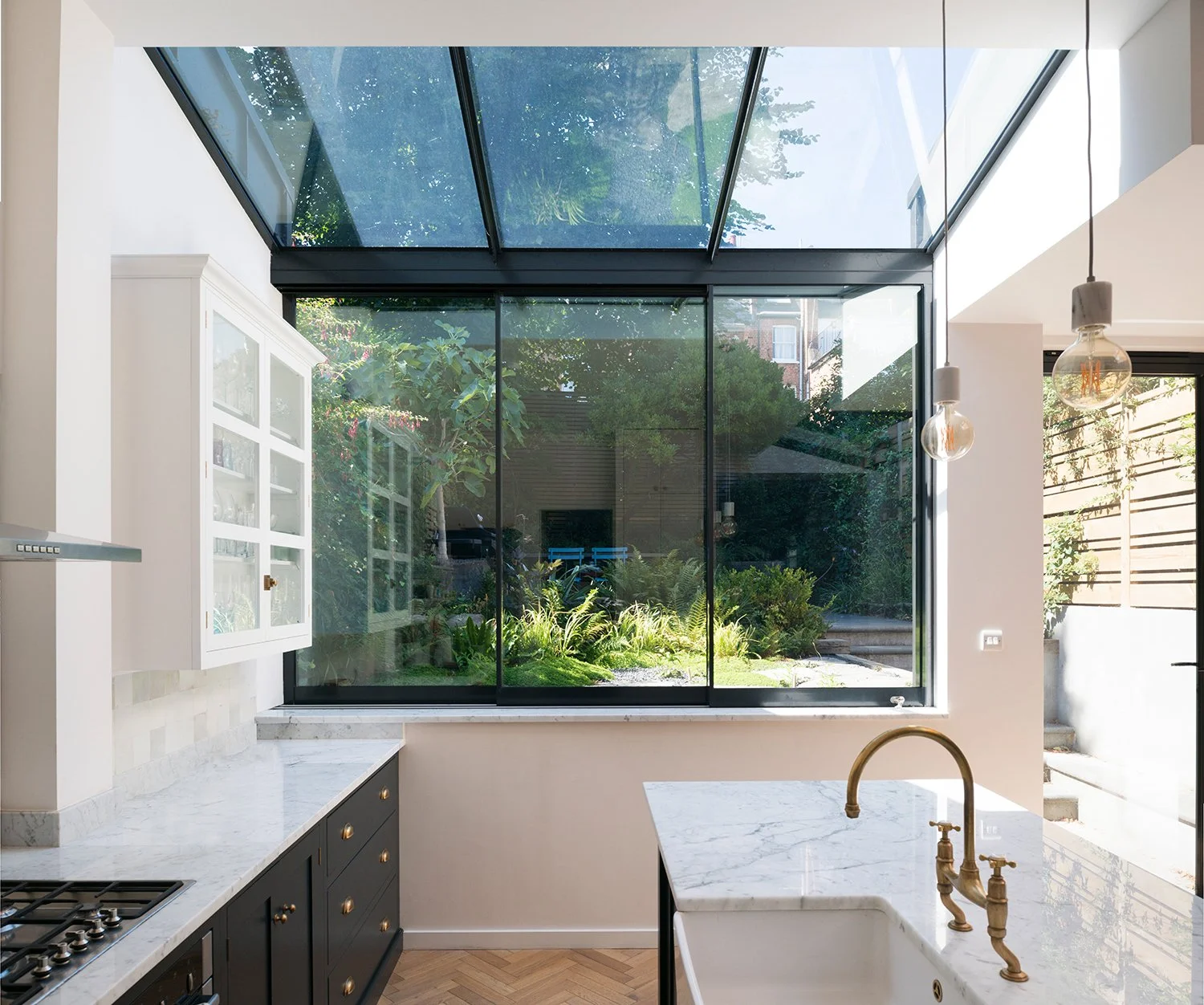
Gladsmuir Road, Islington: a kitchen extension to a Victorian terrace where roof glazing and garden-facing openings bring light deeper into the plan. The value is not only in the added floor area, but in how the extension changes the way the house feels and works.
Structural complexity
Many London homes were not designed for open-plan living.
Creating larger spaces often requires structural steel to support the floors above. This work is carefully sequenced and can add complexity to the build.
Glazing and materials
Large areas of glazing can transform a space, bringing in light and connecting to the garden.
They also increase cost.
Material choices, from brickwork to timber windows, influence the overall budget.
Ground conditions and drainage
What sits below the extension is often unknown at the outset.
Poor ground conditions or existing drainage runs can require additional work before construction can begin.
Services and upgrades
Older homes may need upgrades to heating, electrics, or plumbing when an extension is added.
These are often sensible improvements, but they do add to the overall cost.
This is where extension costs become difficult to judge from general figures alone. Two homes of a similar size can require very different levels of structural work, materials, and design input.
At this point, many homeowners have a broad range in mind, but not a clear answer for their own house.
A Home Visit and Appraisal can help translate these ranges into something specific to your property, so you can move forward with more confidence.
Rear and side return extension costs in London
Not all extensions cost the same to build. The type of extension has a direct impact on cost.
Rear extensions
Rear extensions are often the most straightforward.
They extend into the garden and can be simpler structurally, particularly if only part of the rear wall is opened.
For this reason, they often sit toward the lower to middle end of typical London cost ranges.
Side return extensions
Side return extensions are common in Victorian and Edwardian homes.
They use the narrow strip of land at the side of the house to widen the ground floor, often transforming kitchens into larger, more usable spaces.
Although they may appear modest, they are often more complex to build.
This is because they typically involve removing the existing wall and installing structural support to carry the load above.
Working in tighter spaces can also increase construction complexity.
As a result, side return extensions often have a higher cost per square metre than simpler rear extensions.
Why poorly planned extensions often cost more
Many cost increases do not come from the size of the extension, but from decisions made early on.
Late design changes can disrupt construction. Incomplete drawings can lead to uncertainty on site. Unclear scope can result in unexpected costs.
In some cases, structural issues only become apparent once work begins.
These situations create uncertainty. And uncertainty tends to increase cost.
Careful design at the outset helps reduce these risks.
It allows structural challenges to be understood early, materials to be considered properly, and costs to be priced more accurately.
This is one reason many homeowners explore whether working with an architect is the right approach for their extension.
Why extension cost cannot be separated from the rest of the house
This is often where extension projects begin to move beyond a simple addition.
An extension rarely affects just one room.
Opening up the rear of a house changes how light, heat, and movement flow through the space.
Upgrades to insulation or heating may be needed. Existing rooms may need to be adapted to work with the new layout.
This is why extensions are often most successful when they are considered as part of a wider strategy.
Rather than treating the extension as an isolated addition, it becomes part of a considered evolution of the home.
If your project involves wider changes, our guide to renovation costs in London explains how overall project costs are typically structured.
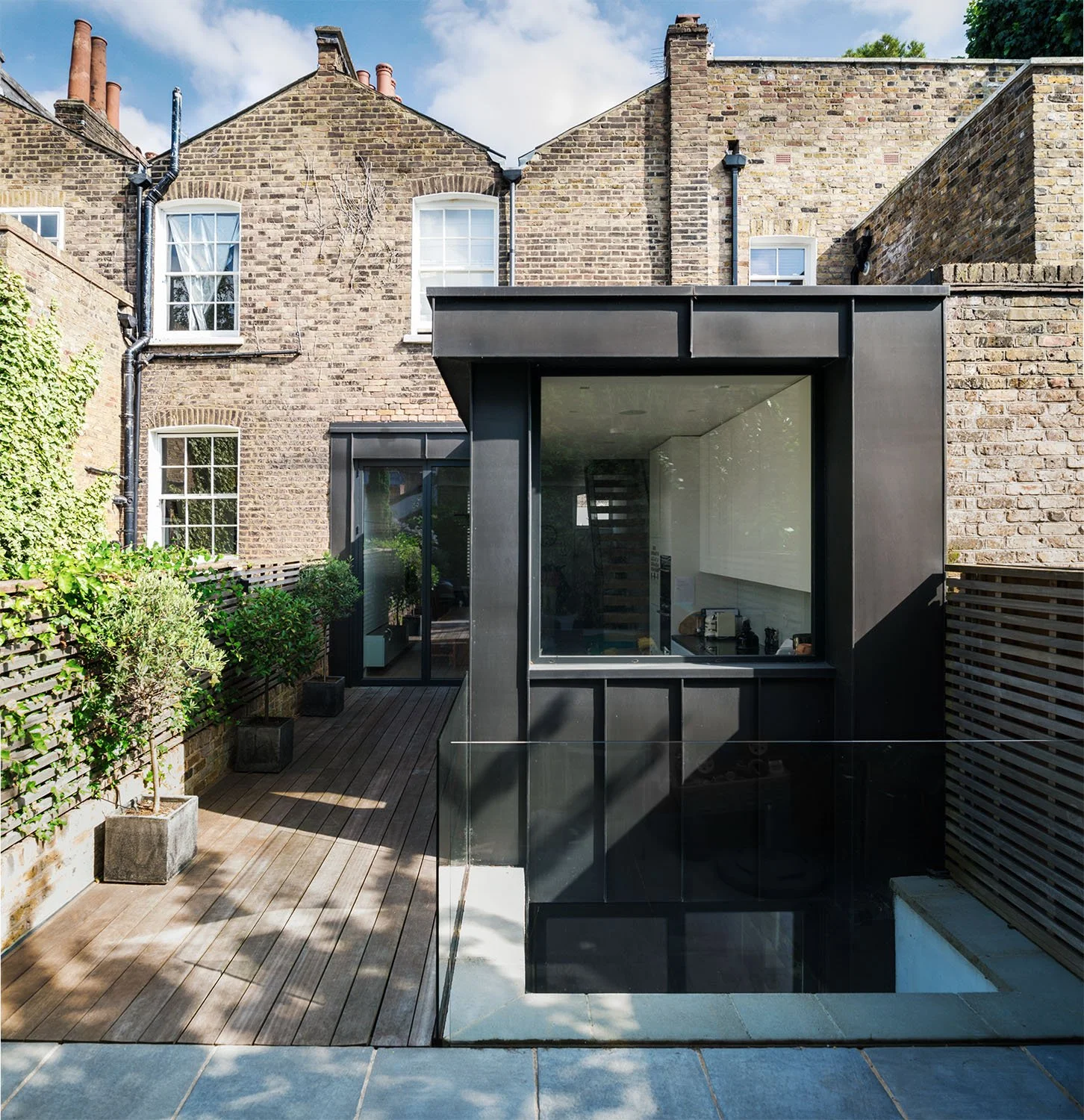
St Paul Street, Islington: a rear extension and basement courtyard reorganised a Victorian terrace around daylight, circulation and garden connection. In older London homes, extension cost often reflects the work needed to make the whole house function properly, not just the new area being added.
Budgeting realistically for a London extension
A realistic budget includes more than construction cost alone.
Construction
The physical building work, which forms the largest part of the budget.
Professional fees
Architects, engineers, and consultants contribute to design and technical development.
Planning and approvals
Applications, surveys, and regulatory approvals all carry associated costs.
Contingency
Older homes often reveal unknowns once work begins.
Allowing around 10 percent of the construction cost as contingency provides a sensible buffer.
By this stage, most homeowners understand the typical cost ranges, but are still left with one key question.
What would it cost for our home?
The answer depends on layout, structure, and how the extension is designed to work with the rest of the house.
Our Home Visit and Appraisal is designed to answer exactly that. It provides a clear, tailored understanding of what is possible, what it might cost, and whether an extension is the right approach before you commit to design or construction.
A clearer way to think about extension costs
When people search for extension cost in London, they are often looking for a single number.
In reality, the cost of an extension is not simply the cost of building extra space.
It is the cost of improving how the home works.
A well-designed extension can transform light, layout, and everyday living. It can improve comfort and unlock the potential of the existing house.
Seen this way, the extension becomes part of a wider story.
Not just an addition.
But a considered improvement to the home as a whole.
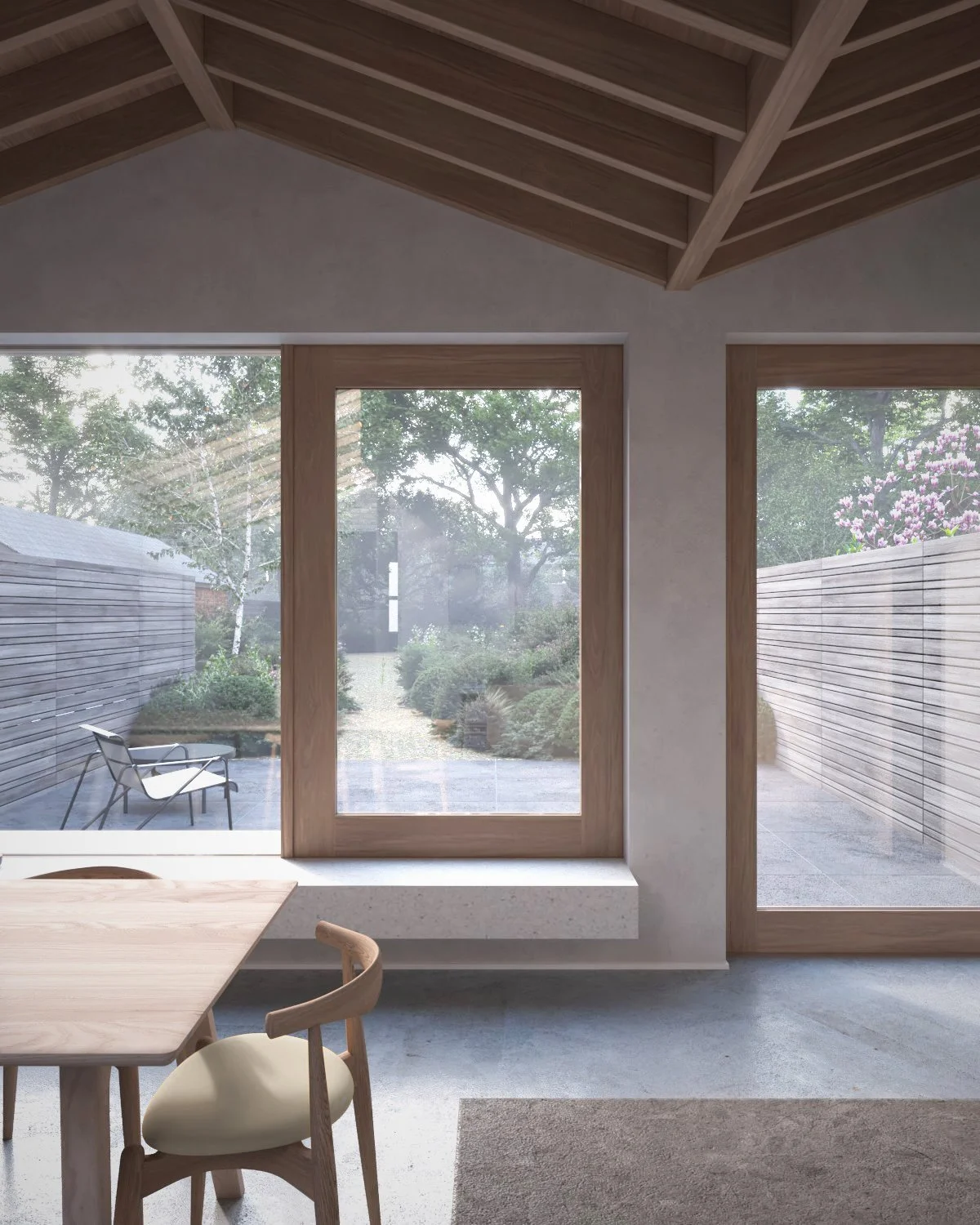
Upper Walthamstow House: exposed timber structure, deep window reveals and garden-facing glazing create a calm dining space within a Victorian extension. Good extension value comes from light, comfort, materials and everyday use, not floor area alone.
If you are considering extending your home
Taking time to understand what is realistic for your home early on can make the entire process more straightforward.
A Home Visit and Appraisal helps you step back, assess your home properly, and move forward with clarity rather than assumptions.

A realistic extension budget starts with understanding the home, not just the size of the addition. Studio CMA helps homeowners test options, clarify likely costs and decide whether extending is the right move before committing to design or construction.