London Fields Roof Extension
Two-storey roof extensions to mid-1990s live-work units in Hackney
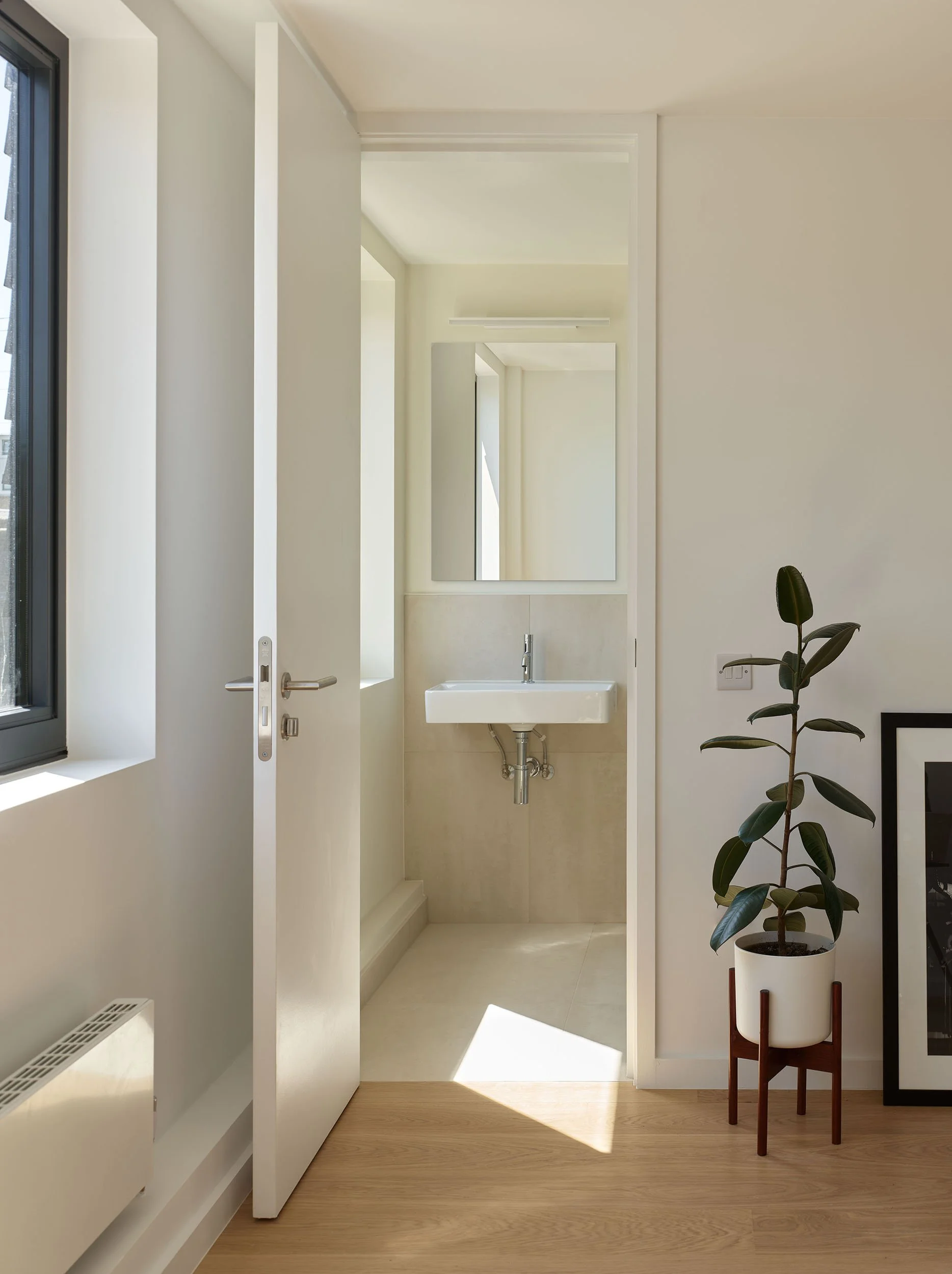
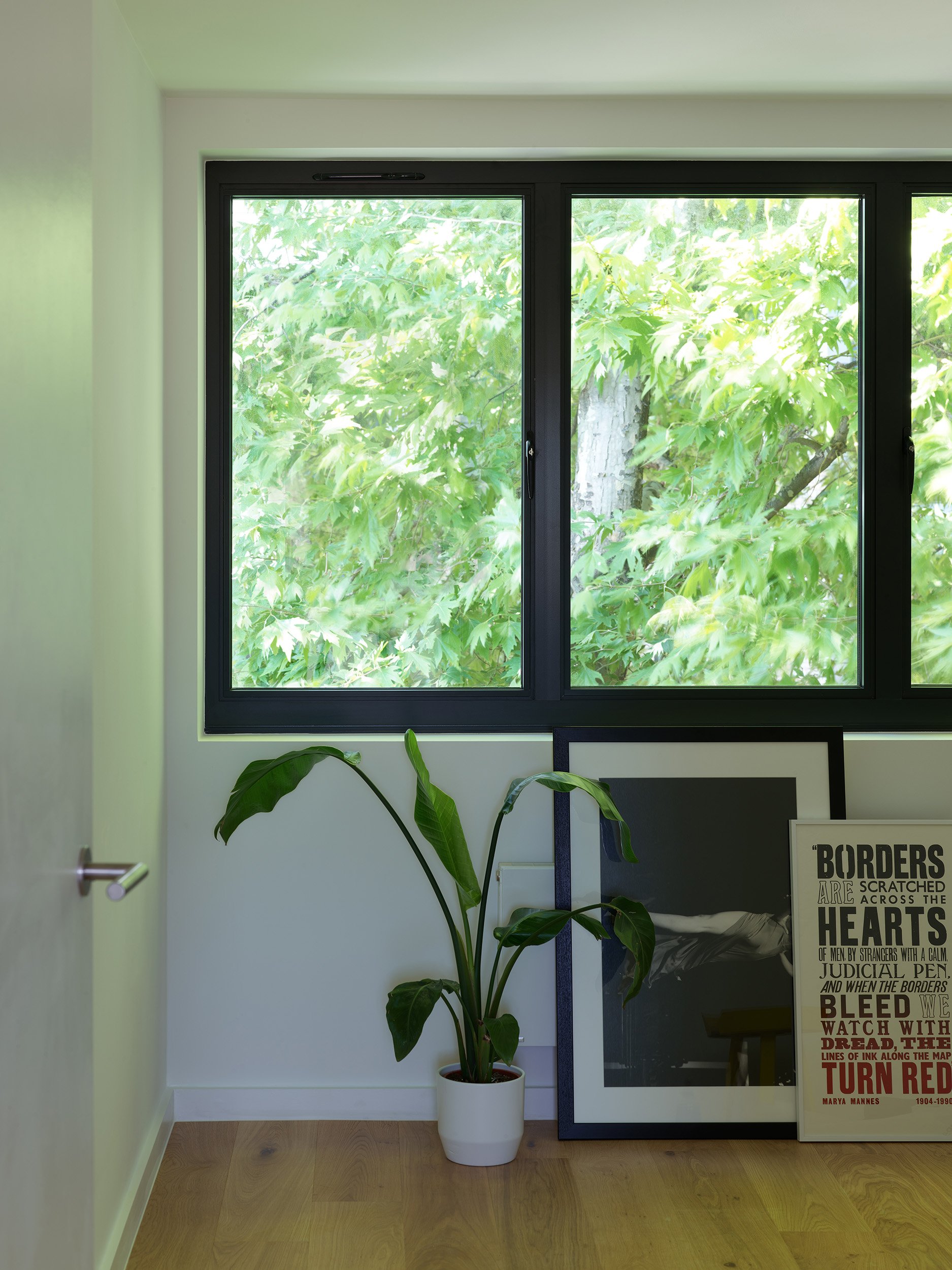
This project involved a pair of two-storey roof extensions to mid-1990s purpose-built live-work units in Hackney’s London Fields area. Each building was converted into two self-contained flats, creating four homes arranged around a shared internal courtyard.
Project context and brief
The two adjacent properties were owned independently and originally designed for combined living and working use. One had been occupied by a furniture maker for nearly two decades. The other was owned by a small creative studio. While both clients were experienced in managing complex work in their own fields, neither had previously undertaken a multi-unit residential development. The project, therefore, needed to move from individual ambition to a coordinated, buildable scheme. While the two owners followed slightly different timelines, the design and delivery strategy aligned the projects where possible, including shared planning assumptions and coordinated procurement.
“I had owned this live-work unit for some 18 years before deciding to develop the property. I was conscious that, although I had some confidence, this was a complex project built in stages and by different people, and I needed the experience and support of a good architect to manage it.”
— Moke
Early discussions focused on feasibility, sequencing, and the practical implications of delivering the project in stages. This initial work helped establish a realistic brief and informed later decisions about layout, access, and construction strategy, similar to the considerations typically explored during an architect’s home visit appraisal.
Planning context and development potential
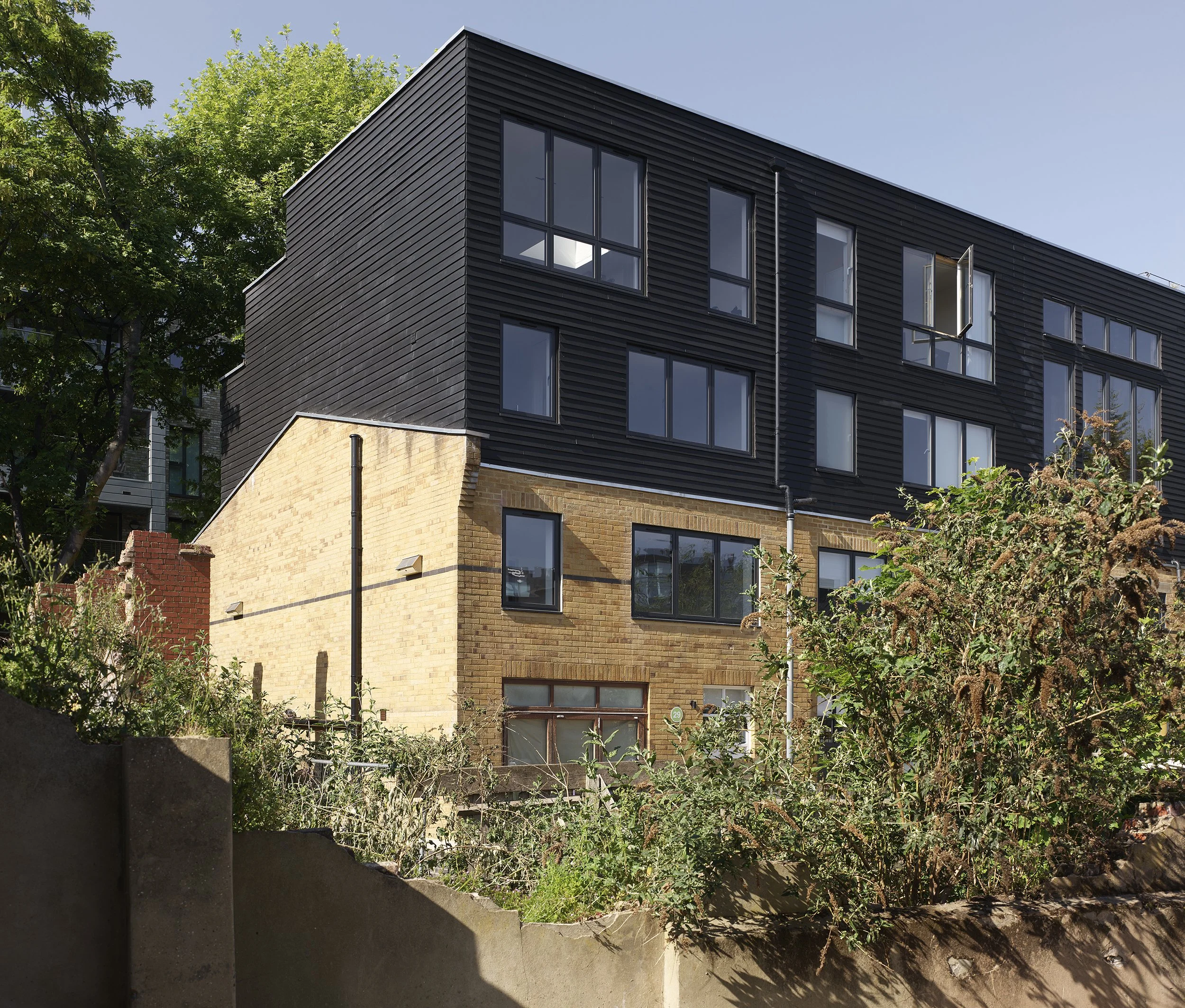
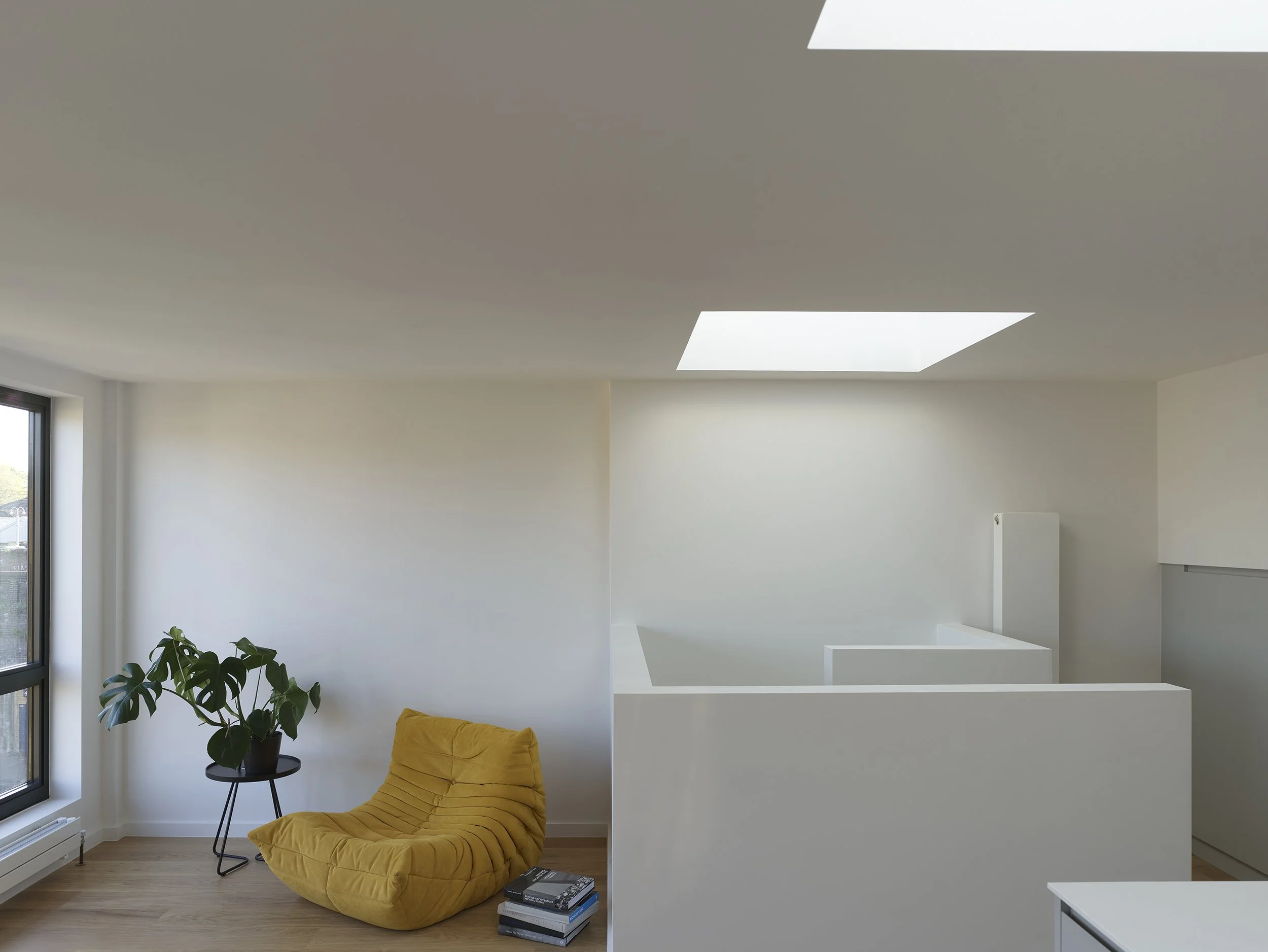
The buildings form part of a wider live-work estate approved in the 1990s, arranged as a terrace of four units. Two neighbouring properties had already added an additional storey, establishing a clear planning precedent. The opportunity was therefore not whether additional volume could be added, but how to do so in a way that aligned with the existing block and delivered long-term residential value.
“The precedent and exterior style were established, but the structure and internal format could be completely individual.”
— Moke
Working within Hackney’s planning framework, the design needed to respect the shared courtyard arrangement while making efficient use of the available roof volume. This approach reflects Studio CMA’s broader experience delivering residential extensions and alterations across the borough as architects working in Hackney.
Turning planning constraints into usable space
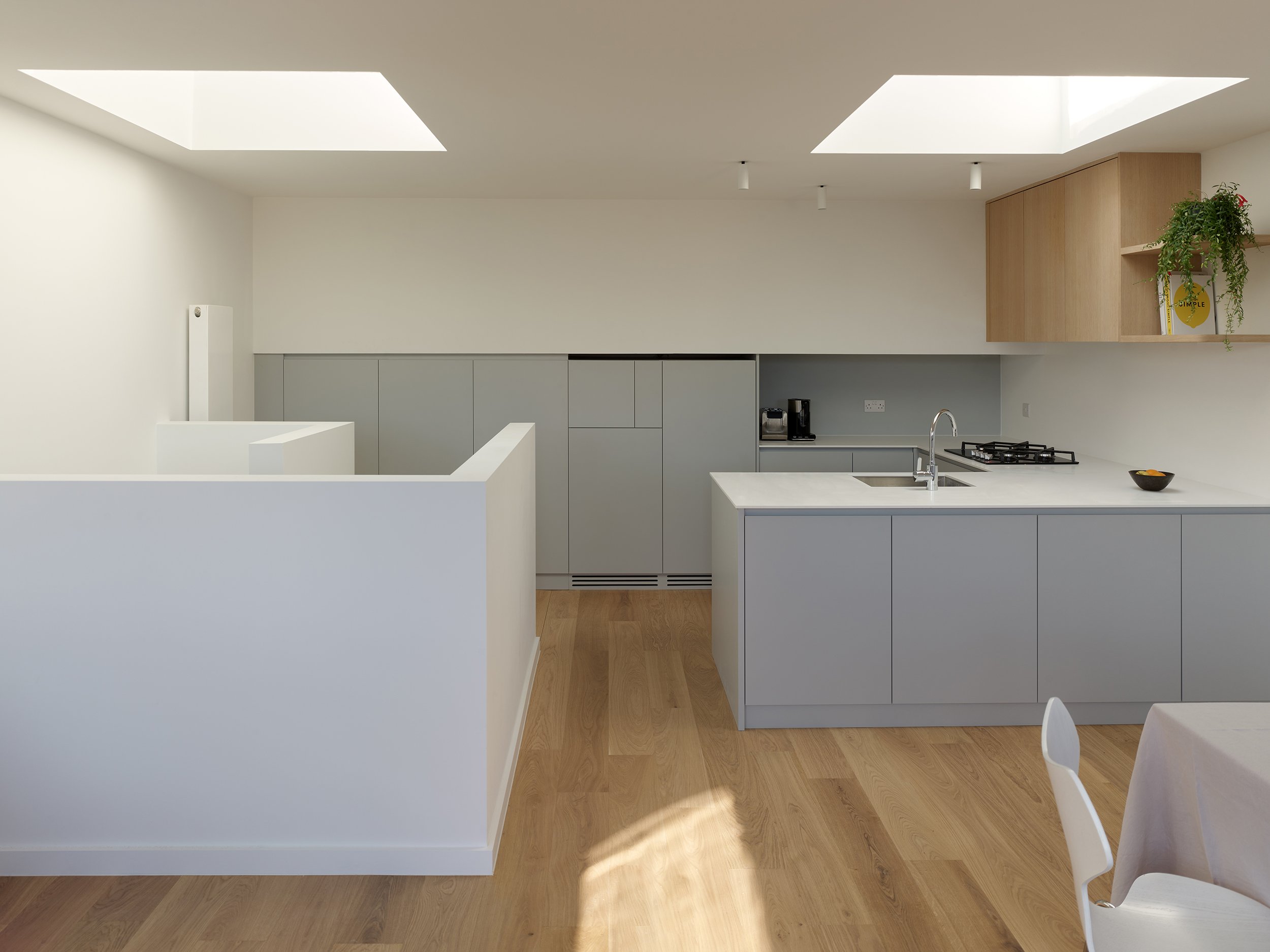
A primary challenge was to convert planning constraints into usable space. Requirements at the front of the buildings introduced a stepped upper level, limiting conventional layouts. The design response used these constraints to shape a more efficient section, allowing the upper floors to function as complete, well-proportioned homes rather than compromised additions.
The final scheme introduced an additional floor, creating four storeys within a volume where neighbouring buildings had achieved three. This increased usable floor area while remaining within the parameters set by the planning authority, resulting in a clearer and more consistent roofline across the terrace.
This approach aligns with Studio CMA’s wider body of work on residential roof extensions, where careful sectional design is often key to unlocking space without increasing visual impact.
Circulation, separation, and daylight
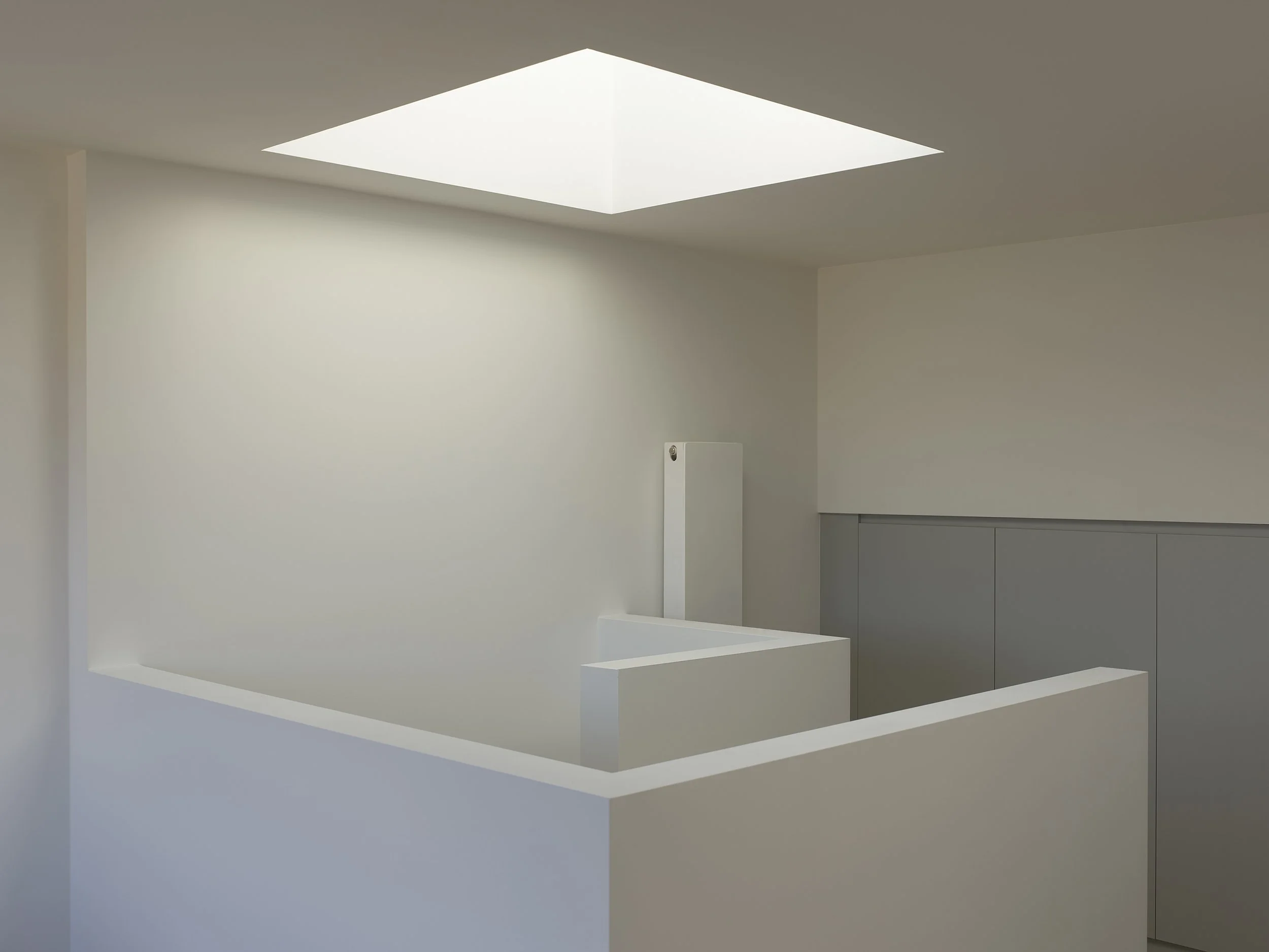
A central circulation core was introduced between the two units, allowing staircases to be stacked and coordinated. For the upper flats, the first flight of stairs bypasses the lower dwelling entirely, connecting directly to the entrance hall. This clarified access, reduced duplication, and improved separation between homes.
“If CMA hadn’t been there, managing it and feeding back to us with their attention to detail, we wouldn’t have been able to execute such a complex project.”
— Chris
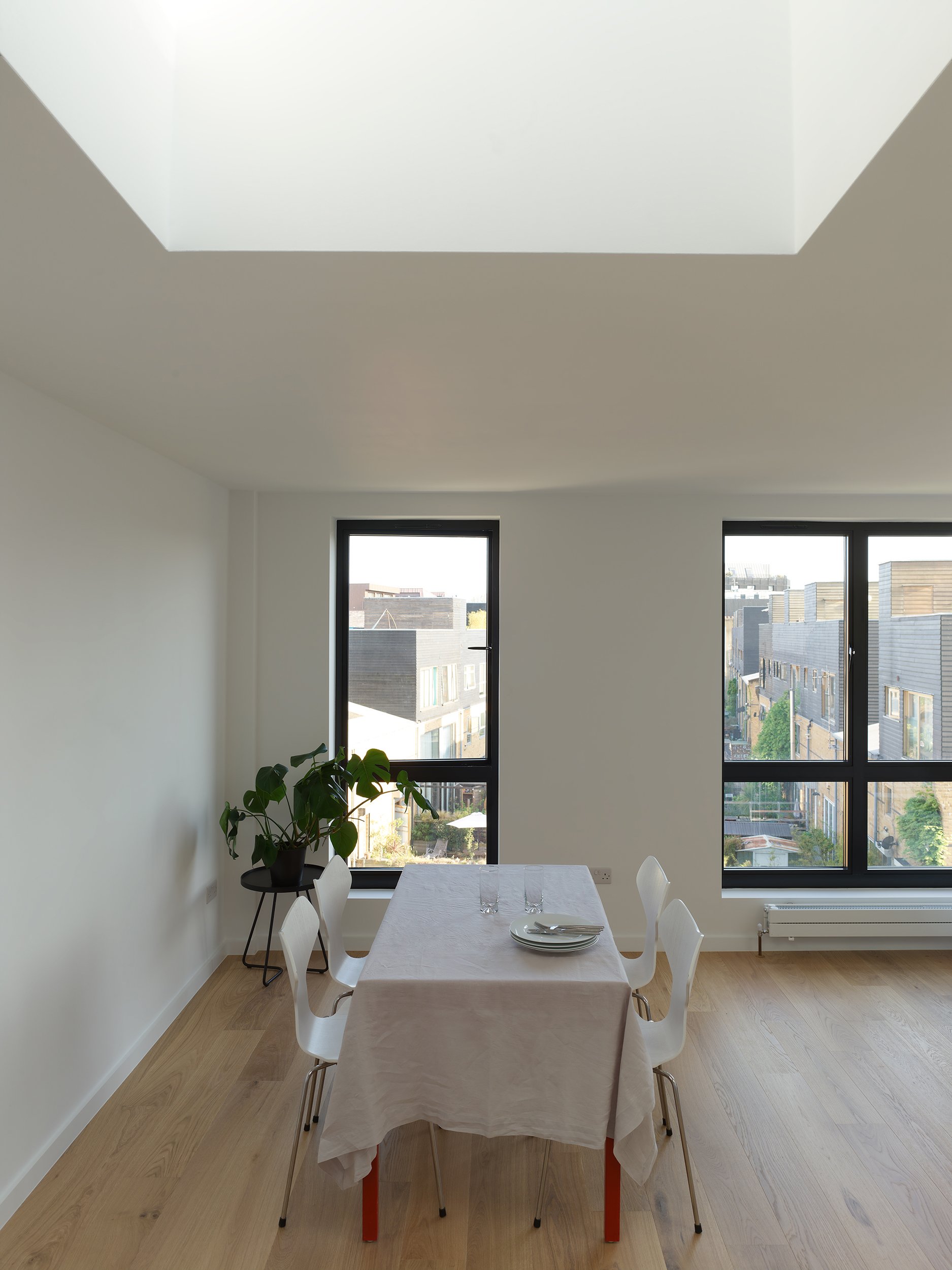
By consolidating circulation, the external walls could be used more effectively for windows and openings, improving daylight to the main living spaces while maintaining privacy between units.
Cost control, performance, and long-term use
Lower ceiling zones created by the stepped roof profile were treated as part of the overall spatial strategy. These areas were used for storage, plant, and utility functions, allowing the primary living spaces to remain open, light-filled, and flexible. On the top floor, built-in furniture integrates these elements within the kitchen, reducing visual clutter and improving day-to-day usability.
Alongside spatial planning, the project needed to support long-term occupation by different households living and working in close proximity. Acoustic separation, thermal performance, and future adaptability were therefore considered as baseline requirements rather than optional upgrades.
“I wanted to achieve very high acoustic insulation and good thermal performance, and to ensure the building could adapt if the balance between living and working changed over time.”
— Moke
Cost control was a defining constraint throughout the project. Construction was delivered in stages and involved multiple parties, requiring consistent coordination and transparent tracking to maintain financial viability.
“The budget management worked out almost exactly on the nose. The updates and spreadsheets were indispensable in keeping track of everything.”
— Chris
The completed flats now operate as independent, self-contained homes with clear separation, good daylight, and efficient layouts. Despite the constraints of the original buildings and planning envelope, the upper dwellings feel resolved and robust, capable of supporting both current use and future change.
“After completing the top flat, I suddenly felt envious of whoever would live there. It really does look lovely.”
— Chris