Passivhaus Architects in London
Designing comfortable, low-energy homes with clarity, not guesswork
At Studio CMA, we design homes that are brighter, warmer, quieter, and healthier to live in, while using significantly less energy over the long term.
As Passivhaus architects in London, we use Passivhaus principles to guide early decisions about how your home is put together. Not as a rigid standard, but as a way to create buildings that feel comfortable in every season and perform reliably once built.

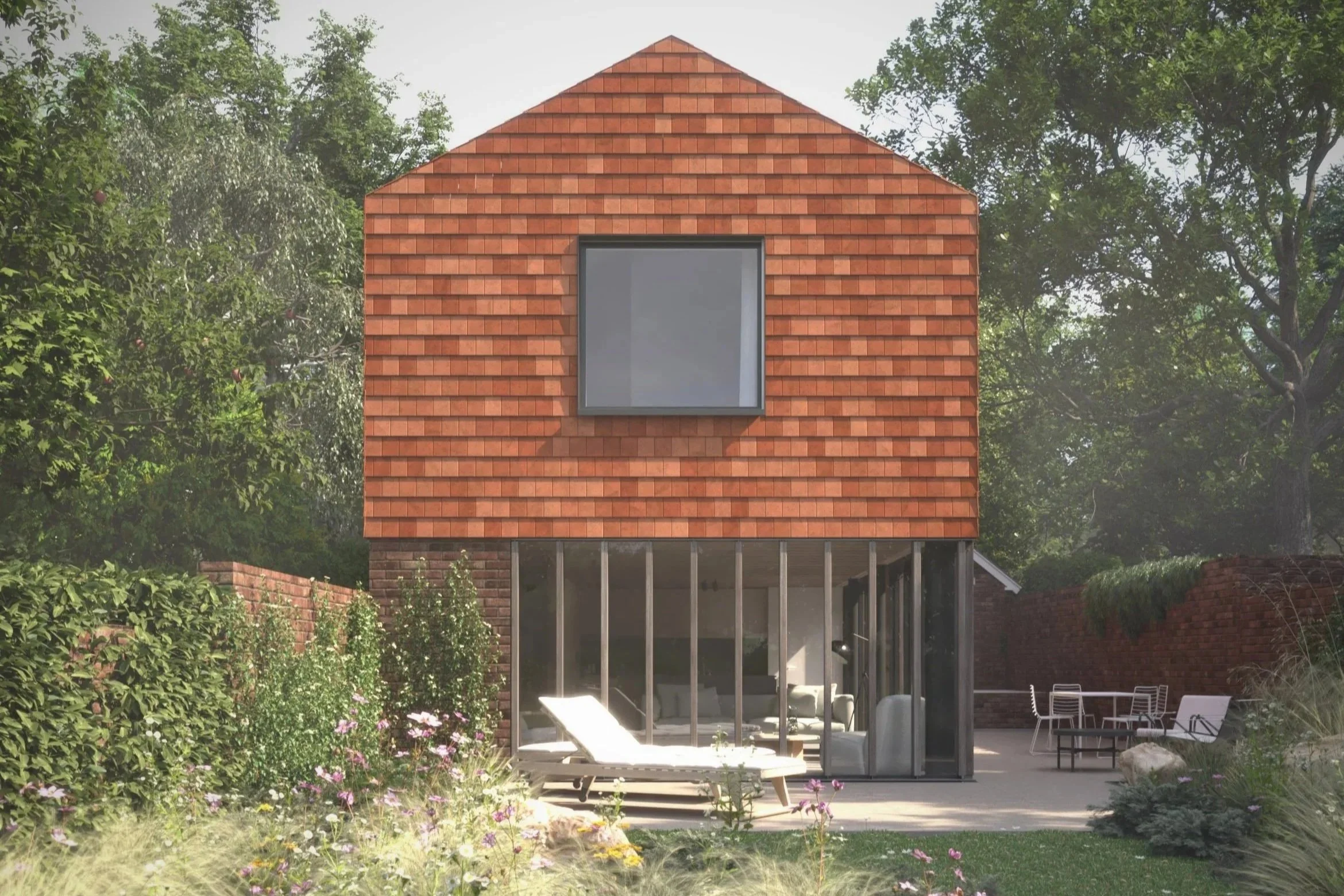
Passivhaus Country Home
Why most homes feel uncomfortable (and expensive to run)
Many homes are colder than they should be in winter and overheat in summer. Rooms feel draughty. Surfaces feel cold. Heating systems work harder than they need to.
The usual response is to add more technology. Bigger boilers. New windows. Insulation added in isolation.
But these upgrades are often disconnected.
The real issue is not how we heat homes. It is how they are put together.
If a building loses heat quickly and unevenly, no system can fully compensate. Comfort becomes something you constantly adjust, rather than something the building provides naturally.
What Passivhaus means for your home
Passivhaus is a performance standard. It sets clear targets for how a building uses energy and how it maintains comfort.
It is not a style, and it does not dictate how a home should look.
At its core, Passivhaus focuses on reducing heat loss so that a home can stay comfortable with very little energy. When this is done well, the building does most of the work, rather than relying on heating and cooling systems to correct problems.
Passivhaus is best understood as a framework for making better decisions about comfort, health, and long-term performance. You can read a fuller explanation in our article on what is Passivhaus.
What a Passivhaus approach gives you
When these principles are applied well, the difference is immediate and noticeable.
Rooms stay warm in winter and comfortable in summer without constant adjustment.
There are no cold spots near windows or external walls.
Draughts are removed, so the whole house feels calm and consistent.
Fresh air is provided without needing to open windows in winter.
Energy use is lower and more predictable over time.
The result is not just efficiency. It is a home that feels stable, quiet, and easy to live in.
Where Passivhaus goes wrong
Passivhaus is powerful, but it is often misunderstood.
It can be treated as a checklist rather than a way of thinking.
It can be pursued as certification alone, without considering whether it suits the building.
It can be applied too rigidly, especially in older homes where different construction methods are at play.
And it is often approached through systems and technology before the building itself is properly resolved.
This is why a fabric first retrofit approach is so important. The performance of the building fabric, the walls, roof, floors, and windows, must be addressed before adding systems to compensate for underlying problems.

How far should you go?
One of the most important decisions is how far to take a Passivhaus approach.
There is no single correct answer.
Full Passivhaus certification
This delivers the highest level of performance and certainty. It works best where the building can be designed as a complete system from the outset, which is often the case with new-build homes.
Passivhaus principles
This is the most common approach. The focus is on achieving the right outcomes, rather than meeting every target exactly. It allows flexibility to respond to real buildings, budgets, and constraints.
Targeted improvements
In some projects, it is more appropriate to improve specific elements in a considered sequence. This can still deliver meaningful gains in comfort and energy performance when done carefully. The right approach depends on your home, your priorities, and how far you want to go.
Passivhaus in existing homes
Applying Passivhaus thinking to existing buildings requires care.
Older homes, particularly period properties, behave differently from modern construction. Materials handle moisture in different ways. Structures have limits. Planning and conservation constraints often apply.
This means the principles need to be adapted, not applied blindly.
Just as importantly, the order in which changes are made matters. Improving one part of the building without understanding the whole can create unintended problems.
This sits within a broader approach to improving existing buildings through home retrofit, where comfort, performance, and durability are considered together rather than in isolation.
Choosing a Passivhaus architect in London
Working with a Passivhaus architect is not about applying a standard. It is about making the right decisions early.
As Passivhaus architects in London, our role is to help you understand what is possible for your home, how different approaches compare, and what level of intervention is appropriate.
We balance comfort, cost, disruption, and long-term performance so that the outcome is aligned with how you want to live.
The goal is a home that performs as intended once built, not one that relies on adjustment or correction afterwards.
Passivhaus for new homes
New-build projects allow Passivhaus principles to be applied much more directly.
The building can be designed as a complete system from the outset. Form, structure, insulation, and ventilation can all be coordinated together. This leads to very predictable performance and consistent comfort.
We have designed new homes to Passivhaus principles, exploring how low-energy performance can be achieved alongside careful architecture and material choices.
This understanding of what is possible in an ideal scenario informs our retrofit work, helping guide decisions in more constrained existing buildings.
Before you commit, you need clarity
Most of the important decisions in a project are made early.
How far to go. What to prioritise. What sequence to follow. How to balance performance with cost and disruption.
Getting these decisions right avoids wasted work, unnecessary expense, and performance problems later on.
Start with a Retrofit Strategy
For most existing homes, the first step is not design. It is clarity.
Our Retrofit Strategy service helps you understand how your home performs today, what is realistically achievable, and how to approach improvements in the right order.
This gives you a clear, joined-up plan before committing to design or construction.
Or book a call
If you would prefer to talk things through, we are happy to discuss your project and help you decide what makes sense for your home.
Planning a new home?
If you are considering a new build and want to explore a Passivhaus approach, we would be happy to discuss your project and what level of performance is appropriate.
Our latest articles.