
Does an extension always have to be box shaped?
That was the question asked of Good Housekeeping when they interviewed Daniela Ciarcelluti.
We were delighted to see Daniela speak with Good Housekeeping about why extensions do not need to be box shaped. Her short answer was no. The right form is the one that makes your home brighter, warmer, quieter, healthier and easier to live in all year, while sitting comfortably with the original architecture.
Many London rear extensions follow a simple rectangular or “glass box extension” approach because it is straightforward to build. We approach extensions as part of a whole-house transformation, where shape, light and connection to the garden improve how the entire home works.

Good Housekeeping, September 2025 cover featuring Sheridan Smith, which includes the Studio CMA Culverden Road project in the interiors section.
Culverden Road: a period home re-imagined
When Carolyn and David first got in touch, a tired glass conservatory was dominating the rear of their London period home. It sat more than a metre above the garden, was poorly insulated, and cut the kitchen and hall off from the outside.
A simple box-shaped rear extension, often referred to as a “glass box extension”, would have been cheaper, but less rewarding. Good box extension design often prioritises simplicity, but it can limit how a home connects to light, views and the garden. Instead, we worked with the language of the existing house, the lines of the old conservatory, and the level changes to the garden to create a triangular, partially cantilevered garden room.
This approach reflects how we think about designing extensions for Victorian homes.
The angled walls and asymmetric roof echo the original sloping roofs while opening diagonal views to the garden and common beyond. From the inside, a glass-to-glass corner supported by a slender steel column dissolves the edge, and a discreet glass guard keeps the threshold safe without blocking views. The zinc roof seams fan toward a discreet valley, giving the extension a crisp, durable profile that planners welcomed as subservient to the host villa. In planning terms, “subservient” means the extension sits comfortably alongside the original house rather than competing with it.
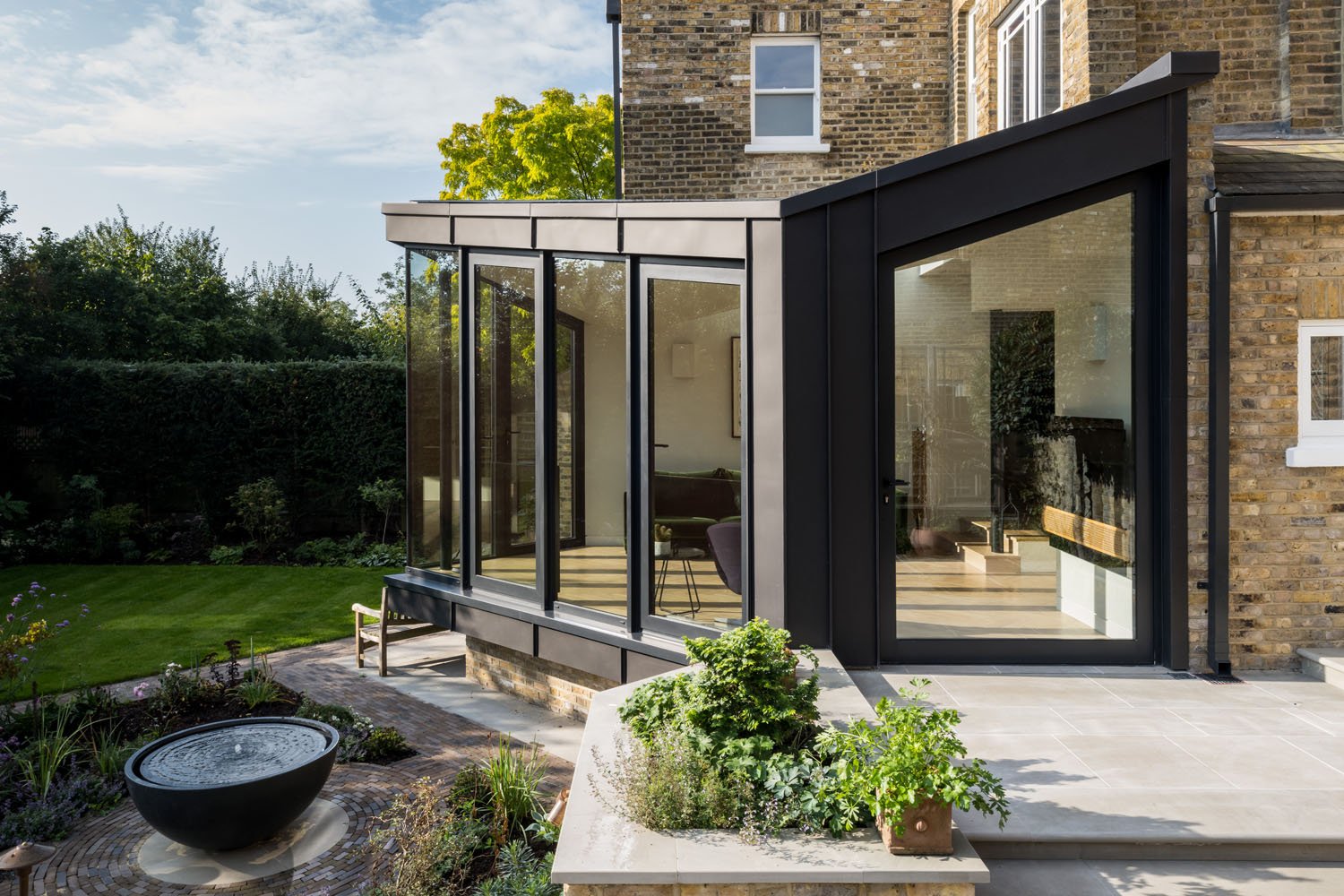
Geometry and Daylight: Rear extension to a London period home — a light triangular garden room cantilevers toward the landscape, opening views on three sides.
The shapes and angles were not arbitrary. They arose from a deep understanding of the context and the existing building. Every decision was rational — aligning with the roof language, improving views, and resolving the level changes to the garden. This is where many projects go wrong. You can see examples in why some extensions make homes less comfortable.
The roof is predominantly solid and highly insulated, with a single targeted rooflight to draw daylight deep into the plan. High performance glazing filters infrared to minimise summer overheating while retaining winter warmth.
The angled, pitched roof extension echoes the original sloping forms while improving comfort and daylight control throughout the year.
In short: conscious, rational choices that maximise enjoyment and make the room usable all year round.
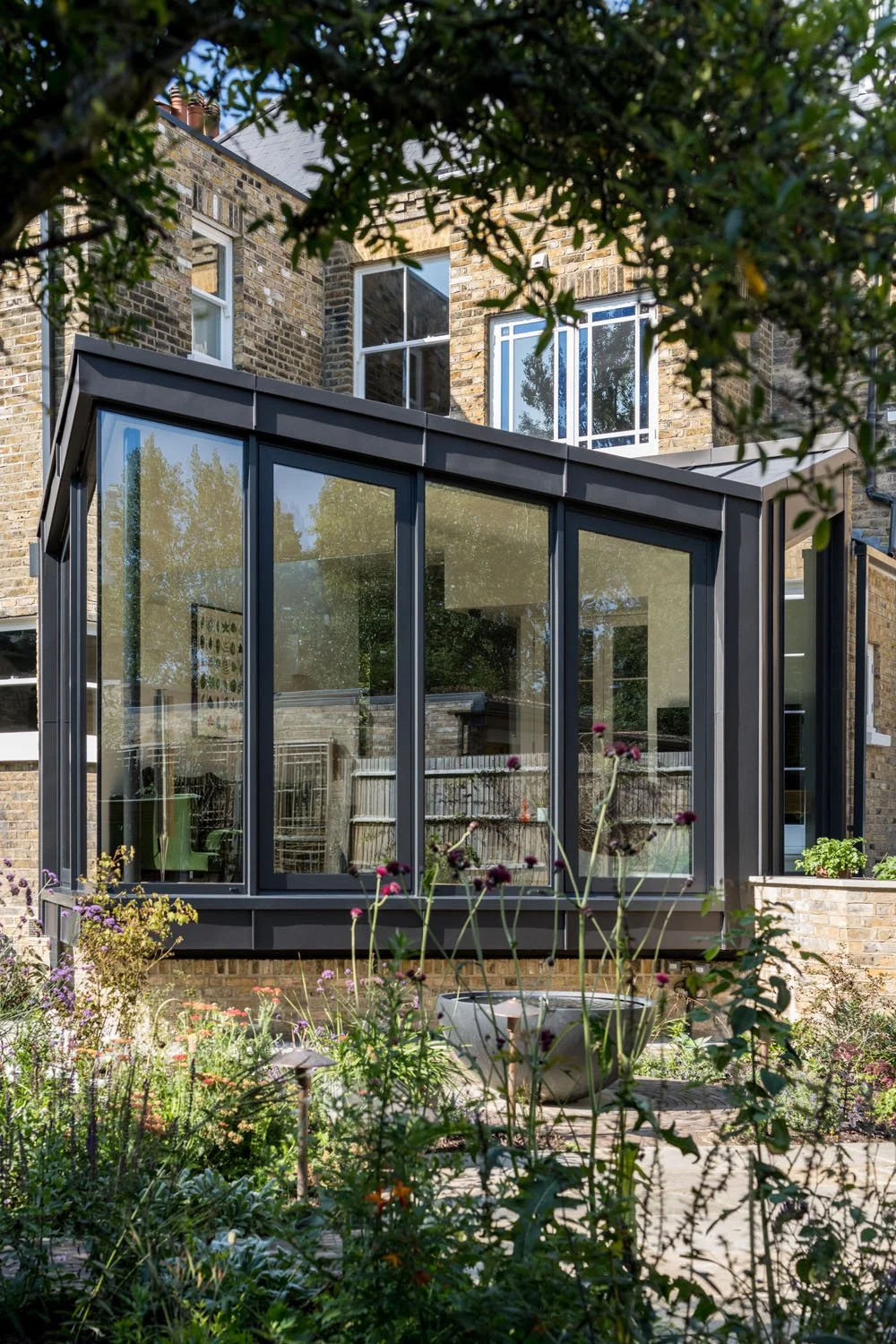
Garden Elevation: The cantilevered edge hovers above planting, giving depth to the facade without bulk.

Corner bay detail: Glass-to-glass corner with a slender internal column keeps the edge transparent while carrying the roof.
“There is so much about this project that we are delighted with; we love the magical light and space that it has given us with wonderful views of our garden and the trees of the common behind, making it feel like being in the countryside... There is nothing ordinary about this project.”
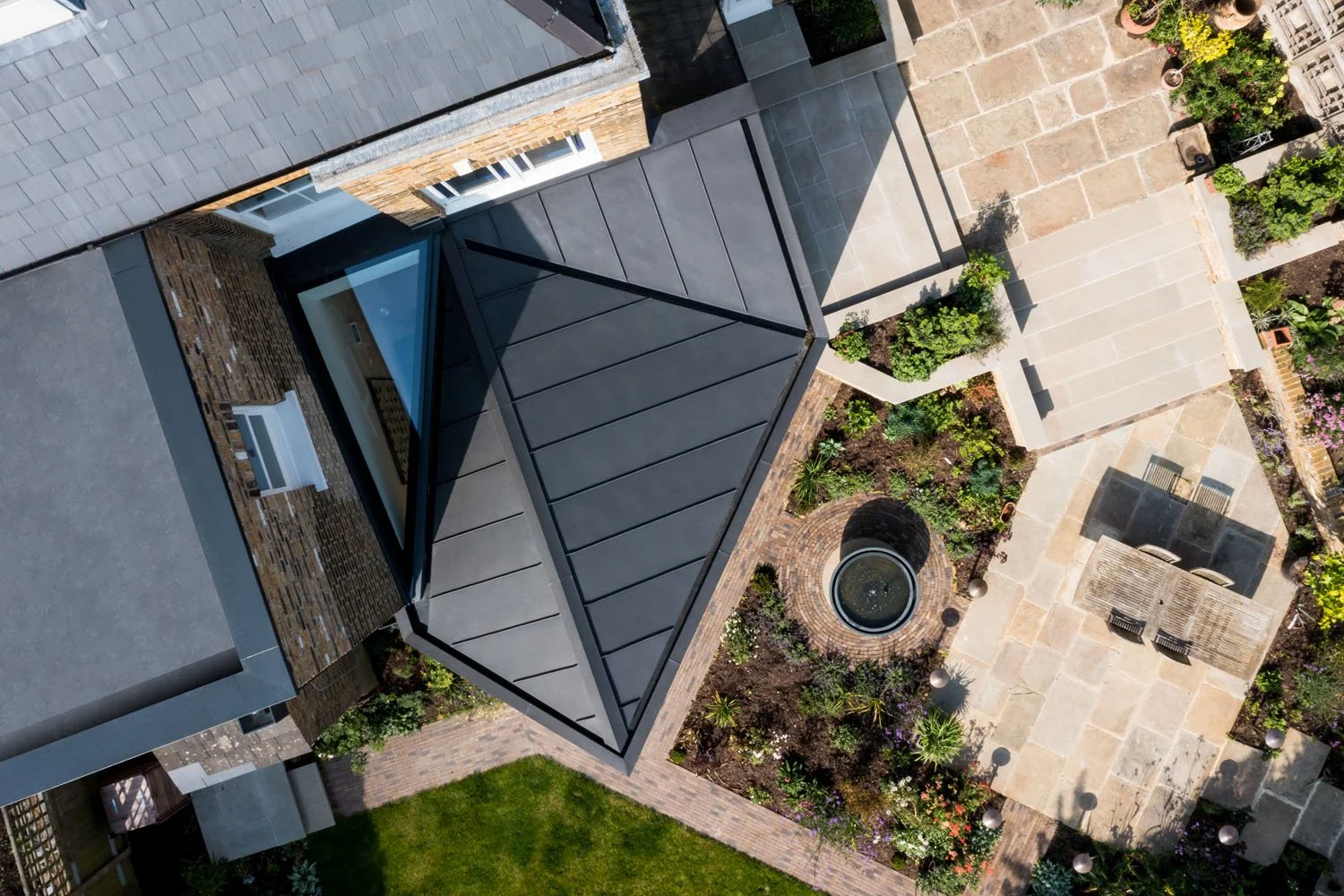
Aerial roof geometry: Triangular standing-seam zinc roof with hip and valley lines that drain to the house side - a crisp, low-profile form that steps with the villa.
This is not a trendy gesture. We avoid chasing fashions that date quickly. Instead we aim for timeless design moves, derived from context and client brief, and personalised to how each family wants to live. That’s why Culverden Road feels both contemporary and at home with its period host.
This is a considered example of a modern extension to a period home, where new and existing architecture work together rather than competing.
For us, sustainability is not just about energy modelling and insulation values. A sustainable home is one that lasts in time, is durable, loved, and therefore maintained and cared for. At Culverden Road, investing beyond the box has given the family a room that will be cherished for decades.

Asymmetric roof with targeted rooflight brings soft, even daylight to seating.

Enlarged openings and a splayed facade create long diagonal garden views and easy circulation.

Solid insulated roof for comfort year-round, with clerestory daylight to the seating nook.

Garden elevation: Partially cantilevered edge hovers above planting, opening diagonal views without adding bulk.
Next steps
If you are thinking about extending your home, the most useful first step is to understand what is possible before committing to a direction.
Start with the bigger picture
Download our guide to planning a sustainable, whole-home extension.
Talk through your project
If you would like to explore your ideas in more detail, you can book a consultation to discuss your home, your priorities, and whether an extension is the right approach.
Test options before committing
Our Architect’s Home Visit and Appraisal allows you to test different layouts, forms and budget scenarios early, so you can move forward with clarity and confidence.
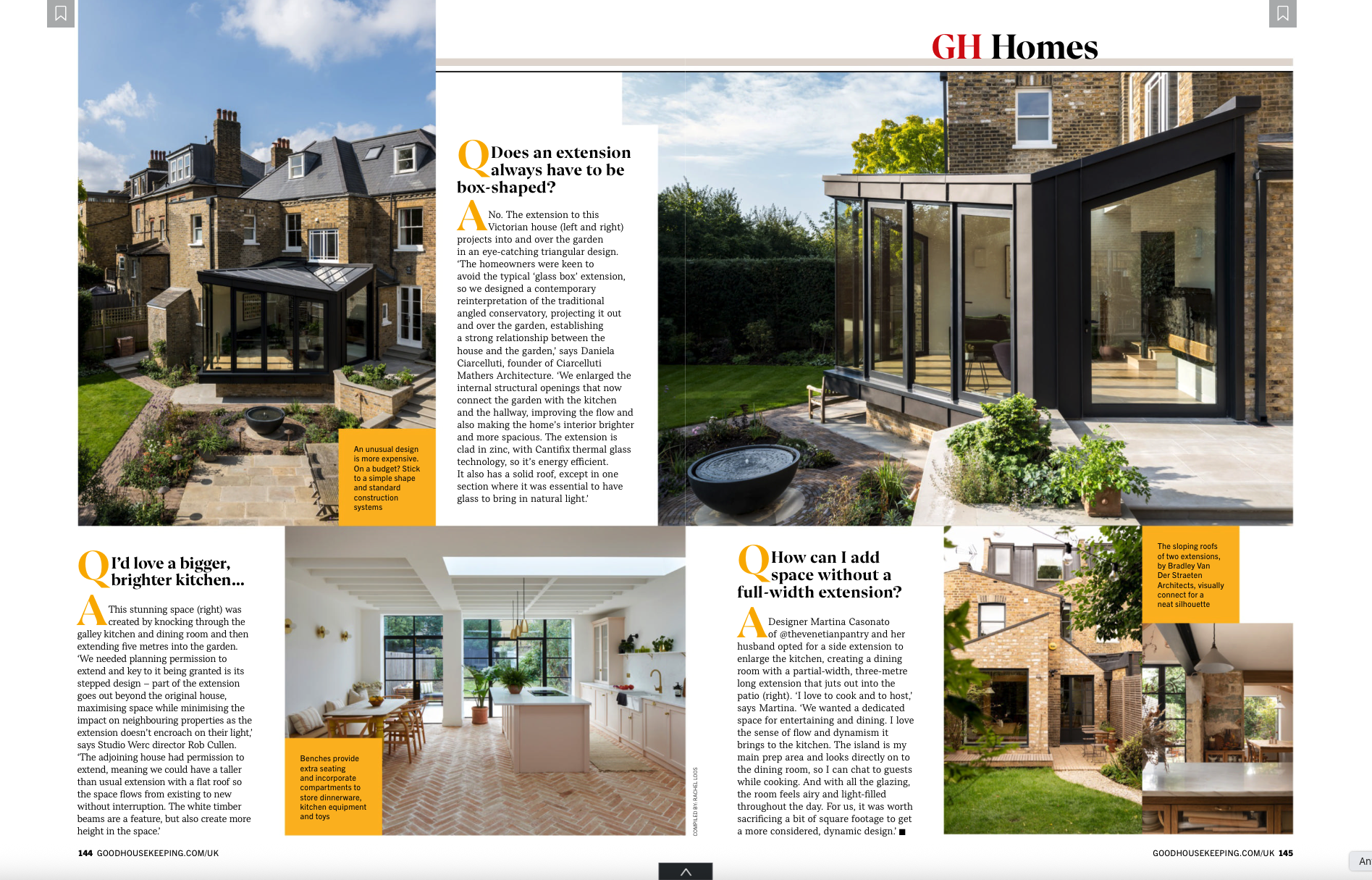
Feature in Good Housekeeping magazine showcasing Studio CMA’s Culverden Road extension — a triangular zinc-clad garden room for a London period home.