
Light Retrofit: A Practical Guide to Improving Your Home Without a Full Renovation
A lighter touch that makes a lasting difference
Not every home needs a full overhaul.
Sometimes, you just want to make it warmer. Healthier. More comfortable to live in. You want to protect what is already beautiful and fix what is not quite working.
A light retrofit is often the most practical way to approach a home energy upgrade, particularly in older London homes.
It focuses on targeted improvements, carried out within the constraints of real projects. Budget. Time. Phasing. Planning. Not redesigning the whole house, but improving what matters most, in a way that still considers how the home works as a whole.
For many homes looking to retrofit an old house, it is the natural place to start.
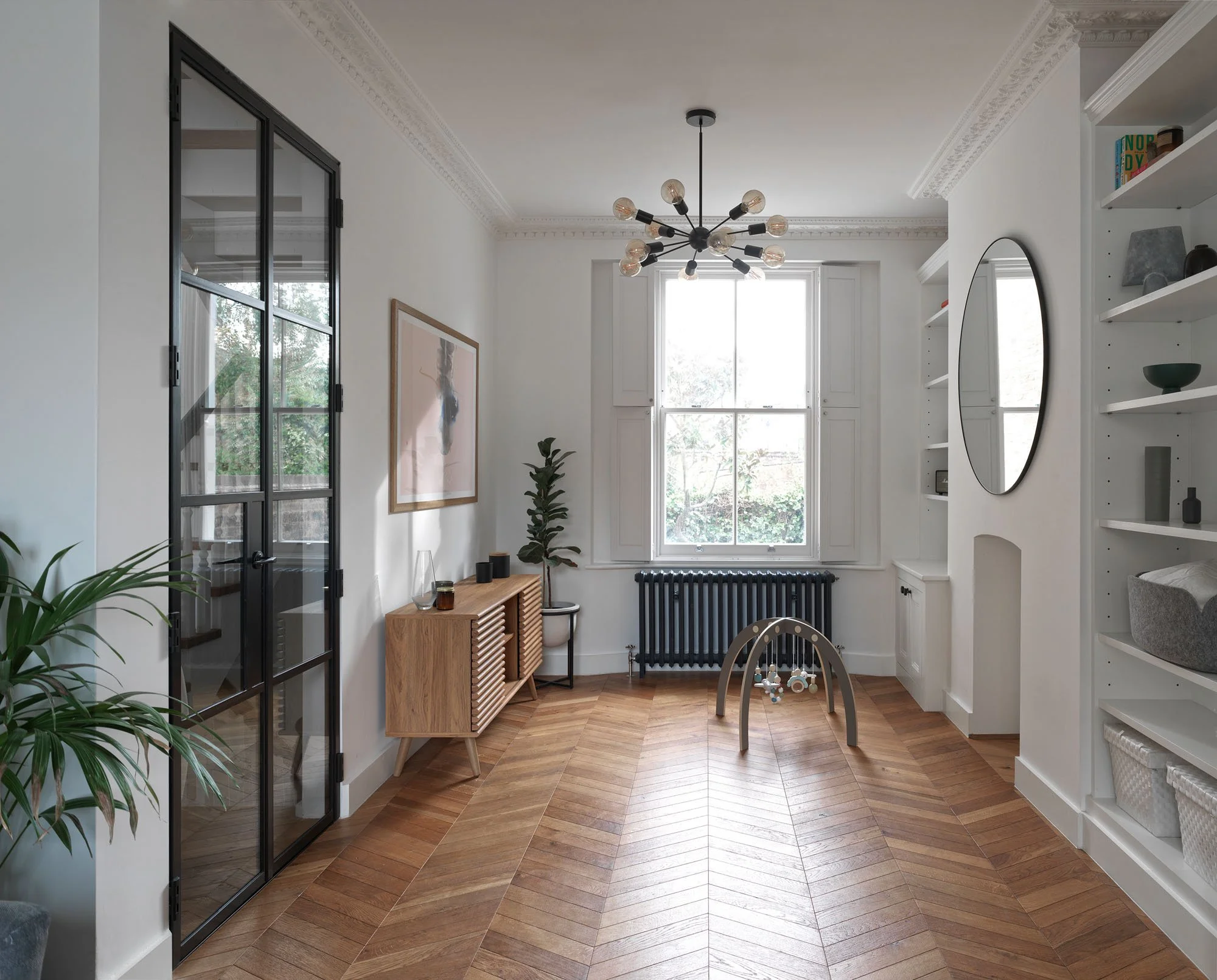
A light retrofit in Islington, improving comfort and energy performance while retaining the character of the original Victorian interior.
What is a light retrofit?
A light retrofit focuses on targeted improvements, but these are planned in the context of the whole house, so they work together rather than in isolation.
Typical improvements include:
Reducing draughts around floors, doors, and windows
Adding insulation where it is accessible, such as lofts or suspended timber floors
Upgrading glazing, or adding secondary glazing
Improving heating systems or controls
Introducing basic ventilation, such as extract fans in kitchens and bathrooms
These changes may seem modest. But together, they can shift how a home feels.
You notice it in simple ways. The room warms up faster. The cold draught by the sofa disappears. You stop thinking about the heating.
Why many homes take this approach
A light retrofit is shaped by real-world constraints.
Budget limits how much can be done at once
Phasing spreads work over time
Planning and conservation restrict what can change
Partial renovation means only part of the house is being touched
This is how most projects unfold.
A considered light retrofit works within these conditions. It allows you to improve your home step by step, while still keeping an eye on how each change fits into the bigger picture.
What a light retrofit can achieve
Done carefully, a light retrofit can make a noticeable difference:
Rooms feel warmer and more stable
Draughts reduce
Heating systems work more effectively
Energy use begins to fall
It improves comfort. It reduces waste. It makes the house easier to live in.
For many homes, this is a meaningful step forward.
But it is rarely the full potential of the building.
Where light retrofit sits in the bigger picture
A light retrofit is one way to improve your home. But it is not the only approach.
There are three broad ways to think about retrofit:
Incremental improvement
A light retrofit focuses on targeted upgrades, carried out over time, but considered in relation to the whole home.
Whole-house retrofit
Approaches such as AECB retrofit and EnerPHit retrofit treat the home as a whole system.
An AECB retrofit uses Passive House methods but allows flexibility to suit UK homes, budgets, and phasing
An EnerPHit retrofit is part of the Passivhaus family, with stricter targets and a formal certification route
Both aim to coordinate insulation, airtightness, ventilation, and heating so they work together.
New-build benchmark
Passive House sits at the highest level and is usually applied to new builds, though occasionally to retrofit.
If you are unsure how far to go, start with our guide on how much you should retrofit your home.
The limits of a light retrofit
A light retrofit improves parts of your home.
It does not fully optimise how the whole building works.
That distinction matters.
It is not a whole-house solution
Even with well-considered upgrades, untreated areas will continue to affect overall performance.
It depends on coordination
The success of a light retrofit comes down to how well decisions are connected.
Poorly sequenced upgrades can create problems. Well-planned ones can work together surprisingly effectively.
Moisture and ventilation risks
Older homes rely on a balance between heat, air movement, and moisture.
If you reduce draughts or add insulation without improving ventilation, moisture can build up. That can lead to condensation, mould, or reduced performance.
A simple way to think about it is clothing.
A dry jacket keeps you warm because it traps air. A wet jacket loses that warmth quickly. Buildings behave in the same way. If moisture gets trapped in the fabric, performance drops and problems follow.
Missed opportunities
If decisions are made without considering the wider plan, you may limit what can be achieved later or need to revisit work.
If a deeper, whole-house approach is possible, it will usually deliver a more consistent, more comfortable, and more efficient result.
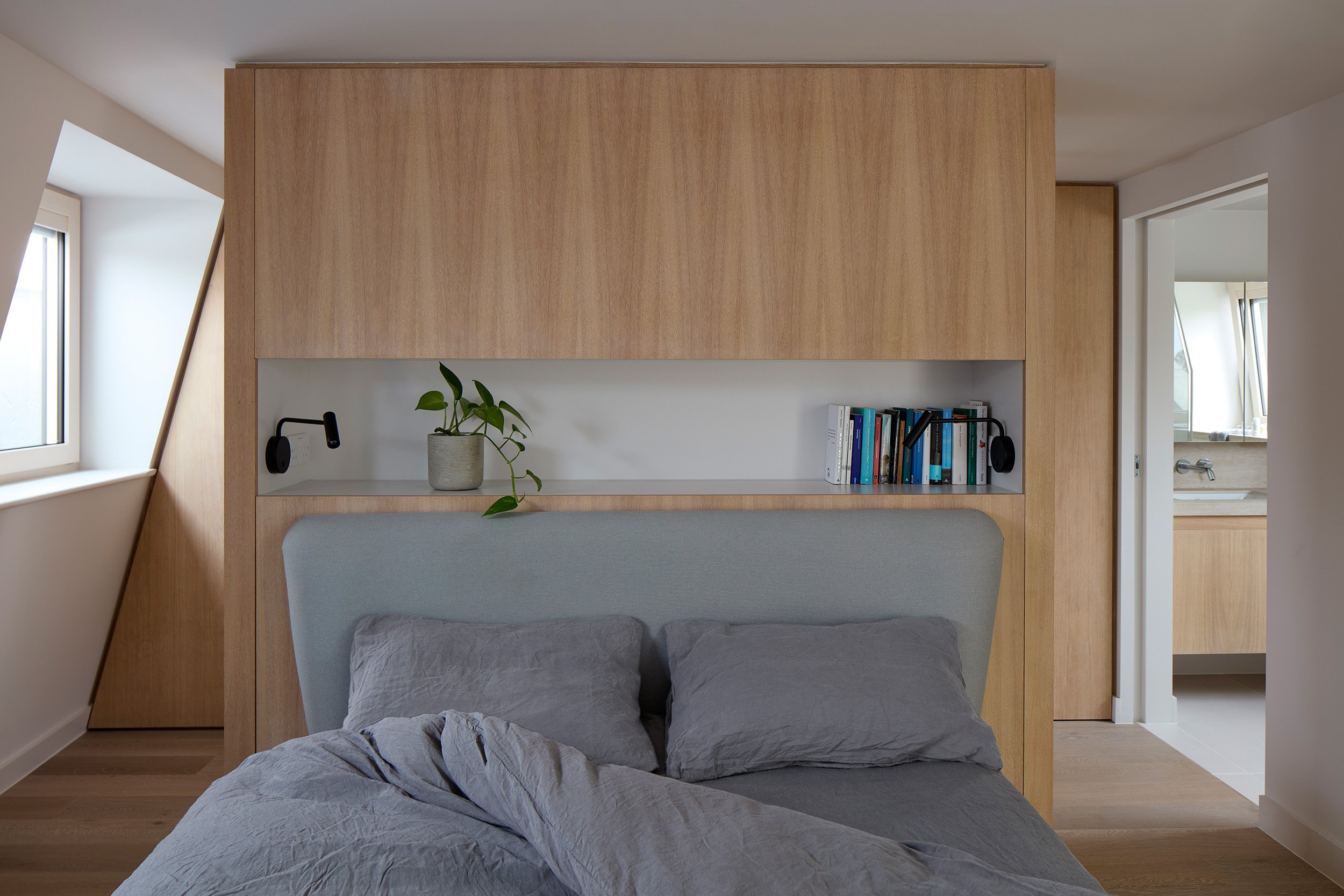
A Hackney home upgraded through a light retrofit, using targeted interventions to improve comfort, storage and spatial clarity.
Common mistakes to avoid
Most problems with light retrofit are not about doing too little.
They come from a lack of coordination.
Improving airtightness without upgrading ventilation
Adding insulation without understanding moisture movement
Replacing heating systems before reducing heat loss
Treating each upgrade as an isolated decision
This is why a fabric first approach is often recommended, improving the building fabric before upgrading systems.
The risk is not doing less.
It is doing things in the wrong order.
When is a light retrofit the right choice?
A light retrofit is often the right approach when:
You need immediate improvements
You are working within clear budget limits
You are planning to improve your home in stages
You are not ready for a full renovation
It is a practical and sensible starting point.
If a whole-house retrofit is realistic for your project, it is usually worth considering first before committing to a series of smaller upgrades.
Why having a plan still matters
Even with a light, staged approach, it helps to understand how your home works as a whole.
A light retrofit is most effective when it forms part of a longer-term plan.
That plan helps you:
Avoid rework
Prevent unintended problems
Make each upgrade build on the last
You do not need to do everything at once.
But you do benefit from thinking ahead.
A Retrofit Strategy can help map that out, so the decisions you make now support the home you want in the future.
If you are considering a home retrofit, starting with a clear plan will almost always lead to a better result.
Less energy. More comfort. Same soul.
A successful light retrofit should feel almost invisible.
The room warms up without effort. The draughts fade. The house feels calmer.
And yet the proportions, materials, and character that made you fall in love with it remain intact.
Not doing everything.
But improving the right things, in a way that works together, over time.