
Planter House
A small rear extension in London that gives part of its 13 m² footprint back to the garden, bringing daylight, fresh air and planting into a Walthamstow home.
Location: Walthamstow, London
Property: Three-bedroom mid-terraced house
Conservation area: Orford Road Conservation Area
Project: 13 m² rear extension and internal reconfiguration
Key ideas: Daylight, planting, kitchen relocation, garden connection and planted roof
Planning: Planning permission secured


A home organised around the wrong room.
At Planter House, the problem was not simply how much space the house contained. It was where that space sat.
The couple had bought a three-bedroom terraced house in Walthamstow’s Orford Road Conservation Area. Although the house had generous rooms, its layout had been shaped around someone else’s way of living.
For two people who loved cooking and spending time with friends, the kitchen was in the wrong place. It sat at the front of the house, separated from the rear living room and garden. Cooking felt removed from the social life of the home rather than part of it.
They wanted a bright kitchen where they could prepare food while talking to friends, with more generous living space and an easier relationship with the garden. Upstairs, they also needed better storage, room for working and exercise, and a larger main bedroom.
Why a full-width extension was not the best answer.
The clients’ first instinct was to extend across the full width of the house and gain as much floor area as possible. We explored that option alongside several alternative layouts, looking at how each would affect daylight, ventilation, movement and the usefulness of the existing rooms.
A full-width extension would have made the new room larger. It would also have pushed the garden further away and risked making the middle of the enlarged ground floor feel darker and more enclosed.
The larger room would not necessarily have created the better home.
Instead of asking how much of the garden could be built over, we asked what a narrow area left open might contribute to the whole house.
That subtraction became the defining move.
Bringing the garden into the plan.
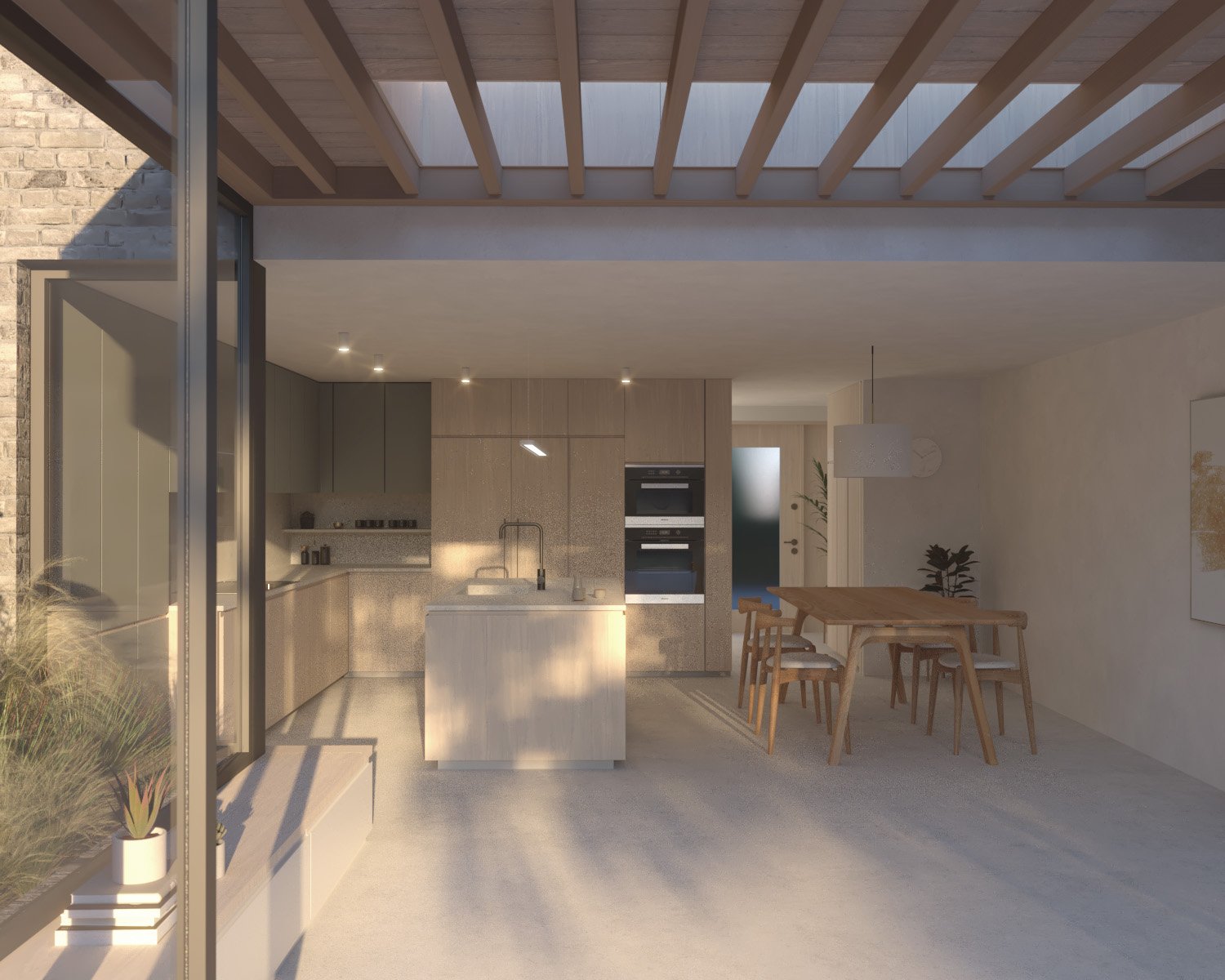
The 13 m² extension pulls back from one boundary to create a planted recess beside the kitchen. This allows daylight, fresh air and greenery to reach deeper into the plan.
The planting is not something seen only beyond the rear doors. It becomes part of the kitchen’s everyday outlook, bringing the garden alongside the room and closer to the ordinary rituals of cooking, eating and spending time together.
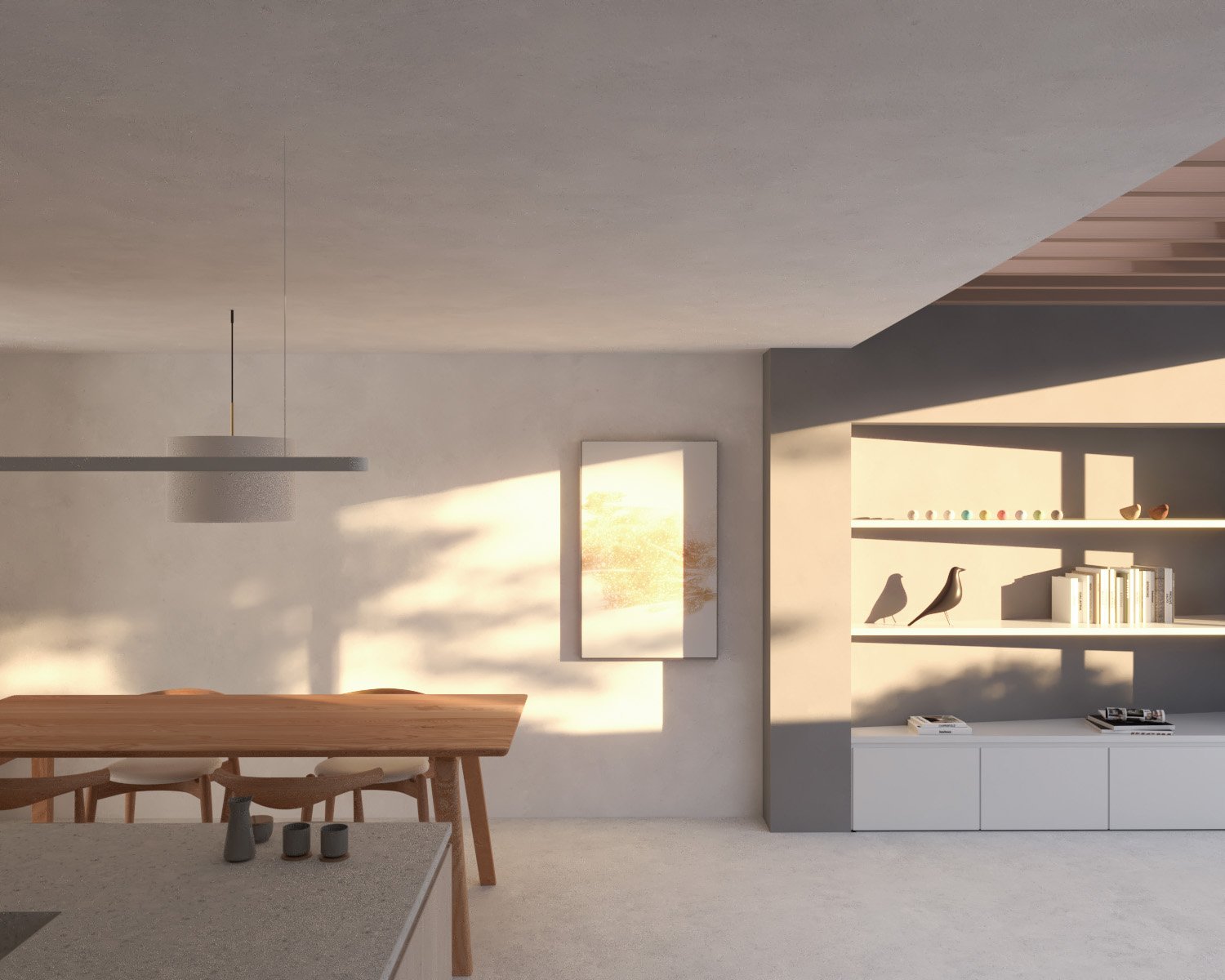
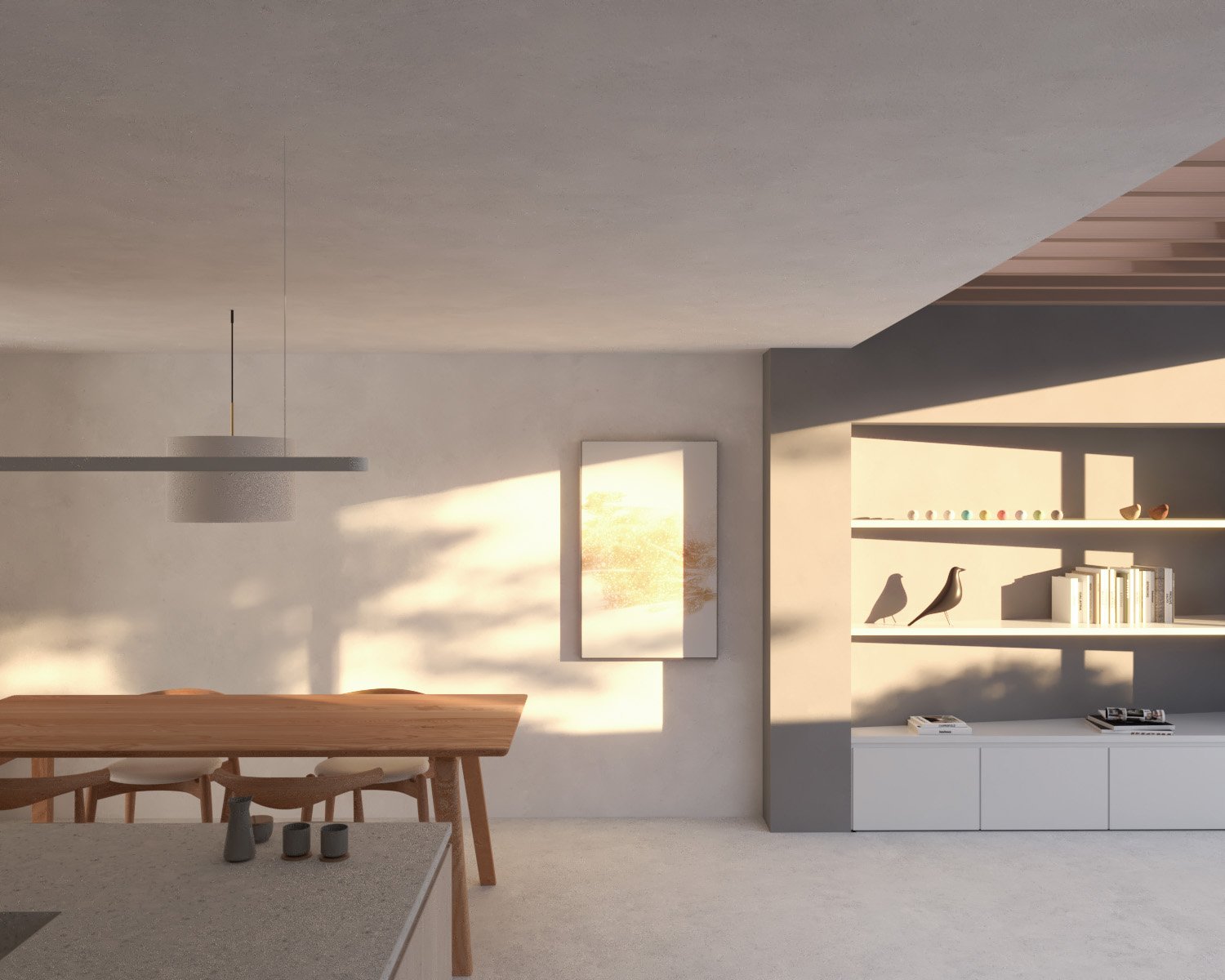
The front room remains separate, offering somewhere quieter to retreat to. The staircase is opened towards the new kitchen and dining space, connecting the original house more clearly with the extension.

A large island forms the practical and social centre of the kitchen.
Beyond it, the dining area and informal seating gather around the glazed garden doors. The ground floor becomes a sequence of connected places rather than one undivided room: somewhere to relax, somewhere to cook, somewhere to eat and somewhere to sit close to the garden.
A rooflight brings daylight into the deeper part of the plan. Above, the planted roof supports biodiversity and gives the upstairs rooms and neighbouring homes a softer outlook.
The extension also steps back and changes height along its boundaries, reducing its impact on the adjoining properties. Dark metal cladding and slender metal-framed glazing give the new work a quiet contemporary identity alongside the existing brick house.
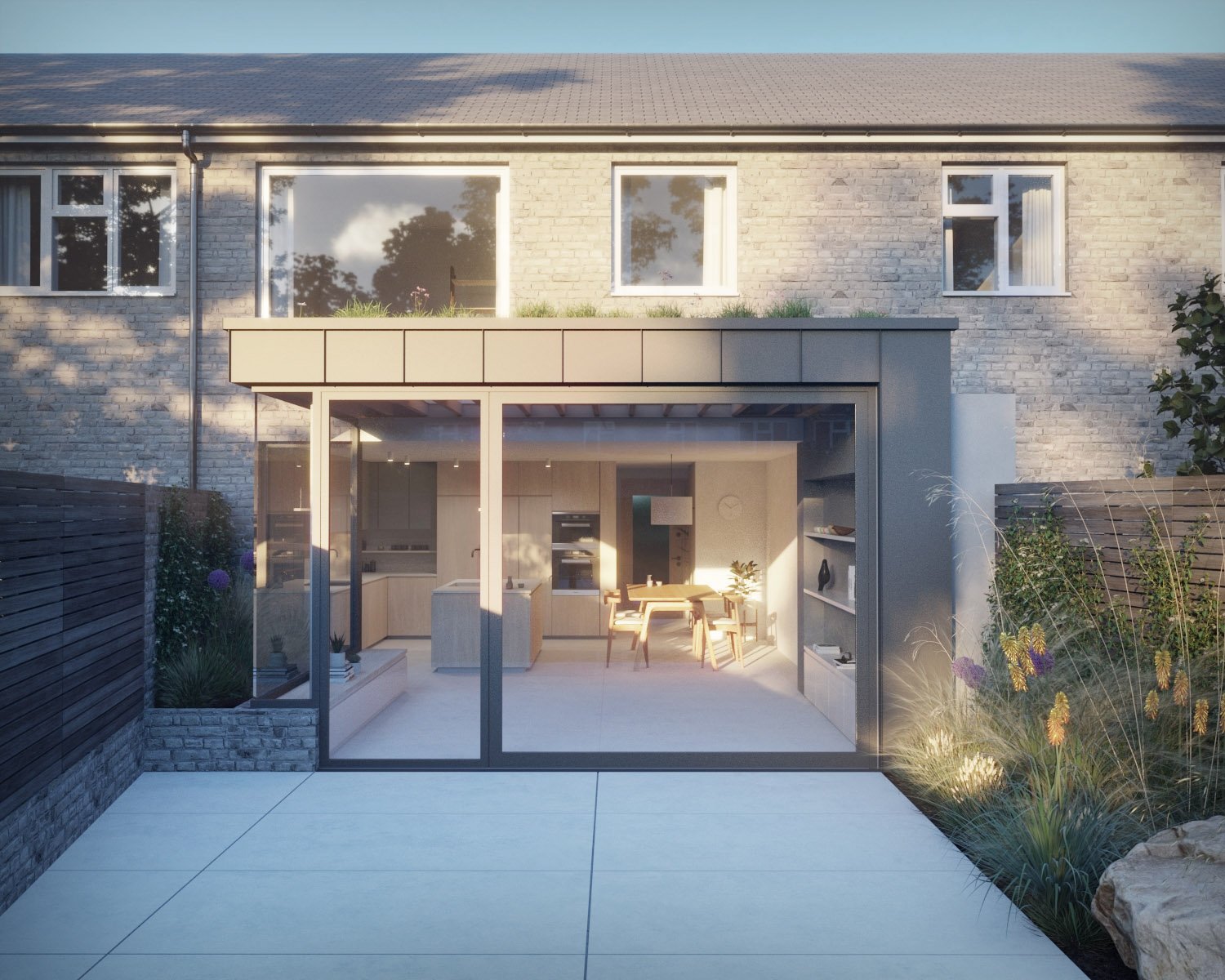
A larger rear window brings in more daylight and strengthens the relationship with the garden below.
Upstairs, two smaller rooms are brought together to form a more generous main bedroom with improved storage.
Because the house sits within the Orford Road Conservation Area, the proposal needed to balance the clients’ ambitions with its effect on the existing building, neighbouring homes and local setting. Planning permission was secured for the proposal.
Planter House shows what a carefully judged rear extension to a terraced house can do. The design adds useful space, but its greater contribution comes from reorganising the house around light, planting and the way its owners want to live.
Sometimes, the space you choose not to build can make the greatest difference to the space within.
Planning a rear extension to a London terraced house?
The best extension is not always the largest. We can help you understand where additional space will genuinely improve daily life, and where better light, layout, planting and garden connection may matter more than floor area alone.